Selling vs. Renting: Which Is Better?
Selling vs. Renting: Which Is Better for Your Home?

Deciding whether to sell or rent your home is one of the clearest financial crossroads a homeowner can face, and the right choice depends on finances, local market conditions, and personal plans. This guide helps homeowners—particularly those watching the Orangeville and surrounding markets—understand the key trade-offs so you can answer questions like “should I sell or rent my house” using concrete metrics and a practical decision framework. You’ll learn the pros and cons of each path, how to run a sell vs rent analysis that accounts for home equity and taxes, the timing factors shaped by interest rates and local demand, and the real-world responsibilities and hidden costs of being a landlord. Practical tools—including example calculations, EAV comparison tables, and checklists—are provided to make a data-driven choice. If you prefer, the article also points to the Flaherty.ca Home Selling System as a local resource for homeowners who lean toward selling and want a data-driven selling plan. Read on for clear formulas, lists for featured-snippet style answers, and step-by-step next steps to make an informed decision.
What Are the Pros and Cons of Selling vs. Renting Your Property?
Selling converts your property into immediate cash and eliminates landlord obligations, while renting can create ongoing income and potential long-term appreciation; the right option depends on liquidity needs, local market timing, and your tolerance for management. Selling often yields a lump-sum that can pay down debt, fund a move, or be invested, whereas renting preserves ownership and possible long-term gains but adds recurring costs and tenant risk. Understanding both sides helps frame the numerical analysis that follows and identifies which assumptions to test in a sell vs rent analysis. Below are concise pros and cons to target quick decisions and featured-snippet style answers.
The main advantages and disadvantages are:
- Selling provides immediate net proceeds after mortgage payoff and fees, removing ongoing property risk.
- Renting supplies monthly cashflow and preserves upside if the market appreciates, but it requires management and exposes you to vacancy and repair costs.
- Selling incurs transaction costs and potential tax considerations, while renting exposes you to landlord responsibilities and capital tied up in the asset.
These trade-offs set up the next deeper look at selling-specific benefits and renting-specific challenges, which will feed into numeric calculations.
What Are the Benefits and Drawbacks of Selling a Home?
Selling a home converts built-up home equity into liquid funds by paying off the mortgage and settling closing costs, giving you immediate capital to reallocate. The mechanism is straightforward: sale price minus mortgage balance and selling expenses equals net proceeds, and that cash can be used for debt reduction, reinvestment, or buying another home. Drawbacks include transaction costs such as agent commissions and legal fees and potential tax considerations under Canadian rules; depending on use and exemptions, capital gains tax issues may arise if the property isn’t your principal residence. Preparing a home for sale also requires time and expense for staging, repairs, and marketing, although professional selling systems can streamline that process. This clarity about cash conversion leads naturally into the numeric sell vs rent comparison in the next section.
What Are the Advantages and Challenges of Renting Out Your Property?
Renting turns a residence into an income-producing asset by collecting market rent, which creates monthly cashflow after mortgage, taxes, insurance, and maintenance costs are paid. The key mechanism is net rental yield: gross rent minus recurring expenses, which determines whether the property produces positive monthly cashflow or requires subsidy. Challenges include intermittent vacancy, tenant turnover costs, unexpected repairs, and the time requirement for management; these risks can erode returns and make the investment less passive than many expect. Local rental demand—for example in Orangeville and nearby markets—will determine achievable rent levels, so accurate local comps and vacancy data are essential before committing to a landlord path. Understanding these income and risk elements sets up a formal financial comparison.
Academic research further explores the complexities of the rental market, identifying key factors that influence rent prices and the challenges faced by landlords.
Factors Affecting Residential Rent Prices & Landlord Challenges
The housing market is frequently troubled by issues such as exorbitant rent pricing and a lack of transparency, posing challenges for both landlords and home renters. This study examines the factors affecting residential housing rent in Ibadan City to thoroughly investigate the cost-effectiveness of rents. We looked into a number of variables, including neighborhood characteristics, property size, amenities, and location, aiming to pinpoint the essential elements significantly impacting rental costs.
Modelling Residential Housing Rent Price Using Machine Learning Models, TP Ogundunmade, 2023
How to Calculate Financial Outcomes: Sell vs. Rent Analysis
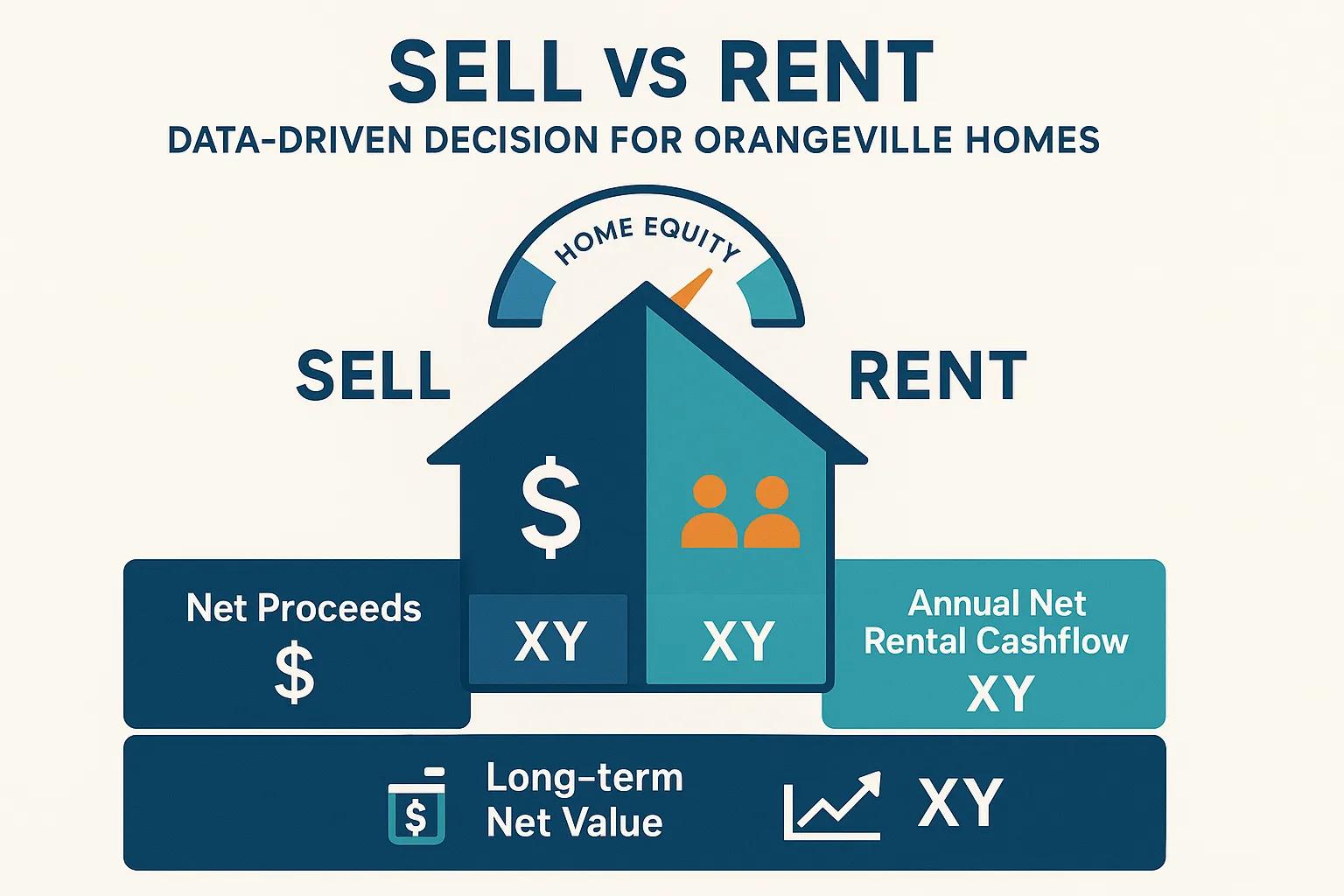
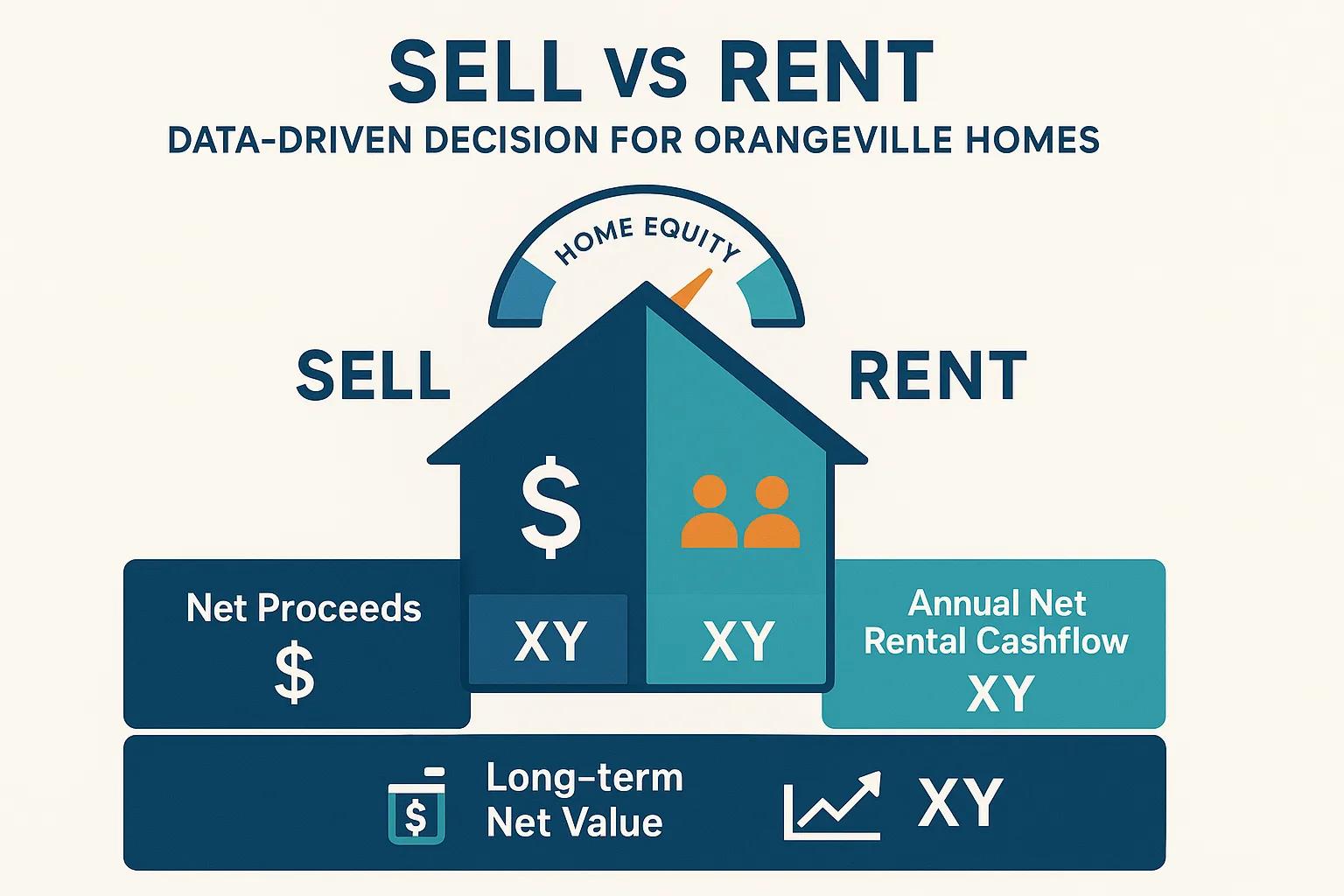
A clear sell vs rent analysis uses three formulas: ; ; . The mechanism is to compare immediate, certain proceeds from selling to a stream of uncertain future cashflows from renting, discounted or adjusted by expected appreciation and risk. Below is a compact EAV-style comparison table to compare measurable outcomes and guide the decision rule: if the present value of expected rental cashflows plus estimated residual equity exceeds net sale proceeds (adjusted for reinvestment returns and risk), holding may be preferable; otherwise selling is likely better.
This table summarizes typical numeric outcomes for homeowners evaluating sell vs rent decisions.
| Outcome | Calculation | Typical Result Example |
|---|---|---|
| Net Sale Proceeds | Sale price − mortgage − selling fees − taxes | $X after mortgage payoff, ready for reinvestment |
| Annual Net Rental Cashflow | (Monthly rent × 12) − (mortgage + taxes + insurance + maintenance + vacancy + management) | $Y per year in net cashflow |
| Long-term Net Value | Remaining equity growth + accumulated rent − costs | Equity + cumulative net cashflow over holding period |
This comparison clarifies what numbers to gather next and leads to the specific role of home equity in determining selling profit.
How Does Home Equity Impact Your Selling Profit?
Home equity is the homeowner’s share of the property value: current market value minus outstanding mortgage balance, and it directly determines how much cash you realize at sale. The mechanism is simple—higher equity increases net proceeds after mortgage payoff, while low equity can mean little or no net cash after selling costs, which influences whether selling is financially sensible. For example, a homeowner with meaningful equity can convert that wealth into a down payment on a new property or diversified investments, while low-equity situations may suggest holding or refinancing rather than selling. Using a local, data-driven valuation helps solidify the inputs here, and homeowners looking for precise local numbers can request a free home evaluation to get an accurate equity estimate before finalizing a decision.
Indeed, the importance of precise, data-driven valuation is underscored by academic studies that integrate homeownership as an investment into comprehensive models.
Data-Driven Housing Valuation & Homeownership Investment
Therefore, accurate, data-driven housing valuation is crucial for both homeowners and potential investors. This study uses apartment sales data to conduct feature importance analysis, integrating the investment aspect of homeownership into a comprehensive valuation model.
Lietuvos būsto kainų modeliavimas panaudojant didžiųjų duomenų analitikos priemones, 2025
This explanation naturally leads into the practical breakdown of rental income potential and the expense categories to include.
What Are the Rental Income Potential and Associated Expenses?
Estimating rental income potential requires local market rent benchmarks, and net yield depends on deducting realistic expense allowances such as maintenance, insurance, taxes, vacancy, and management fees from gross rent. The mechanism to assess profitability is to construct a simple P&L for a typical year and express net return as a percentage of property value (cap rate) or as monthly net cashflow. Common expense assumptions include a vacancy allowance (e.g., 5–10%), maintenance at 1–2% of property value annually, and any property management fees if you outsource. These realistic expense estimates feed into the earlier table and help you compare the monthly cashflow against the lump-sum sale proceeds discussed previously.
When Is the Best Time to Sell or Rent Your Home?
Timing hinges on local supply-demand metrics, interest rate conditions, and your personal liquidity or mobility needs; aligning market timing with your financial goals usually yields the best outcome. The mechanism is twofold: selling is generally favored when buyer demand is strong and inventory is low, producing higher sale prices and faster transactions, while renting can be preferable when buyer affordability is constrained by high interest rates but rental demand and rates are healthy. Seasonal patterns and local indicators like days on market, new listings, and rental vacancy rates in Orangeville should influence timing choices. The next subsections translate local conditions and macroeconomic trends into actionable timing rules. See video tips including the best time to sell your house at https://flaherty.ca/tips
How Do Local Market Conditions Affect Selling vs. Renting Decisions?
Local market conditions—inventory levels, days on market, and rental vacancy—directly influence whether selling yields a premium or renting produces stable yields in an area like Orangeville. The mechanism: in a seller’s market with low inventory, properties often sell quickly and for higher prices, favoring sale; conversely, in renter-tight markets with strong rental rates and low vacancies, landlords can command steady income and lower downtime. Practical indicators to monitor include recent sold-to-list price ratios, average days on market, and local rental listings and vacancy figures; these metrics help you translate general advice into a local plan. Consulting local comps and up-to-date market reports will refine the timing decision and connect to the practical tools described later.
What Is the Impact of Interest Rates and Economic Trends on Your Choice?
Interest rates shape buyer affordability, influence mortgage costs for landlords, and alter the relative attractiveness of selling versus renting through their impact on demand and financing costs. The mechanism: higher mortgage rates typically reduce the pool of buyers who can afford purchase payments, which can depress sale prices and favor renting; at the same time, higher rates increase landlords’ financing costs, which may reduce net rental yield unless rents rise in step. Recent trends through 2023–2024 have shown sensitivity in both purchase and rental markets to rate changes, so homeowners should factor current mortgage rate levels and rate trajectory into their analysis. Understanding these macro drivers frames whether a short-term hold or immediate sale better aligns with financial goals.
Research further highlights how interest rates and home prices fundamentally influence the economic calculus of selling versus renting, affecting the user cost of housing.
Sell vs. Rent Analysis: Interest Rates & Home Prices
Second, decisions are made on the basis of ex ante rather than ex post returns. We model this by using the transaction sequence sell–rent for one year–repurchase. Put differently, unless interest rates and home price appreciation are equal, the user cost of owner-occupied housing will differ from the rent of an equivalent rental unit.
The puzzling divergence of rents and user costs, 1980–2004, R Verbrugge, 1980
What Are the Responsibilities and Hidden Costs of Being a Landlord?
Landlording involves recurring expenses, time commitments, and legal responsibilities that frequently surprise new investors; treating rental ownership as a business helps avoid underestimated costs. The mechanism is that gross rent conceals many deductions—taxes, insurance, maintenance, vacancy, tenant turnover costs, and management fees—which can materially reduce net returns and require operational effort. Below is an EAV-style table summarizing typical recurring and hidden costs so homeowners can see common ranges and plan realistic cashflow.
Introductory paragraph for the EAV table: This table quantifies major landlord cost categories and expected annual impacts to help homeowners model realistic net income from renting.
| Cost Category | Typical Annual Attribute | Example Annual Value |
|---|---|---|
| Maintenance & Repairs | Reactive and scheduled upkeep | $X (percentage of rent/value) |
| Vacancy & Turnover | Lost rent plus reletting costs | $Y per vacancy event |
| Management & Compliance | Property management fees, legal compliance | $Z (percentage of rent) |
This cost breakdown emphasizes that passive rental income often requires active cash reserves and management planning, which leads into a focused list of the top hidden costs homeowners must anticipate.
For quick decision-making, the top hidden landlord costs include:
- Unexpected Repairs: Emergency systems failures or structural issues that require immediate funds.
- Vacancy and Turnover: Lost rent during tenant changeovers plus cleaning and advertising costs.
- Legal and Compliance Costs: Expenses associated with lease drafting, hearings, or regulatory compliance.
- Higher Insurance Premiums: Rental properties often attract higher liability and property insurance costs.
- Management Fees and Time: Either the ongoing cost of a property manager or the hours you must personally invest.
Recognizing these five categories makes clear why thorough financial modeling and contingency planning are essential before electing to rent.
What Time and Effort Are Required for Property Management?
Typical property management tasks include marketing and showing the unit, tenant screening, rent collection, maintenance coordination, and emergency response, which can add up to many hours per month if self-managed. The mechanism is that each tenant lifecycle stage—placement, tenancy, turnover—requires administrative and hands-on work that either consumes owner time or triggers management fees. Many owners find that hiring a professional manager reduces headaches but costs roughly 7–10% of gross rent, which must be included in yield calculations. A practical rule is to estimate 4–8 hours per month for routine management tasks if self-managing, and to weigh that time cost against management fees when deciding whether to rent. That time estimate naturally leads into the legal and maintenance considerations that follow.
What Legal and Maintenance Considerations Should Landlords Know?
Landlord obligations in Ontario include adhering to provincial tenancy laws, maintaining safe habitability standards, and ensuring appropriate insurance and liability coverage; failing to meet these responsibilities creates legal and financial risks. The mechanism is compliance: leases, eviction processes, safety certifications, and local bylaws govern what landlords must provide, and non-compliance can produce fines or legal disputes. Maintenance planning should distinguish routine preventative maintenance from emergency repairs and should budget accordingly; insurance policies designed for rental properties must be in place to mitigate liability. Awareness of these legal frameworks and maintenance disciplines helps reduce surprises and supports sustainable rental operations, which brings us to how selling with a professional system can remove many of these burdens.
Understanding Ontario Rental Rules and the Landlord and Tenant Board
The Landlord and Tenant Board exercises jurisdiction under the Residential Tenancies Act, 2006 to hear and decide applications respecting residential tenancies and non-profit housing co-operatives. The Landlord and Tenant Board is designated as part of an adjudicative tribunal cluster by regulation made under the Adjudicative Tribunals Accountability, Governance and Appointments Act, 2009. Currently, the Landlord and Tenant Board (Tribunals Ontario) is backed up. In the event a tenant stops paying rent, it may take between one and two years to have them evicted.
Who’s Protected by Rental Rules?
Ontario’s Residential Tenancies Act applies to most private residential rental units, including those in single and semi-detached houses, apartments and condominiums, and secondary units (for example, basement apartments).
Many of the rules about rent do not apply to some types of rentals, such as university and college residences and commercial properties.
Rent Increase Limits
The rent increase guideline for 2026 is 2.1%. For most tenants, your rent can’t go up by more than the rent increase guideline for every year. This applies to most tenants living in rented houses, semis, basement apartments, condos, as well as care homes, mobile homes, and land lease communities.
Eviction Rules and Tenant Protections
Your landlord can only evict you in specific situations and must give you written notice using the proper form provided by the Landlord and Tenant Board (LTB), an independent tribunal with the authority to resolve residential tenancy disputes in Ontario. The form must give the reason for eviction.
Even if your landlord gives you written notice, you don't have to move out. Your landlord must first apply for and receive an eviction order from the LTB. You have the right to go to a hearing and explain why you should not be evicted.
For more information, read the LTB's brochures:
Protection Against Wrongful Evictions
The maximum fine for an offence under the Residential Tenancies Act, 2006 can be up to:
- $50,000 for an individual
- $250,000 for a corporation
Eviction for Personal Use
Your landlord must give you the equivalent of one month’s rent, or offer you another unit if they:
- want to use the unit themselves
- want to use the unit for their family
- are selling the property and the purchaser will be using the unit themselves
Evictions Due to Renovations, Repairs or Demolition
Your landlord must also compensate you if they evict you from your unit to:
- renovate / repair
- demolish
- convert
They must give you the right of first refusal to move back into the unit following a renovation or repair. You must notify your landlord in writing before you leave that you want them to offer you the unit when they complete the renovation, and provide your new address.
If your landlord fails to provide you a right of first refusal, you have two years to file a claim with the LTB for compensation.
Bad Faith Evictions
Landlords must act in good faith when evicting a tenant for reasons that are not the tenant’s fault. This means the landlord must have honest intentions to use the rental unit for the purpose stated on the eviction notice. Landlords are also required to disclose their past use of no-fault evictions when applying for no-fault evictions. This gives the LTB more information to consider when determining whether the application was made in good faith and if an eviction order should be issued.
If the LTB determines that a landlord has given a notice of termination in bad faith, they may make an order requiring the landlord to pay the former tenant the sum of:
- the difference between the last rent charged to the former tenant and the former tenant’s current rent in their new unit for up to a one-year period,
- up to 12 months of the last rent charged to the former tenant, and
- reasonable out-of-pocket moving, storage and other expenses that the former tenant has incurred or will incur.
This applies to all bad faith evictions, including:
- where the landlord does not allow the tenant to move back into the unit after repairs or renovations
- where the landlord or purchaser does not move into or use the unit themselves
Why Is Selling with Flaherty.ca the Best Option for Homeowners?
The Flaherty.ca Home Selling System combines tech-enabled marketing with dedicated local agent follow-up to simplify selling and maximize reach for homeowners who decide to sell. The mechanism is an integrated selling platform that pairs video-narrated VR animated online showings, data mining and predictive analytics to target likely buyers, and syndication across a broad set of platforms to amplify listing visibility. The system is supported by a dedicated team of three full-time realtors who contact buyers seven days a week and prioritize new listings, offering homeowners a managed process that reduces time on market and operational friction. For homeowners considering selling, the Flaherty.ca approach provides a measurable, data-driven alternative to do-it-yourself listing strategies and helps translate market advantage into net proceeds.
Introductory paragraph for the EAV table: The table below outlines measurable service attributes of the Flaherty.ca Home Selling System so homeowners can compare seller-facing features and reach.
| Service Element | Attribute | Typical Value/Benefit |
|---|---|---|
| Reach | Syndication channels | 57+ platforms for broad exposure |
| Marketing | VR showings + video narration | Higher online engagement and virtual tour completeness |
| Team Support | Dedicated realtor team | Continuous buyer follow-up and priority listing handling |
This service overview highlights the selling-system features that often reduce time on market and improve buyer engagement, making selling a streamlined option for busy homeowners.
How Does the Flaherty.ca Home Selling System Enhance Your Selling Experience?
The system enhances selling by using video narrated VR animated online showings to present properties online in an engaging, immersive way that increases buyer time-on-listing and captures remote interest. The mechanism is enhanced visibility: predictive analytics and data mining identify likely buyers and prioritize outreach, while syndication across many platforms multiplies listing impressions and inquiry volume. The dedicated three-realtor team model provides continuous follow-up so motivated buyers are contacted promptly, which reduces missed opportunities and accelerates offers. For homeowners seeking a selling path that minimizes hands-on time while maximizing exposure, this coordinated approach can make selling simpler and more effective. Describing these features sets up homeowners to request the next-step service.
What Proven Results and Benefits Does the Flaherty Team Offer?
Flaherty.ca presents proven results through local sold listings and priority access to new listings, backed by a system that matches marketing scale with personal follow-up to convert interest to offers. The mechanism of combining broad syndication with targeted buyer outreach often produces faster contacts and clearer feedback loops for price and condition decisions. While individual results vary, the team emphasizes free home evaluations and local comparative market analysis to show sellers realistic expectations and likely net proceeds. Homeowners who want an evidence-based selling pathway benefit from the combination of technology-enabled marketing and a responsive local team that supports pricing and negotiation decisions. This explanation leads into practical next steps for homeowners who want a personalized evaluation.
How Can You Make a Personalized Decision: Sell or Rent?
Making a personalized decision requires a structured checklist, realistic financial inputs, and targeted local data to compare the present-value of selling versus expected rental cashflows and future equity. The mechanism is to assemble accurate inputs—current market value, mortgage balance, local rents, expense estimates, vacancy assumptions, and your required liquidity or timeline—and run a sell vs rent calculation based on those figures. Below is a practical decision checklist to guide homeowners through the evaluation process and prepare for a consultation or a free valuation.
Use this checklist when preparing to decide:
- Gather current market value and mortgage balance: Know your equity before modeling outcomes.
- Estimate realistic rental income and expenses: Use local rent comps and include vacancy and maintenance allowances.
- Calculate net sale proceeds and compare to discounted net rental cashflows: Apply your expected reinvestment return or discount rate.
- Factor in time, legal obligations, and personal plans: Consider whether you want to stay involved as a landlord.
- Request a professional valuation or free home evaluation if uncertain: Get precise local numbers before deciding.
Following this checklist prepares you for the tools and resources listed next, and it culminates in the clear action of obtaining a localized evaluation. Book a call with Kevin Flaherty for a free no obligation consultation
What Tools and Resources Help Evaluate Your Sell vs. Rent Options?
Several tools support accurate decisions: a sell vs rent calculator to test scenarios, a comparative market analysis (CMA) for local sale value, rental market reports for achievable rents, and landlord cost worksheets to model expenses. The mechanism of using layered tools is to start with quick scenario checks and escalate to professional valuations for high-stakes decisions. Use an interactive calculator for initial sensitivity testing, then obtain a CMA to validate sale price assumptions and local rental market reports to benchmark rent. These resources let you test multiple horizons and reinvestment assumptions, helping you choose the strategy that aligns with financial goals.
How to Access a Free Home Evaluation and Expert Guidance from Flaherty.ca?
To get an accurate, localized valuation, request a free home evaluation and speak with Kevin Flaherty and the Flaherty.ca team who can deliver market-based guidance tailored to Orangeville-area homeowners. The mechanism of this service is a professional comparative analysis combining local sold comps, current market activity, and the Flaherty.ca system’s data-driven insights to estimate likely sale price and net proceeds. A free home evaluation provides homeowners with realistic numbers for home equity, expected selling costs, and strategic recommendations—information you can use immediately in a sell vs rent calculation. If you want precise, local input to finalize your choice, a free home evaluation is the recommended next step.
This article ends after the last heading, having provided structured comparisons, practical lists, and EAV tables to support a data-driven sell vs rent decision.
Frequently Asked Questions
What are the financial benefits of selling versus renting my home?
Selling your home can provide immediate cash that can be used for debt repayment, investments, or purchasing a new property. This lump sum can significantly improve your liquidity. In contrast, renting generates a steady stream of income, which can be beneficial for long-term financial planning. However, it also comes with ongoing expenses and risks associated with property management. Evaluating your financial goals and liquidity needs is crucial in determining which option aligns better with your financial strategy.
How do I assess the local rental market before deciding to rent my property?
To assess the local rental market, start by researching comparable rental properties in your area. Look at factors such as rental prices, vacancy rates, and the demand for rentals. Online platforms and local real estate reports can provide valuable insights. Additionally, consider consulting with local real estate agents who have expertise in rental markets. Understanding these dynamics will help you set competitive rental prices and make informed decisions about your property.
What are the potential risks of becoming a landlord?
Becoming a landlord comes with several risks, including tenant-related issues such as late payments, property damage, and potential evictions. Additionally, you may face unexpected maintenance costs and periods of vacancy that can impact your cash flow. Legal responsibilities, such as adhering to local tenancy laws and ensuring property safety, can also pose challenges. It's essential to have a solid management plan and financial reserves to mitigate these risks effectively.
How can I calculate the return on investment (ROI) for renting my property?
To calculate the ROI for renting your property, start by determining your annual rental income and subtracting all associated expenses, including mortgage payments, property taxes, maintenance, and management fees. The net income is then divided by your total investment in the property (purchase price plus any additional costs). Multiply the result by 100 to express it as a percentage. This calculation will help you assess whether renting is a financially viable option compared to selling.
What are the legal responsibilities of landlords in Ontario?
In Ontario, landlords must comply with the Residential Tenancies Act, which includes maintaining the property in a habitable condition, ensuring safety standards, and adhering to proper eviction procedures. Landlords are also responsible for providing written notice for rent increases and must follow specific guidelines for terminating tenancies. Understanding these legal obligations is crucial to avoid disputes and ensure a smooth rental experience. Consulting legal resources or professionals can provide further clarity on these responsibilities.
What should I do if my tenant stops paying rent?
If a tenant stops paying rent, the first step is to communicate with them to understand the situation. If the issue persists, you must follow the legal eviction process outlined by the Landlord and Tenant Board in Ontario. This typically involves providing written notice and applying for an eviction order if necessary. It's essential to document all communications and actions taken to protect your rights as a landlord. Seeking legal advice can also be beneficial in navigating this process.
How can I enhance the appeal of my property for potential renters or buyers?
To enhance your property's appeal, focus on both interior and exterior improvements. For selling, declutter, deep clean, and consider staging to showcase the space effectively. For renting, ensure the property meets safety standards and is well-maintained. Simple upgrades like fresh paint, landscaping, and modern fixtures can make a significant difference. High-quality photos and a compelling listing description are also essential for attracting interest, whether you are selling or renting your property.
What factors should I consider when deciding to sell or rent my home?
When deciding whether to sell or rent your home, consider factors such as your financial situation, local market conditions, and personal goals. Evaluate your liquidity needs, potential rental income, and the costs associated with being a landlord. Additionally, assess the current demand for homes in your area, interest rates, and your long-term plans. Understanding these elements will help you make a more informed decision that aligns with your financial objectives and lifestyle preferences.
How can I determine the right rental price for my property?
To determine the right rental price for your property, research local market trends and comparable rental listings in your area. Analyze factors such as property size, location, amenities, and recent rental rates to establish a competitive price. You can also consult with local real estate agents or use online rental valuation tools to get a more accurate estimate. Setting the right price is crucial for attracting tenants and maximizing your rental income while minimizing vacancy periods.
What are the tax implications of selling or renting my home?
Tax implications vary significantly between selling and renting a home. When selling, you may be subject to capital gains tax if the property is not your principal residence or if you exceed the exemption limits. Renting your property can also have tax consequences, as rental income is taxable, but you can deduct certain expenses like maintenance, property management fees, and mortgage interest. Consulting a tax professional can help you navigate these complexities and optimize your tax situation.
What are the common challenges landlords face?
Landlords often face challenges such as tenant turnover, property maintenance, and legal compliance. Managing tenant relationships can be demanding, especially when dealing with late payments or disputes. Additionally, unexpected repairs and maintenance can strain finances and time. Legal obligations, including adhering to local tenancy laws and ensuring property safety, can also pose challenges. Being prepared for these issues and having a solid management plan can help mitigate risks and enhance your rental experience.
How can I effectively manage my rental property?
Effective property management involves several key practices: screening tenants thoroughly, maintaining open communication, and keeping accurate records. Regular property maintenance is essential to prevent larger issues down the line. Consider using property management software to streamline tasks like rent collection and maintenance requests. If managing the property becomes overwhelming, hiring a professional property management service can alleviate stress and ensure compliance with local laws, allowing you to focus on other priorities.
What should I include in my rental agreement?
A comprehensive rental agreement should include essential details such as the rental amount, payment due dates, lease duration, and security deposit terms. Additionally, outline tenant responsibilities, maintenance obligations, and rules regarding property use. Include clauses for late payments, eviction procedures, and any specific policies related to pets or smoking. A well-drafted rental agreement protects both parties and helps prevent misunderstandings, ensuring a smoother landlord-tenant relationship.
How can I prepare my home for sale or rent?
Preparing your home for sale or rent involves several steps. For selling, focus on decluttering, deep cleaning, and making necessary repairs to enhance curb appeal. Consider staging the home to attract potential buyers. For renting, ensure the property meets safety standards and is in good condition. Address any maintenance issues and consider fresh paint or landscaping to make it more appealing. High-quality photos and a well-written listing description can also help attract interest, whether selling or renting.
Conclusion
Deciding whether to sell or rent your home involves weighing immediate financial benefits against long-term investment potential. Understanding the local market dynamics and your personal financial goals is crucial for making an informed choice. For tailored guidance, consider requesting a free home evaluation from our expert team at Flaherty.ca. Take the next step towards a confident decision today.
See the best marketing plan that gets top dollar faster
Why photos alone undersell your home
Pricing Strategy for Town, Village, and Rural Homes
Smart Upgrades to Consider for Maximizing Your Home's Resale Value
Selling Your Home vs. Downsizing: A Senior's Guide
Understanding Closing Costs to Sell Your House
Orangeville Real Estate Agents: Which One to Choose?
Selling vs. Renting: What’s Best for You?
Real Estate Agents Orangeville for Quick Home Sales
Understanding the Home Selling Process in Dufferin
What Makes The Best Real Estate Agent for A Seller
Find the Best Real Estate Agents Near Me for Local Property Buying and Selling
What to Expect During the Home Selling Process
orangeville real estate market
Pricing decisions that cost sellers the most
What to do if your property isn't selling
What Every Seller Must Know About OffersHow to successful sell stigmatized real estate