Selling Your Home as a Senior Made Easy
Selling Your Home as a Senior Made Easy: Expert Tips and Guidance for a Smooth Transition
Selling your home as a senior is a major decision that blends financial planning, emotional readiness, and practical logistics, and this guide clarifies each step so you can act with confidence. You will learn how to decide when to sell, the financial and legal considerations to address, practical home-prep actions that speed sale and maximize value, how to identify a senior-focused real estate professional, and what the full selling and relocation timeline looks like. This article speaks directly to seniors and their families, offering clear, actionable advice on downsizing benefits, estate coordination, decluttering strategies, staging priorities, and evaluating offers. It balances emotional support with step-by-step checklists and comparison tables so you can weigh options and take deliberate next steps. Throughout, we use terms seniors commonly search for — like tips for selling homes for seniors, downsizing for seniors, and senior move management services — and map them to concrete actions that reduce stress, limit home-showing traffic, and protect sale proceeds. Read on for short featured answers, practical lists you can print, and comparison tables that highlight the trade-offs you’ll face while preparing for a smooth move to the right next chapter.
How Do Seniors Decide When and Why to Sell Their Home?
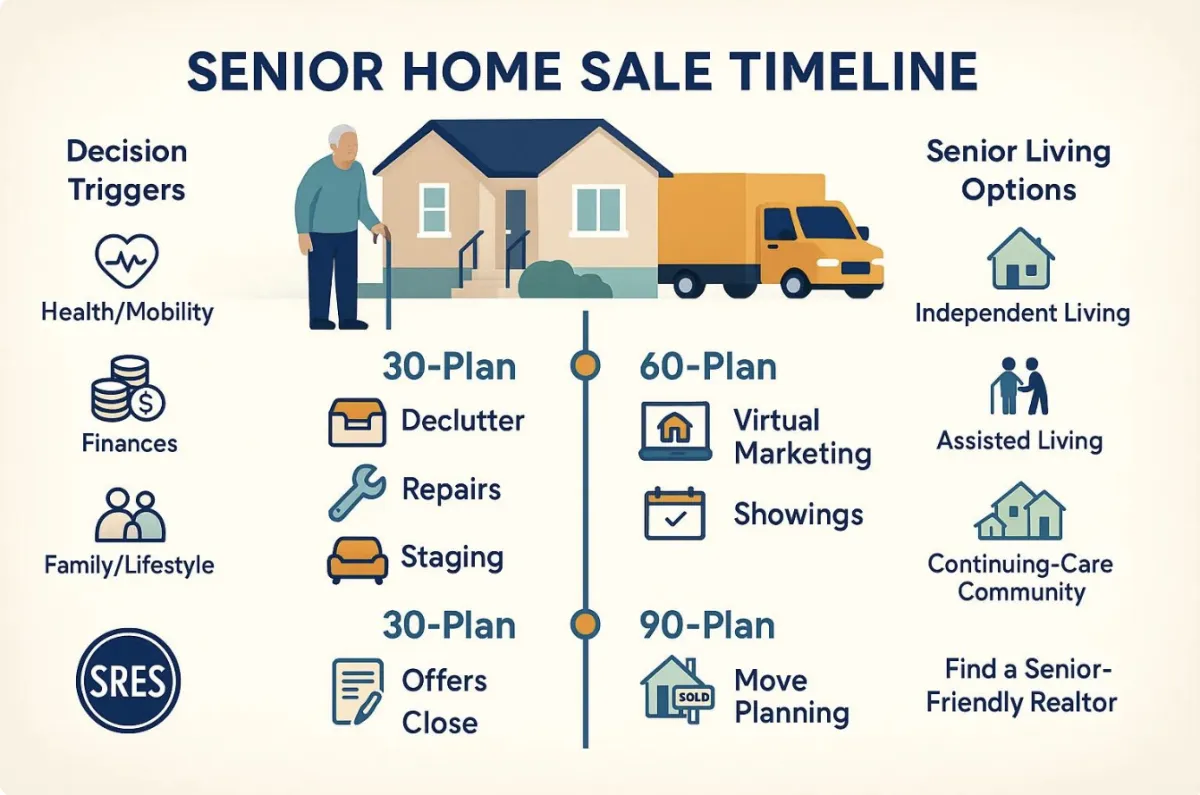
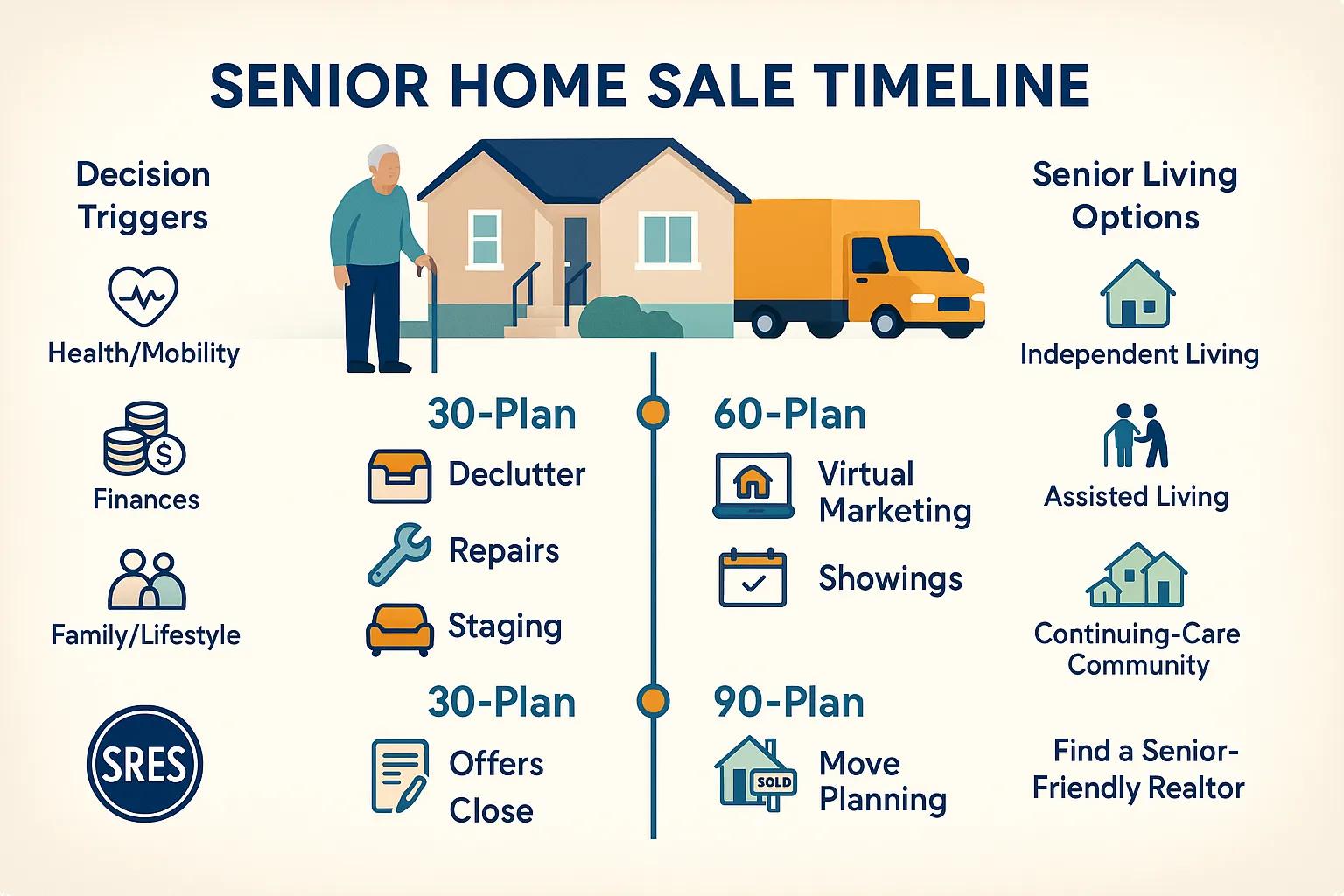
Deciding when to sell begins with a clear assessment of needs: health and mobility changes, financial pressures, lifestyle desires for simpler living, or family circumstances such as caregiving and proximity needs. These factors interact — for example, declining mobility increases the cost and difficulty of home maintenance, which accelerates the case for downsizing. A practical decision checklist helps weigh the trade-offs between staying and selling, and it should include cost comparisons, accessibility evaluations, and an assessment of local senior living options. The right timing often comes when the expected benefits of selling (reduced maintenance, liquidity, safer living) outweigh the emotional cost of leaving a long-time home; outlining those benefits prepares you to act and to communicate choices with family. To explore timing in a localized context and get a free home evaluation, many seniors schedule a consultative intake with a specialist who can map market timing to personal goals and available housing alternatives.
This short featured answer summarizes the top decision triggers for seniors and introduces the practical checklist you can use right now.
Health and mobility changes: When stairs, yard work, or safety concerns increase, selling for an accessible property reduces daily risk.
Financial considerations: Selling can free equity for retirement, reduce property costs, and simplify finances.
Lifestyle or family reasons: Desire for community amenities, proximity to family, or downsizing for travel are common triggers.
These three decision triggers lead naturally into a closer look at the benefits of downsizing and how to handle the emotional side of selling.
What Are the Benefits of Downsizing for Senior Home Sellers?
Downsizing delivers practical financial and lifestyle benefits by reducing ongoing expenses, simplifying maintenance, and often improving access to services and community amenities. Financially, moving to a smaller home or senior living option lowers utility, property tax, and repair costs, freeing equity to strengthen retirement security. From a lifestyle perspective, downsizing typically reduces physical burdens such as yard work and extensive cleaning, improves safety through fewer stairs and manageable layouts, and can provide built-in amenities like housekeeping and transportation in community settings. Many seniors report improved social opportunities and lower stress after downsizing, and local markets often offer nearby adult community options that fit these needs. Understanding these practical gains helps families make an evidence-based decision before beginning the sale process.
Research consistently highlights the importance of understanding these transitions to support older adults effectively.
Downsizing & Housing Transitions for Seniors
This knowledge is critical to how policy might facilitate housing transitions, such as downsizing in later life if when this is in the interests of older
Downsizing amongst older Australians, BH Judd, 2012
These tangible benefits make downsizing an effective solution for seniors, and they naturally bring up the emotional side of leaving a long-time family home.
How to Navigate the Emotional Challenges of Selling a Family Home?
Selling a family home often involves grief, attachment, and complex family dynamics that deserve compassionate handling and intentional planning. Acknowledge the feelings openly, designate decision-makers early, and create rituals for preserving memories — such as photographing rooms, making a keepsake box, or recording stories about the house — so emotional value is honored without slowing the sales process. Practical tactics include scheduling decluttering in small stages, delegating tasks to trusted friends or family, and using professional estate-sale or move managers to reduce decision fatigue; these approaches preserve dignity while keeping momentum. Communicating openly with relatives about timelines and roles prevents misunderstandings and helps balance emotional needs with market realities. Preparing emotionally sets the stage for efficient decluttering and staging that appeal to buyers while preserving the home’s legacy for the seller.
Accepting the emotional process and using practical tools to manage it flows directly into the financial and legal steps you should complete before listing.
What Financial and Legal Considerations Should Seniors Know Before Selling?
Seniors should treat the sale as a financial event requiring coordination with tax and estate professionals, focusing on capital gains rules, mortgage or lien payoffs, and the interplay with wills and powers of attorney. Understanding the primary residence capital gains exclusion and when it applies helps set expectations for after-tax proceeds, while reviewing mortgages, liens, and payoff logistics ensures there are no surprises at closing. It’s important to coordinate timing with estate planning activities: confirm beneficiary designations, update wills if needed, and ensure power of attorney documents are current so transactional decisions can be made smoothly. Consulting a tax specialist and an estate attorney before listing clarifies tax exposure, probate implications, and how proceeds should flow to beneficiaries if part of an estate transition. These legal and financial preparations reduce closing delays and protect your sale proceeds during the move.
Below is a compact comparison of common financial and legal items seniors encounter when selling.
Financial or Legal ItemCharacteristicEffect on SellerPrimary residence exclusionExcludes gain on qualifying principal residence salesMay reduce or eliminate capital gains tax liabilityMortgage and lien payoffOutstanding loan balance and any liens must be cleared at closingReduces net proceeds; requires careful payoff coordinationProbate and estate coordinationEstate rules govern asset transfer after deathEarly planning avoids probate delays and protects heirs
How Does Capital Gains Tax and Home Sale Exclusion Affect Senior Sellers?
The primary residence exclusion can remove much or all capital gains tax for qualified sellers, but eligibility depends on residency tests and prior use of the exclusion; seniors must confirm their specific situation with a tax professional.
To clarify, the principal residence exemption generally allows you to sell your home, i.e., your principal residence, without paying tax on any increase in the home's value. In most situations, when assets increase in value, the resulting capital gain is partially taxable. The principal residence exemption allows you to shelter the capital gain on your home.
A capital gain is the profit from selling an asset for more than you purchased it. There isn't a separate capital gain tax rate; rather, a portion of the capital gain is included in your income, called the capital gain inclusion rate. This portion is taxed at your marginal tax rate, which varies based on your total income. Currently, the capital gain inclusion rate remains at 50%, taxed at your marginal tax rate. This rate applies to capital gains on property other than your principal residence, which is exempt from capital gains taxation.
There are specific conditions for a property to qualify as your principal residence. You must own it, either alone or with someone else, and you and/or your spouse or common-law partner must “ordinarily inhabit” it for at least some of the year. The principal residence can be various types of housing units, including houses, apartments, cottages, mobile homes, trailers, houseboats, leasehold interests, or shares in a housing corporation. The land area is also considered, with properties under half a hectare automatically included, while larger properties must prove the excess land is necessary for the residence.
You do not need to designate your home as a principal residence until you sell it. At that point, you must file Schedule 3, Capital Gains (or Losses), and Form T2091IND, Designation of a Property as a Principal Residence by an Individual (Other Than a Personal Trust). Failure to file these forms means you cannot apply the exemption and will owe tax on the capital gain. Late designations may be allowed upon request but are not guaranteed and may incur penalties.
You can claim the principal residence exemption multiple times in your lifetime but only one property per calendar year. Married or common-law partners can only designate one principal residence between them. If your home was your principal residence for only part of the time you owned it, you may claim a partial exemption using a formula that accounts for the eligible years plus one, divided by the total years owned.
If you use part of your home to earn income, such as renting a room or operating a business, you can still claim a partial exemption based on the proportion of the home used as a principal residence.
Property flipping is excluded from the principal residence exemption. New rules as of January 1, 2023, state that owning a property for fewer than 365 consecutive days generally disqualifies the gain from exemption and may classify profits as business income. Exceptions exist for certain personal circumstances but require careful tax advice.
After death, a “deemed disposition” treats property as sold just before death. If the home is jointly owned with a spouse or common-law partner, it can transfer without tax consequences and remain exempt when sold by the survivor. For single individuals, the exemption still applies, but executors must file appropriate forms with the final tax return. If the home passes to other beneficiaries, future gains may be taxable unless they designate it as their principal residence.
Capital Gains Exclusion for Older Homeowners
Since 1964, section 121 of the Internal Revenue Code has afforded older homeowners a reduction in the tax liability incurred on capital gains from the sale of a principal residence.
An Evaluation of the One‐Time Capital Gains Exclusion for Older Homeowners, 1964
Understanding these rules ahead of listing prevents last-minute surprises and supports clearer planning for post-sale housing.
After tax considerations, many sellers need to align sale decisions with estate planning steps to ensure a smooth transfer of assets or closure of the household.
What Estate Planning Steps Are Important When Selling a Retirement Home?
Before listing, review your will, beneficiary designations, and powers of attorney to ensure they reflect current intentions and will support a sale or redistribution of proceeds. If a property will be sold as part of an estate, coordinating with the executor and legal counsel early avoids probate-related delays and clarifies who is authorized to sign documents. Seniors should gather title, deed, and mortgage documentation and confirm there are no unresolved claims or joint-ownership complexities that could impede closing. Updating durable powers of attorney and healthcare directives allows trusted agents to act if health issues arise during the transaction. These estate planning steps reduce legal friction and protect both sellers and heirs as the property changes hands.
This legal groundwork is essential before preparing the home for the market, which includes decluttering, repairs, staging, and virtual tour readiness.
How Can Seniors Prepare Their Home for a Quick and Profitable Sale?
Preparing a home strategically focuses on high-impact, low-cost actions: decluttering and depersonalizing, completing safety and cosmetic repairs, boosting curb appeal, and producing clear virtual presentations for buyers. Decluttering opens space and helps buyers visualize living in the home; targeted repairs like fixing handrails, addressing tripping hazards, and refreshing paint yield strong returns by improving perceived safety and condition. Staging with neutral colors, simplified furnishings, and accessible layout cues helps attract a wider buyer pool, and high-quality virtual tours reduce unnecessary in-person traffic while giving buyers a confident first impression. Prioritizing these tasks based on expected return — safety first, then visible cosmetics — shortens market time and supports a stronger sale price. A concise plan that sequences decluttering, repairs, and staging keeps the process manageable for seniors and their families.
Below is a short action list of the high-impact steps most effective for seniors preparing to sell.
Declutter and depersonalize: Remove personal items and excess furniture to help buyers imagine the space as theirs.
Address safety and minor repairs: Fix handrails, lighting, and trip hazards to improve buyer confidence and pass inspections.
Stage strategically and improve curb appeal: Use neutral colors, clear walkways, and tidy landscaping to increase perceived value.
Following these steps leads directly into a comparison of tasks showing estimated time and sale impact to help plan resources.
Home-Prep TaskTypical Time EstimateImpact on Sale Speed / PriceDecluttering (room-by-room)1–3 days per main living areaSpeeds showings; increases buyer interestMinor safety & cosmetic repairs1–2 weeks depending on contractorReduces contingencies; improves offersProfessional staging / virtual tours2–5 days to implementAttracts higher-quality offers; limits in-person traffic
What Are Essential Decluttering and Depersonalizing Tips for Senior Sellers?
An effective decluttering plan breaks work into small, manageable steps: start with a single room, sort items into keep/donate/sell/trash categories, and use a keepsake box for meaningful items. Seniors benefit from a timeline that limits daily tasks to avoid burnout and from delegating heavy lifting to family or professional organizers and senior move managers when needed. Labeling boxes clearly and photographing items before removal helps preserve memory without delaying the sale; documenting heirloom locations and decisions prevents later disputes among family members. For items with sentimental value, consider temporary storage or digitizing photo albums and documents so the emotional legacy is preserved while the home is staged neutrally. Small, consistent progress maintains momentum and prepares rooms for high-impact staging that appeals to buyers.
These decluttering tactics connect directly to the repairs and staging choices that most improve buyer perception and sale outcomes.
Which Repairs and Staging Techniques Attract Buyers to Senior Homes?
Focus repairs on safety and function first — handrails, lighting, non-slip surfaces, and simple HVAC or plumbing fixes — because buyers of all ages prioritize a move-in-ready, safe property. Cosmetic updates with strong return include fresh neutral paint, updated hardware, and modern but unobtrusive fixtures; these changes support staging by creating a clean canvas for buyers. Staging for senior appeal emphasizes accessibility cues: furniture arranged for clear pathways, lighting adjusted to reduce glare, and bedroom setups that suggest single-floor living when possible. Virtual staging and high-quality video-narrated walkthroughs communicate layout and accessibility features effectively, reducing the need for repeated in-person showings and helping pre-qualified buyers feel confident before scheduling a visit. These techniques preserve the seller's privacy and energy while widening the pool of qualified prospects.
A practical table below compares staging and marketing features that often accompany senior-focused listings and their expected benefits.
Staging / Marketing FeatureAttributeExpected BenefitAccessibility-focused stagingPathway clearance, handrails visibleSignals safety and convenience to buyersVirtual tour with narrationVideo-narrated walkthroughs explain layoutReduces unnecessary visits; improves buyer understandingNeutral refresh and declutterClean canvas presentationBroadens buyer appeal and increases offers
Using these staging and marketing strategies naturally leads to the question of whether to work with a specialized agent who understands seniors’ needs.
Why Should Seniors Choose a Specialized Real Estate Agent?
A specialized real estate agent for seniors brings empathy, process management, and community connections that simplify complex decisions and help protect seller interests. Seniors benefit from working with a Seniors Real Estate Specialist (SRES) or an experienced agent who understands accessibility concerns, emotional transitions, estate coordination, and local senior living options. Specialized agents can also manage logistics like scheduling low-impact showings, coordinating contractors, and connecting sellers with trusted move managers or community resources. In markets where technology matters, agents who use advanced marketing tools — such as syndicated listings, high-quality virtual presentations, and targeted buyer matching — reduce market time and limit in-person traffic while increasing qualified leads. Choosing a senior-focused agent blends practical transaction expertise with the interpersonal skills needed to make a move less stressful and more efficient.
Here are three primary reasons seniors benefit from a specialist agent and how to evaluate them.
Experience with senior-specific needs: Specialists understand accessibility upgrades, downsizing timelines, and estate coordination requirements.
Process and vendor management: Senior-focused agents connect sellers with trusted organizers, contractors, and move managers to streamline the transition.
Tech-enabled marketing: Agents using virtual tours and wide syndication can attract qualified buyers faster and reduce in-person showings.
These benefits set up a practical comparison of agent features so you can vet candidates effectively.
Agent Feature / SystemCharacteristicBenefit for Senior SellerAdvanced marketing technologyVideo-narrated VR animated online showingsFewer in-person visits; clearer buyer understandingData-driven buyer matchingPredictive analytics and syndicationConnects listing to likely buyers; reduces market timeLocal senior expertiseProven local experience and senior resourcesBetter pricing guidance and community referrals
After reviewing these features, the next two subsections define what an SRES does and how to find a senior-friendly realtor locally.
What Is a Seniors Real Estate Specialist and How Do They Help?
A Seniors Real Estate Specialist (SRES) is an agent trained to address the unique needs of older adults and their families, focusing on counseling, relocation options, and transaction management. SRES agents are skilled at balancing emotional concerns with practical steps, making them adept at coordinating estate issues, recommending senior move services, and crafting timelines that minimize stress. Practical scenarios where SRES help include arranging low-impact showings, suggesting staging for accessibility, and negotiating contingencies sensitive to health or timing constraints. When interviewing an SRES, ask about specific experience with senior moves, references, and examples of how they limit in-person traffic while still attracting qualified offers. Choosing an SRES aligns specialized knowledge with compassionate service, which is especially valuable for complex or emotional sales.
Knowing what an SRES offers makes it easier to search for a senior-friendly realtor in your local area.
How to Find a Senior-Friendly Realtor in Orangeville and Surrounding Areas?
Finding a senior-friendly realtor starts with clear criteria: local market knowledge, senior resources, process-oriented communication, and demonstrated use of senior-focused marketing tools. Ask candidates for recent sold listings that involved senior sellers, references from other clients in similar situations, and examples of how they minimize showings while maximizing buyer quality. Local expertise matters for pricing, timing, and connecting to area-specific adult community options, so verify an agent’s track record in Orangeville and the surrounding market through sold listing evidence. Interview multiple agents and request a written plan that outlines staging, virtual marketing, and support services; the best agents offer a clear, senior-sensitive roadmap. Evaluating agents with these questions ensures you choose a partner who respects emotional transitions and achieves strong market results.
At this point, if you want expert help with timing, staging, and buyer exposure, consider a consultative intake to align personal goals with market strategy.
For seniors seeking a technology-forward, senior-aware approach, the Flaherty.ca Home Selling System combines local expertise with advanced marketing tools to reduce market time and limit in-person traffic. The system uses video-narrated VR animated online showings and data-driven buyer matching, syndicating listings widely to reach a broad pool of qualified buyers while emphasizing seller comfort and convenience. Kevin Flaherty and his team provide a consultative intake and free home evaluations that help seniors understand timing, expected proceeds, and housing alternatives before committing to a listing. This focused approach supports seniors who want fewer showings, better-targeted buyer outreach, and a guided transition to the right next living situation.
What Does the Selling Process and Transition Look Like for Seniors?
The selling process for seniors follows clear phases: decision and planning, home preparation and listing, showings and negotiation, closing and move coordination, and post-sale transition into new housing or community. Each phase requires specific tasks — from legal and financial checks to decluttering and staging — and a realistic timeline that accounts for health, caregiving, and moving logistics. Evaluating offers should balance net proceeds with contingencies, closing flexibility, and the buyer’s readiness to close on a timeline that suits the seller. Move coordination often includes hiring senior move managers, arranging donations or estate sales, and planning the physical move with accessible scheduling. A well-structured timeline reduces stress and ensures decisions are made with full information about options and outcomes.
Below is a concise sample timeline you can adapt depending on how quickly you want to move and market conditions.
30-day plan: Rapid prep and aggressive marketing for sellers needing quick relocation; requires contractors and staging ready early.
60-day plan: Balanced timeline for staging, decluttering, and controlled showings with modest contingencies.
90-day plan: More gradual approach allowing deeper decluttering, estate coordination, and staged visits to community options.
These sample timelines frame decision points for offers and contingencies and lead into a comparison of typical milestones and relocation options.
PhaseTypical MilestoneSeller ActionDecision & PlanningConsultations, evaluations, advisor alignmentSchedule free home evaluation and legal/tax reviewPrep & ListingDeclutter, repairs, staging, virtual marketingImplement priority repairs and produce virtual tourOffers & ClosingOffer review, negotiation, closing logisticsEvaluate net proceeds and coordinate move dates
Planning milestones this way helps sellers and families coordinate resources and communication, which connects into the final section on specific timeline guidance and senior housing options.
How to Create a Realistic Timeline and Navigate Offers as a Senior Seller?
Creating a realistic timeline begins with a clear target move date and reverse-planning from that point, allowing time for decluttering, necessary repairs, staging, and any legal or financial steps. When reviewing offers, focus on net proceeds after payoffs and fees, the buyer’s financing contingency strength, and any timing contingencies related to your next living arrangement. Consider delegating authority through a trusted agent or power of attorney for signing when health or travel may interfere, and ask for flexible closing dates if needed to accommodate moving or medical needs. Use a simple offer-evaluation checklist that ranks price, certainty of closing, and timing alignment with personal logistics to make objective decisions. A measured timeline with built-in buffers reduces last-minute stress and makes the negotiation phase more predictable.
This guidance naturally leads to exploring senior living options that fit differing care and lifestyle needs.
What Senior Living and Adult Community Options Should Sellers Consider?
Sellers should compare independent living, assisted living, and continuum-of-care communities based on required care level, cost, location, and available amenities to find the best fit for long-term well-being. Independent living suits active seniors wanting minimal assistance but with community amenities; assisted living provides daily care support, while continuing-care communities offer escalating care levels on one campus, which may be attractive for long-term planning. When evaluating options, prioritize transparent fee structures, levels of medical support, staffing ratios, and social programming that match lifestyle priorities. Visit communities with a checklist that assesses accessibility, emergency response systems, transportation options, and the ease of transitioning from home. Local resources and directories focused on adult communities can streamline research and help schedule visits that fit the seller’s timeline and mobility.
For seniors exploring adult lifestyle communities in Ontario, a valuable resource is AdultCommunities.ca, a comprehensive real estate guide to Ontario’s 55+ and retirement living communities. This guide offers detailed information on various community types, amenities, and locations, helping seniors and their families make informed decisions about their next living arrangement. Utilizing such specialized resources can simplify the search process and ensure a better match to personal needs and preferences.
Considering these housing alternatives rounds out the selling and transition planning, concluding the practical roadmap for seniors preparing to sell.
For personalized assistance tailored to senior sellers who want fewer showings and targeted buyer outreach, the Flaherty.ca Home Selling System offers a consultative intake and free home evaluation to map timing, marketing, and relocation options with clear next steps. If you prefer a listing approach that emphasizes virtual showings, buyer matching, and local expertise in Orangeville, contacting Kevin Flaherty provides a focused plan that respects the emotional and logistical needs of senior moves.
Frequently Asked Questions
What should seniors consider when choosing a moving company?
When selecting a moving company, seniors should prioritize companies that specialize in senior relocations. Look for movers with experience in handling the unique needs of older adults, such as packing delicate items and providing assistance with downsizing. It's essential to check reviews, ask for references, and ensure the company is licensed and insured. Additionally, inquire about their policies on handling items that may have sentimental value and whether they offer services like unpacking and setting up in the new home, which can ease the transition process.
How can seniors manage the financial aspects of moving?
Seniors should create a detailed budget that includes all potential moving expenses, such as hiring movers, packing supplies, and any necessary repairs to the new home. It's also wise to consider the costs associated with selling their current home, including real estate agent fees and closing costs. Consulting with a financial advisor can help seniors understand how the sale of their home impacts their overall financial situation, including tax implications and how to best allocate funds for their new living arrangements.
What are some tips for maintaining emotional well-being during the moving process?
Maintaining emotional well-being during a move can be challenging for seniors. It's important to acknowledge feelings of loss and nostalgia associated with leaving a long-time home. Engaging in open conversations with family and friends about these feelings can provide support. Creating a memory book or keepsake box can help preserve cherished memories. Additionally, establishing a routine and staying connected with loved ones during the transition can provide comfort and stability, making the process feel less overwhelming.
How can seniors ensure their new home is safe and accessible?
Before moving in, seniors should assess their new home for safety and accessibility features. This includes checking for adequate lighting, removing tripping hazards, and ensuring that bathrooms and kitchens are equipped with grab bars and non-slip surfaces. Consider hiring a professional to evaluate the home and suggest modifications that enhance safety. Additionally, seniors should familiarize themselves with the layout of their new space to ensure they can navigate it comfortably and safely, which can significantly reduce the risk of accidents.
What resources are available for seniors looking to downsize?
There are numerous resources available to assist seniors in the downsizing process. Local senior centers often provide workshops on decluttering and moving. Professional organizers specializing in senior moves can help with sorting belongings and managing the logistics of the move. Additionally, many communities have estate sale companies that can assist in selling unwanted items. Online platforms and local charities can also facilitate donations, making it easier for seniors to part with items they no longer need while benefiting others.
How can family members support seniors during the selling and moving process?
Family members can play a crucial role in supporting seniors through the selling and moving process by being actively involved in decision-making and providing emotional support. They can help with decluttering, packing, and organizing logistics, which can alleviate stress for the senior. Encouraging open communication about feelings and concerns can also foster a supportive environment. Additionally, family members can assist in researching and visiting potential new living arrangements, ensuring that the senior feels comfortable and confident in their choices.
Conclusion
Selling your home as a senior can lead to significant financial and emotional benefits, including reduced maintenance costs and improved access to community resources. This guide provides essential insights and actionable steps to navigate the complexities of the selling process with confidence. For personalized assistance tailored to your unique needs, consider scheduling a consultative intake with our expert team. Take the first step towards a smoother transition by exploring our services today.
See the best marketing plan that gets top dollar faster
Why photos alone undersell your home
Pricing Strategy for Town, Village, and Rural Homes
Smart Upgrades to Consider for Maximizing Your Home's Resale Value
Selling Your Home vs. Downsizing: A Senior's Guide
Understanding Closing Costs to Sell Your House
Orangeville Real Estate Agents: Which One to Choose?
Selling vs. Renting: What’s Best for You?
Real Estate Agents Orangeville for Quick Home Sales
Understanding the Home Selling Process in Dufferin
What Makes The Best Real Estate Agent for A Seller
Find the Best Real Estate Agents Near Me for Local Property Buying and Selling
What to Expect During the Home Selling Process
orangeville real estate market
Pricing decisions that cost sellers the most
What to do if your property isn't selling
What Every Seller Must Know About OffersHow to successful sell stigmatized real estate
