




Wellington North Real Estate | Wellington County Homes
Popular Wellington North Neighbourhoods
Wellington North, Ontario Real Estate:
Your Guide to Buying & Selling Homes
Located in the northern part of Wellington County, Wellington North, Ontario offers a beautiful blend of rural landscapes, historic communities, and modern residential living. Comprised of charming villages and towns such as Arthur and Mount Forest, Wellington North appeals to buyers seeking a peaceful lifestyle with scenic farmland, established neighbourhoods, and small‑town amenities within reach of larger urban centres like Guelph and Kitchener‑Waterloo.
Wellington North Real Estate Market Overview

The Wellington North real estate market encompasses a diverse mix of property types, from detached family homes and heritage residences in village cores to spacious rural properties, hobby farms, and modern subdivisions. Many homes are set amidst open fields, tree‑lined streets, and countryside views, offering an appealing setting for families, professionals, and retirees alike.
Whether you’re drawn to the historic architecture and walkable downtowns of Mount Forest and Arthur or prefer the tranquil setting of rural acreage, Wellington North provides housing options that suit a variety of lifestyles and preferences.
Buying a Home in Wellington North
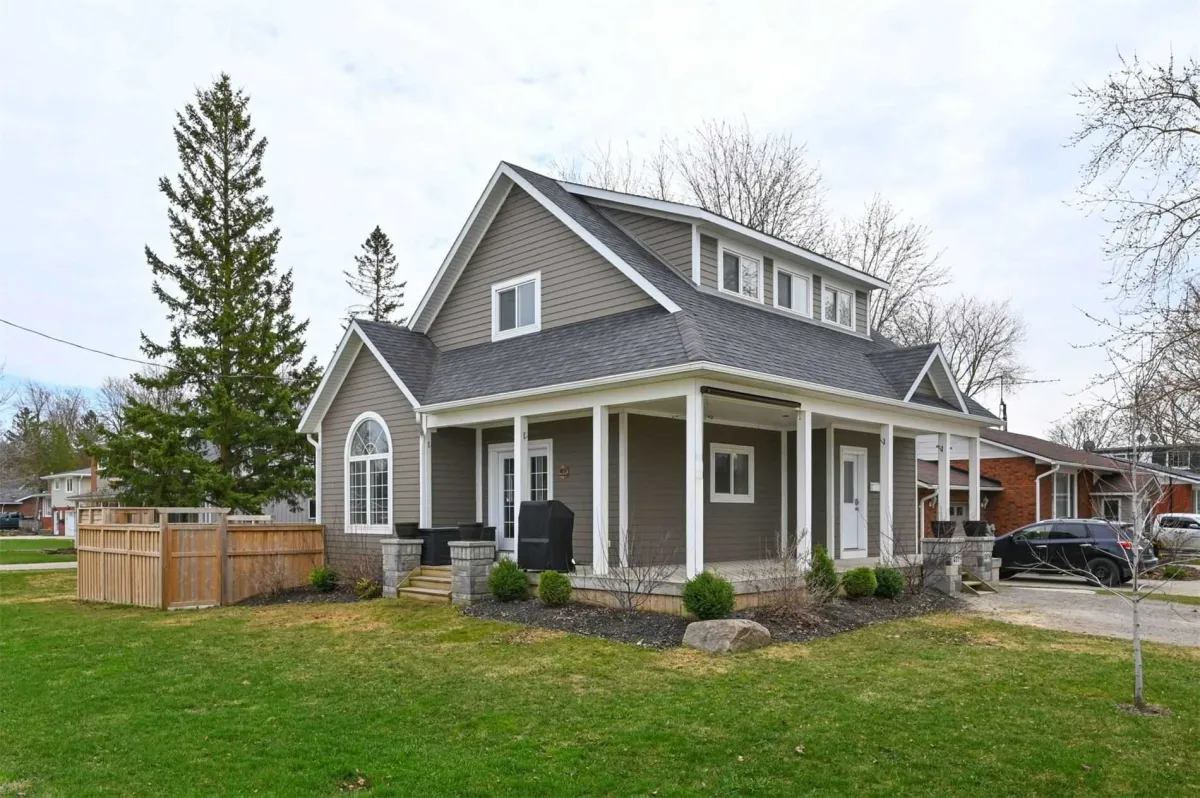
For prospective homeowners, homes for sale in Wellington North offer versatile choices suited to diverse needs. Families often appreciate the community atmosphere, access to schools, and local recreation, while professionals enjoy the balance of peaceful living with convenient travel routes to nearby employment centres.
Whether you’re interested in a character home with historic charm, a modern family residence, or a rural property with room to grow, working with a local Wellington North real estate agent can help you navigate listings, refine your search, and make confident decisions throughout the buying process.
Selling a Home in Wellington North
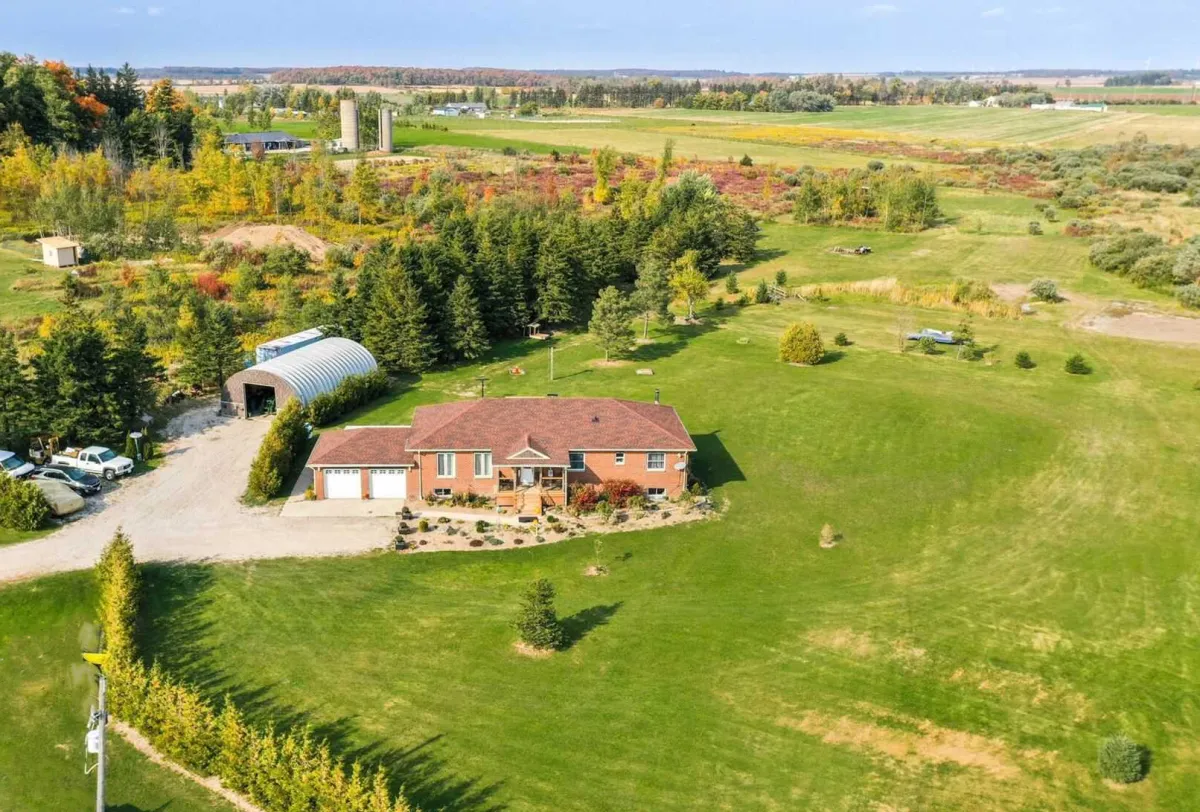
Sellers in Wellington North benefit from the township’s appeal as a welcoming community with rural character and strong neighbourhood identity. Showcasing features such as lot size, heritage details, outdoor space, and proximity to local amenities can help attract motivated buyers.
With the support of an experienced real estate agent familiar with Wellington North’s housing landscape, you’ll be able to market your property effectively, set a competitive price, and manage the selling process with confidence.
Lifestyle & Amenities in Wellington North
Life in Wellington North embraces a relaxed pace and strong sense of community. The township features outdoor recreation, trails, parks, and conservation areas, ideal for walking, cycling, and enjoying the natural environment. Community events, festivals, and local markets help foster connections among residents and celebrate the region’s heritage.
Wellington North’s downtown cores, especially in Arthur and Mount Forest, offer locally owned shops, cafés, bakeries, and services that give the area a welcoming small‑town feel. Residents also have access to essential healthcare, recreational facilities, and schools — making it a comfortable place for families and individuals alike.
Why Choose Kevin Flaherty
Navigating the Wellington North housing market is more effective with the guidance of a trusted real estate agent who understands local trends, community nuances, and property values. Whether you’re buying your first home, selling a long‑time residence, or investing in rural properties, a seasoned agent of 30+ years, Kevin Flaherty provides the insight, strategy, and negotiation support you need to achieve your real estate goals.
FOR SELLERS
Kevin’s exclusive “Home Selling System Team” maximizes the digital exposure of your home utilizing VR animated online showings to create more awareness with the right buyers so you can sell your home faster and for top dollar.
Learn more at 👉 https://Flaherty.ca/seller
FOR BUYERS
Kevin’s 30+ years of real estate experience gives you an unfair advantage when looking, evaluating, selecting and negotiating on every purchase.
Learn more at 👉 https://Flaherty.ca/buyers

Wellington North Township — Where Three Counties Meet
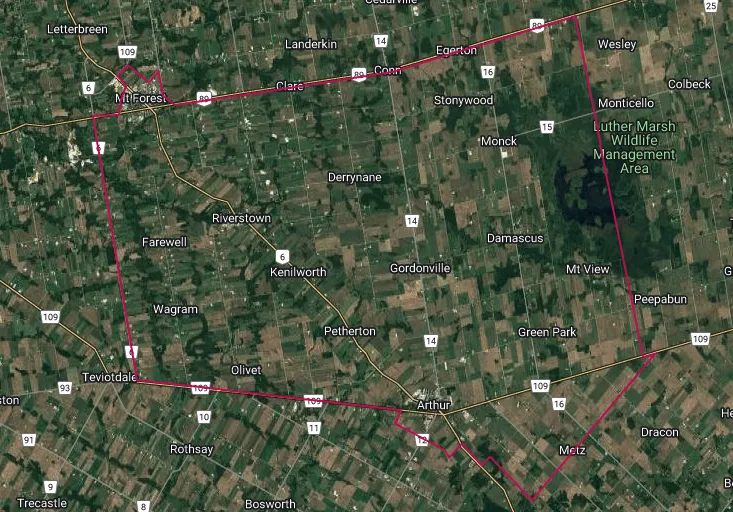
The Township of Wellington North occupies the northern tier of Wellington County, sharing borders with Grey County to the north and Dufferin County to the east. Formed on January 1, 1999, through the amalgamation of Arthur Township, West Luther Township, the Village of Arthur, the Town of Mount Forest, and a portion of West Garafraxa Township, Wellington North covers 526 square kilometres of rolling farmland, river valleys, and small-town streetscapes. Its motto, Semper Porro — Latin for "Forever Forward" — reflects the community's long tradition of self-reliance and civic pride.
The township's official logo, designed by Reg Mason, encodes this identity in symbols: a buggy represents the Mennonite community whose farms and roadside stands are woven into the rural landscape; a great blue heron stands for the phantom of the marsh; grain sheaths speak to the agricultural heritage that has sustained the region since the 1840s. With a population of approximately 12,400 spread across two primary urban centres and a dozen smaller hamlets, Wellington North offers buyers a rare combination of genuine small-town character and practical access to services.
Real estate in Wellington North ranges from century-old brick homes on tree-lined village streets in Arthur and Mount Forest to working farms, hobby acreages, and newer subdivisions. The township sits at the crossroads of Highway 6 and Highway 89, making it accessible to Guelph (75 km), Orangeville (45 km), and Owen Sound (90 km) — a position that increasingly attracts buyers seeking rural living without sacrificing connectivity.
Arthur — "Canada's Most Patriotic Village"
The village of Arthur takes its name from Arthur Wellesley, 1st Duke of Wellington, the British military hero whose victory at Waterloo in 1815 made him one of the most celebrated figures of the 19th century. Settlers began arriving in 1840, drawn by the saw and grist mills on the Conestogo River. By 1841, when surveyor John McDonald made the first official survey, the population stood at just 22 people; by 1900 it had grown to over 1,500. The Arthur Enterprise News, founded in 1863, became one of the few non-syndicated weekly newspapers in Canada — a distinction it maintained for well over a century.
The arrival of the Toronto, Grey and Bruce Railway in 1872 accelerated Arthur's growth and led to its formal incorporation that same year. In 1897, Arthur became one of the first villages in Ontario to be connected to an electricity line — though power was available only in the evenings. The community's most enduring distinction, however, is its wartime record: during the Second World War, one out of every seven Arthur residents enlisted. A total of 338 men and women served, and 25 gave their lives. In 2002, MPP David Tilson formally recognized Arthur as "Canada's Most Patriotic Village" — a title the community carries with quiet pride.
Arthur's most prominent political figure is Ted Arnott (born 1963), who served as MPP for Wellington-Halton Hills from 1990 to 2025 — one of the longest continuous tenures in Ontario legislative history — and held the office of 42nd and 43rd Speaker of the Legislative Assembly of Ontario. The village also produced Rae Luckock (1893–1972), one of the first two women elected to the Ontario Legislature in 1943. Today, Arthur's community centre, fairgrounds, splash pad, and the West Luther Trail system make it a lively hub for families and outdoor enthusiasts alike.
Mount Forest — Carnegie Library, Carnegie Legacy
Mount Forest, the township's largest community with a population of approximately 5,000, sits at the junction of Highway 6 and Highway 89 at an elevation of 430 metres — placing it squarely in the western Dundalk Highlands and making it one of the highest towns in southern Ontario. The community was originally called Maitland Hills, based on the mistaken belief that it sat on the Maitland River system; in fact, it occupies a height of land near the headwaters of the South Saugeen River. Provincial land surveyor Francis Kerr platted the village in 1853, and by 1869 it was described in county directories as "one of the most enterprising villages in the West," with a population of 1,700.
The Toronto, Grey and Bruce Railway arrived in 1871, pulling the first train into Mount Forest behind a wood-burning engine. By 1879, the settlement had grown sufficiently to be incorporated as a town. The Mount Forest Confederate, first printed in 1867, served the community for 152 years before ceasing publication in 2019. In 1913, philanthropist Andrew Carnegie approved a grant of $10,000 for a public library — a building that still anchors the town's cultural life as part of the Wellington County Library system. Mount Forest also holds the distinction of being the first place Aimee Semple McPherson ever preached, and it is the founding home of the Society of Rural Physicians of Canada, an organization that has shaped rural healthcare policy across the country.
The town's hospital, Louise Marshall Hospital, traces its origins to a private 10-bed facility established by Dr. A.R. Perry in the 1920s. Pharmacist Wentworth Marshall purchased the hospital and transferred it to public ownership in 1928, renaming it in honour of his mother Louise, who had served as its supervisor. The hospital remains a cornerstone of healthcare for the entire northern Wellington region. Mount Forest's elevation in the lake-effect snowbelt — averaging nearly 300 centimetres of snowfall annually — makes it one of the snowiest communities in southern Ontario, a fact that shapes both its winter economy and its real estate character.
Kenilworth, the Mennonite Countryside, and Wellington North's Smaller Communities
Kenilworth, named for a pioneer storekeeper who emigrated from Kenilworth, England, has served as the administrative seat of Wellington North Township since amalgamation. Its post office has operated continuously since 1848 — one of the longest unbroken postal records in the county. The community's most celebrated heritage site is the Lynes Blacksmith Shop, a forge and carriage works that operated from 1883 to 1955. Left undisturbed for more than sixty years after closing, the shop was reopened in 2017 as a working heritage attraction offering guided tours of the forge, the family home, a village barn, and a nature trail. Kenilworth also produced William Henry Cushing (1852–1934), who went on to become Alberta's first Minister of Public Works and the 11th Mayor of Calgary — a remarkable trajectory from a rural Wellington County hamlet to the highest levels of western Canadian governance.
Beyond the three main communities, Wellington North's rural landscape is shaped significantly by its Mennonite community — a presence so central to local identity that a horse-drawn buggy appears in the township's official logo. Mennonite farms, roadside produce stands, and furniture workshops are woven through the countryside between Arthur and Mount Forest, offering both a distinctive cultural character and a practical agricultural economy. The communities of Damascus, Derrynane, Farewell, Gordonville, Green Park, Metz, Monck, Olivet, Petherton, Riverstown, and Wagram round out the township's settlement pattern, each preserving a piece of the original Arthur and West Luther township heritage.
The township's natural landscape is anchored by the Conestogo River corridor through Arthur, the South Saugeen River headwaters near Mount Forest, and the West Luther Trail — an 11-kilometre multi-use trail that follows the former railway right-of-way through the western portion of the township. For buyers seeking rural acreages, hobby farms, or properties with river frontage, Wellington North offers consistent inventory at price points that remain meaningfully below those of the Orangeville and Guelph markets to the south.
Wellington North Real Estate — What Buyers and Sellers Need to Know
Wellington North's real estate market divides naturally into three segments. In Mount Forest and Arthur, the primary inventory consists of detached homes on serviced lots — a mix of century-old brick and frame houses, mid-century bungalows, and newer infill construction. Both communities have seen steady demand from buyers relocating from larger urban centres, drawn by the combination of full municipal services, schools, hospitals, and a genuine main-street commercial core at prices well below comparable properties in Guelph or Orangeville.
The rural and agricultural segment — farms, hobby acreages, and rural residential lots — represents a significant share of Wellington North's total inventory. Properties range from working cash-crop and livestock operations to smaller acreages suited to hobby farming, equestrian use, or simply the desire for space and privacy. The Mennonite farming tradition has maintained a high standard of land stewardship across much of the township, and buyers frequently note the quality of the agricultural land and the condition of heritage farm buildings.
Kevin Flaherty serves buyers and sellers throughout Wellington North and the broader northern Wellington / Grey / Dufferin border region. As a member of both the Mount Forest Chamber of Commerce and the Dufferin County Board of Trade, Kevin is embedded in the professional and business communities of both Wellington North and the wider Dufferin-Grey border region. Whether you are purchasing a village home in Arthur, a farm near Kenilworth, or a rural acreage in the West Luther countryside, Kevin's familiarity with the local landscape — and his network across the adjacent Grey and Dufferin County markets — provides a meaningful advantage.
Wellington North — Key Historical Milestones
| Year | Event |
|---|---|
| 1840 | First settlers arrive in Arthur area; Conestogo River mills drive early growth |
| 1848 | Kenilworth post office opens — continuous operation to present day |
| 1851 | Mount Forest post office established; settlement named Maitland Hills |
| 1853 | Francis Kerr surveys Mount Forest village-plot; community renamed Mount Forest |
| 1863 | Arthur Enterprise News founded — one of Canada's few non-syndicated weeklies |
| 1871 | Toronto, Grey and Bruce Railway reaches Mount Forest (wood-burning engine) |
| 1872 | TG&B Railway reaches Arthur; Arthur incorporated as a village |
| 1879 | Mount Forest incorporated as a town |
| 1883 | Lynes Blacksmith Shop opens in Kenilworth (operates until 1955) |
| 1897 | Arthur becomes one of the first Ontario villages to have electricity |
| 1913 | Andrew Carnegie grants $10,000 for Mount Forest Public Library |
| 1928 | Louise Marshall Hospital established as a public institution in Mount Forest |
| 1939–45 | 338 Arthur residents enlist in WWII; 1 in 7 residents served — "Canada's Most Patriotic Village" |
| 1990 | Ted Arnott first elected MPP for Wellington; serves 35 years; becomes 42nd & 43rd Speaker of Ontario Legislature |
| 1999 | Township of Wellington North formed through amalgamation; motto Semper Porro adopted |
| 2017 | Lynes Blacksmith Shop reopens as heritage attraction in Kenilworth |
Frequently Asked Questions — Wellington North Real Estate
What communities are included in Wellington North Township?
Wellington North Township includes the village of Arthur, the town of Mount Forest, and the smaller communities of Kenilworth, Damascus, Derrynane, Farewell, Gordonville, Green Park, Metz, Monck, Mount View, Olivet, Petherton, Riverstown, and Wagram. The township was formed in 1999 through the amalgamation of Arthur Township, West Luther Township, the Village of Arthur, the Town of Mount Forest, and a portion of West Garafraxa Township.
Why is Arthur called "Canada's Most Patriotic Village"?
During the Second World War, one out of every seven Arthur residents enlisted in the Canadian Armed Forces — a per-capita rate of service that was among the highest of any community in the country. A total of 338 men and women from Arthur served, and 25 were killed in action. In 2002, MPP David Tilson formally recognized Arthur with the designation "Canada's Most Patriotic Village."
What is the Carnegie Library in Mount Forest?
In 1913, philanthropist Andrew Carnegie approved a grant of $10,000 for the construction of a public library in Mount Forest. The building was completed that year and has served the community ever since as part of the Wellington County Library system. It remains one of the original Carnegie libraries still in active use in Ontario.
What types of properties are available in Wellington North?
Wellington North offers a broad range of property types: detached village homes (century brick, mid-century bungalows, and newer builds) in Arthur and Mount Forest; working farms and cash-crop operations across the rural township; hobby acreages and rural residential lots; and properties with river frontage on the Conestogo River and South Saugeen River systems. The Mennonite farming tradition has maintained high land stewardship standards across much of the rural landscape.
What is the Lynes Blacksmith Shop in Kenilworth?
The Lynes Blacksmith Shop in Kenilworth operated as a forge and carriage works from 1883 to 1955. After closing, it was left undisturbed for more than sixty years. In 2017, the shop was reopened as a working heritage attraction offering guided tours of the forge, the family home, a unique village barn, and a nature trail. It is one of the most intact 19th-century blacksmith shops remaining in Wellington County.
How far is Wellington North from major urban centres?
Wellington North is approximately 75 kilometres from Guelph, 45 kilometres from Orangeville, 60 kilometres from Kitchener-Waterloo, and 90 kilometres from Owen Sound. Highway 6 and Highway 89 provide direct routes to the south and east, making the township accessible for commuters and buyers seeking rural living within reasonable distance of larger employment centres.
Who is Kevin Flaherty and why does he specialize in Wellington North?
Kevin Flaherty is a real estate professional serving the Wellington, Grey, and Dufferin County region. As a member of both the Mount Forest Chamber of Commerce and the Dufferin County Board of Trade, Kevin is deeply connected to the business and real estate communities of Wellington North and the wider Dufferin-Grey border region. His familiarity with the specific property types, community character, and market dynamics of Wellington North — from village homes in Arthur and Mount Forest to farms and acreages in the rural township — makes him a knowledgeable guide for both buyers and sellers in this market.
What neighbouring communities should Wellington North buyers also consider?
Buyers exploring Wellington North often also consider properties in Southgate Township and Dundalk to the north (Grey County), Grand Valley and Amaranth Township to the east (Dufferin County), and the Erin Township communities to the south. Each of these areas offers a distinct character and price point, and Kevin Flaherty's cross-county expertise allows buyers to compare options across the full northern Wellington / Grey / Dufferin border region.
Explore Wellington North Communities & Nearby Areas

170 Lakeview Court; Unit 3A
Orangeville, ON
L9W 5J7

Not Intended To Solicit Properties Already Listed For Sale.
A HoneyCombHub.ca Web Site Solution
Copyright 2026 . All rights reserved.