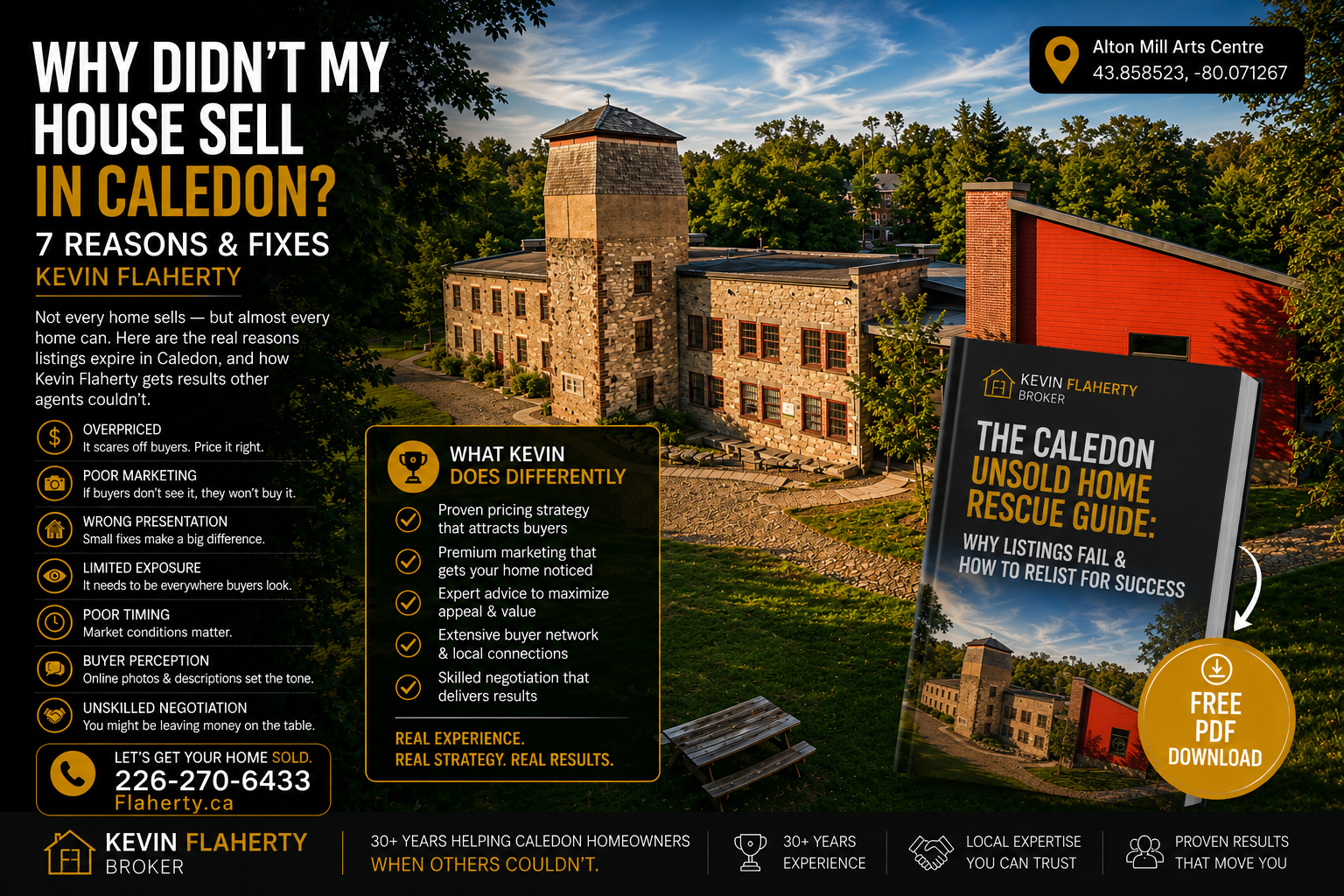
A listing usually stalls because the price, positioning, presentation, exposure, access, timing or feedback response did not match what buyers needed. Diagnose the evidence before you relist so the next campaign is materially different.
Updated 12-minute readReviewed against current RECO guidance
What is the most likely reason your Caledon home did not sell?
The most likely cause is not one isolated defect. It is a mismatch between the listing strategy and current buyer expectations. Start with the original price evidence, online presentation, showing access and repeated feedback. Then correct the combination of issues that buyers actually responded to instead of relaunching the same listing with a new date.
Fast answers for Caledon homeowners with an unsold listing
Why didn't my house sell in Caledon?
Most stalled listings show a mismatch in one or more of seven areas: price, positioning, presentation, exposure, access, timing or the response to buyer feedback. The right diagnosis comes from the listing evidence, not a generic explanation.
Should I lower the price immediately?
Not automatically. First compare the original price with relevant recent sales and current competing homes. If the price was supported, weak presentation, limited access or missing buyer information may have caused the problem.
How soon can I relist with a new brokerage?
Review when the original representation agreement expires or can be terminated, along with any costs and holdover clause. RECO notes that a holdover clause may create a payment obligation after expiry under specified conditions.
What should change before the relaunch?
The new campaign should have a current pricing analysis, a distinct first impression, property-specific media, clear showing access, a written marketing plan and agreed decision points for responding to results.
Will buyers see the previous listing?
Buyer representatives may be able to review prior listing history. A credible relaunch therefore needs material changes in price evidence, presentation or strategy rather than a duplicate listing that only changes the date.
Does the season explain why the home did not sell?
Season and competition can affect demand, but timing is rarely a complete diagnosis. Compare the actual inventory, buyer activity, property presentation and access conditions during the listing period.
What is the best first step after an expired listing?
Run an exit audit using the prior listing, media, price history, activity reports, declined showings, feedback and offers. That evidence should determine the relaunch plan.
Seven reasons a Caledon house may not sell
1
Price and positioning
The asking price may not have matched recent property-relevant sales or the homes buyers compared with yours. Caledon subdivision, village, rural, acreage and estate properties require different evidence.
2
Online visibility
The property may have appeared online without a strong first image, clear buyer benefit, useful description or distribution plan for the likely buyer pool.
3
Photography and video
The media may not have explained the layout, exterior context, land, outbuildings, privacy or lifestyle features that distinguish the property.
4
Condition and documentation
Visible maintenance signals or missing property-specific information may have increased uncertainty. Rural buyers may also need clear well, septic, survey, access or zoning context where applicable.
5
Local and property-type expertise
The pricing and marketing plan may not have reflected the actual Caledon micro-market, buyer profile or property type.
6
Timing and competition
The campaign may have launched into stronger competition or weaker demand without adapting the price, media, access or buyer outreach.
7
Access and feedback response
Declined or difficult showings can reduce opportunity. Repeated feedback also loses value when the strategy does not change after the same concern appears more than once.
How to diagnose the failed campaign
Evidence
Question to answer
Possible response
Low online interest
Was the first impression or price uncompetitive?
Review the primary image, title, buyer benefit and price evidence.
Views but few showings
Did the listing answer the buyer's main concerns?
Improve media, description, documents or showing access.
Showings but no offers
Which objection appeared repeatedly?
Address price, condition, terms, presentation or access.
Offers did not reach agreement
Which price, condition or term prevented a deal?
Review current evidence and the negotiation plan.
Little or inconsistent feedback
Was feedback requested, recorded and interpreted?
Create a written weekly reporting and decision process.
Important: A price reduction is not the only possible correction. A well-supported price can still fail when buyers cannot understand, access or trust the property information.
Review the agreement before you relist
RECO says a seller representation or listing agreement is a written contract between the client and brokerage. It should describe the services, rights and responsibilities, payment, duration and cancellation terms.
Expiry date
The expiry date must appear prominently on the first page. Ontario does not prescribe one standard agreement term.
Services
RECO says there is no standard set of services. Put expected deliverables in the agreement or an attached service schedule.
Termination
Review when the agreement can be terminated and whether penalties, costs or other conditions apply.
Holdover
A holdover clause may require payment after expiry under specified conditions. Review the length and triggers before signing another agreement.
A real estate professional can explain the transaction process. Ask a qualified Ontario lawyer for legal advice or contract interpretation specific to your circumstances.
What a materially different relaunch should include
Exit review
Collect the original listing, media, pricing history, activity reports, showing feedback and offer history.
Current market analysis
Use current sold and active evidence for the property's actual micro-market and buyer pool.
Preparation plan
Prioritize the visible or documented concerns that repeatedly affected buyer confidence.
New positioning and media
Create a distinct first impression and answer the likely buyer's property-specific questions.
Launch and outreach
Coordinate distribution, direct buyer and agent outreach, advertising and showing access.
Weekly decisions
Review measurable results and make planned changes when the evidence supports them.
Flaherty Team service description
Kevin Flaherty describes the team's current plan as professional photography, video-narrated VR animated online showings, distribution to 57+ online locations, direct outreach to a 2,300+ buyer database, buyer-contact coverage and property-specific reporting. Confirm the exact deliverables for your home in the written agreement.
99.2%Sale-to-list ratio52%Faster than market2,300+Buyer database
Owner-approved first-party Flaherty Team claims. Results vary by property, price, timing and market conditions; past performance does not guarantee a future result.
Video guidance for an unsold Caledon home
Why Didn't My House Sell?
A concise explanation of what to review before relaunching.
How to Sell Your House for Top Dollar
Kevin Flaherty's current marketing-plan presentation.
10 Questions to Ask Before Hiring a Realtor
A practical interview framework for comparing written service plans.
How to Avoid Legal Mistakes When Selling
Questions sellers should raise with their real estate professional and lawyer.
Download the rebuilt Caledon Unsold Home Rescue Guide
The eight-page guide includes the seven-point diagnosis, pricing and marketing audits, Ontario agreement and holdover guidance, weekly decision signals, agent interview questions and a relaunch checklist.
Detailed questions before relisting an unsold Caledon home
What records should I collect from the previous campaign?
Collect the listing copy, photos and video, pricing history, online activity reports, showing requests, declined-showing record, written feedback and offer history. These records help separate a price problem from a presentation, access or follow-up problem.
How do I know whether price was the main problem?
Compare the original asking price with relevant recent sales, current competition, buyer feedback and the pattern of views, showings and offers. Repeated price objections supported by comparable evidence are more useful than one opinion.
How should a rural Caledon property be marketed differently?
The campaign should explain land, access, privacy, outbuildings and material systems as clearly as the interiors. Property-specific well, septic, survey, zoning or access information should be organized where it is relevant and available.
Is staging worth considering before a relaunch?
Staging or a focused preparation plan can help when the prior presentation made rooms difficult to understand or repeated feedback identified condition and layout concerns. Prioritize changes by buyer impact rather than renovating by default.
What should the new service schedule include?
It should identify the photography, video, description, distribution, advertising, buyer and agent outreach, showing coordination, reporting cadence and responsibility for recommending changes.
How can a holdover clause affect a new listing?
A holdover clause may create a payment obligation after the original agreement expires under specified conditions. Review the period, triggering circumstances and any overlap before signing another agreement.
What should a relisting agent report each week?
Useful reporting can include online views and saves, inquiries, showing requests and declines, completed showings, repeated feedback, competing listings, new comparable sales and the decision recommended from that evidence.
When should I ask an Ontario lawyer for help?
Ask a qualified Ontario lawyer when you need legal advice or interpretation about termination, holdover, payment obligations, disclosure, title, an offer, a condition or another contract issue specific to your circumstances.
Turn the failed campaign into a written relaunch plan
Kevin Flaherty can review the original listing evidence, current comparable sales, buyer feedback, presentation and agreement terms before recommending the next move.