






Costs of Selling a Home in Mount Forest
The total cost of selling a home in Mount Forest typically runs 5–7% of your sale price — here's every fee broken down so you know your exact net proceeds before you list.
The total cost of selling a home in Mount Forest typically runs 5 to 7 percent of your sale price, covering real estate commissions, legal fees, and moving expenses. Understanding exactly what comes off your top line is the only way to calculate your true net proceeds. If you list your home without a clear picture of these deductions, you risk unexpected shortfalls at closing. My approach is to map out every dollar before you sign a listing agreement, so you know exactly what you will walk away with.
I'm Kevin Flaherty, a broker with eXp Realty, and over 38 years and more than $500M in real estate sold across south-central Ontario, I have helped hundreds of homeowners navigate the financial side of selling. Whether you are upgrading, right-sizing, or relocating out of Wellington North, you need a precise breakdown of real estate commission, legal fees, mortgage discharge penalties, home inspection costs, and staging investments. The goal is to maximize your equity, not just your sale price.
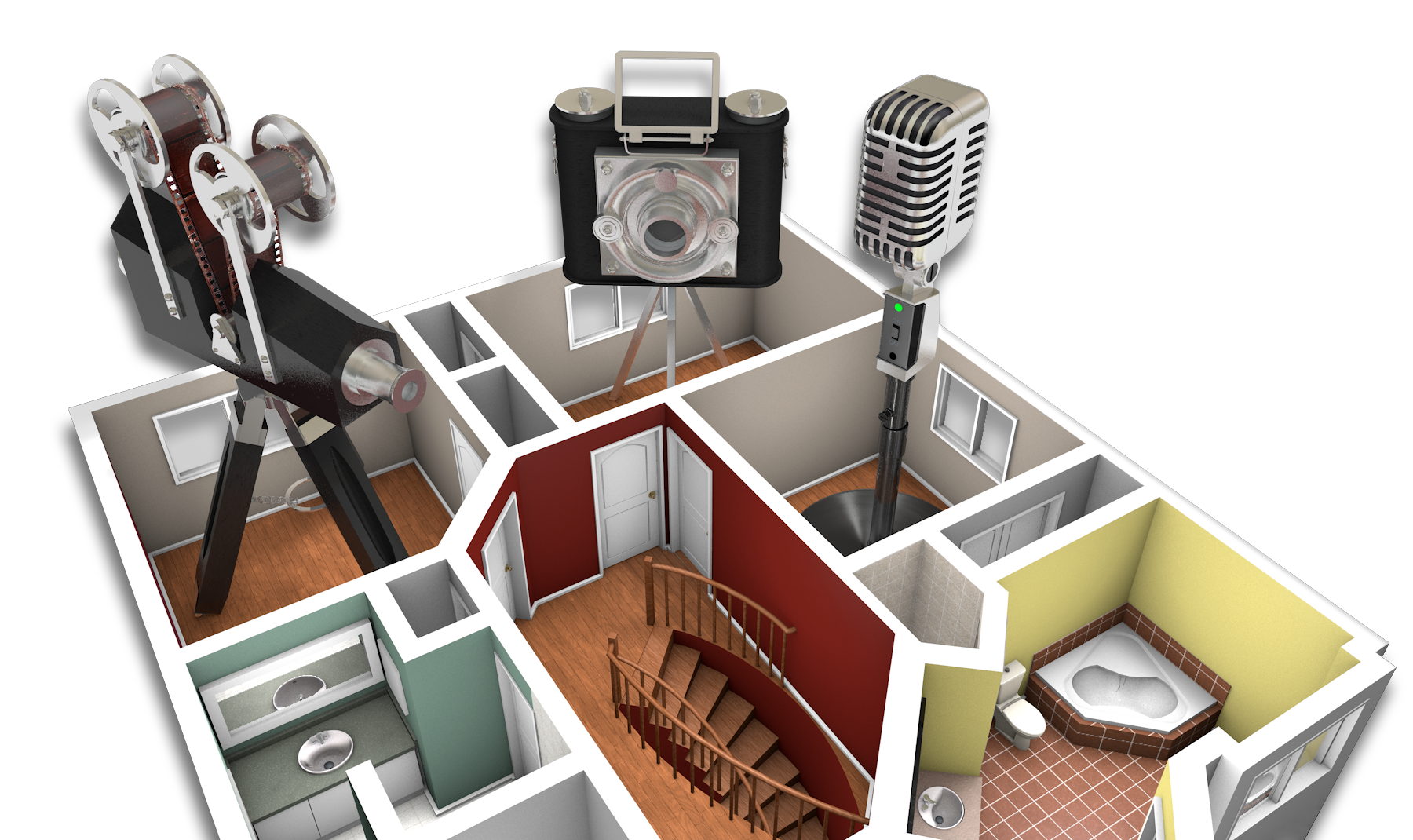
This guide breaks down all the costs sellers face in Mount Forest. We cover pre-listing preparation, marketing and commission structures (including the value of our Video Narrated VR Animated Online Showing system), legal and closing fees, and the financial implications of your mortgage. By the end, you will have a clear framework to calculate your net proceeds and make informed decisions about your sale.
People Also Ask About the Costs of Selling in Mount Forest
How much does it cost to sell a house in Ontario?
Budget roughly 5 to 7 percent of your home's value for the total costs of selling. The largest portion is the real estate commission (typically 3.5 to 5 percent of the sale price, plus HST), followed by legal fees, mortgage discharge penalties, and moving costs. Having a proper home evaluation gives you the baseline to calculate these deductions accurately.
What is the typical realtor commission in Mount Forest?
In Ontario, the total real estate commission usually ranges from 3.5 to 5 percent of the final sale price. This is typically split between the buyer's agent (often 2.5 percent) and the seller's agent (1 to 2.5 percent). The seller pays the total commission from the proceeds of the sale, and it is subject to 13 percent HST.
Do I pay capital gains tax when selling my home?
If the property was your principal residence for every year you owned it, you generally do not pay capital gains tax on the sale. If it was an investment property, a second home, or a rental, 50 percent of the gain is taxable at your marginal rate. Always consult a tax professional to confirm your specific situation.
Who pays the land transfer tax in Ontario?
The buyer pays the land transfer tax, not the seller. However, as a seller, it is important to understand this cost if you are purchasing your next home simultaneously. If you are buying another property in Ontario, you will need to budget for the provincial land transfer tax on that new purchase.
How much are legal fees to sell a house?
Real estate lawyer fees for selling a home in Ontario generally range from $1,000 to $2,000, plus $300 to $600 in disbursements for title searches, document preparation, and registrations. Your lawyer handles the transfer of funds, pays off your mortgage, and ensures all closing adjustments are settled correctly.
Watch: A Backstage Tour of the Seller Marketing Plan
This video is a backstage tour of the seller marketing plan. It shows how Video Narrated VR Animated Online Showings highlight all of a home's key features and benefits online — where buyers shortlist homes they are willing to go see. It does NOT discuss pricing or negotiation; it focuses on marketing exposure and the VR system.
How to Get Top Dollar for Your House
A backstage tour of the seller marketing plan, showing how Video Narrated VR Animated Online Showings highlight all of a home's key features and benefits online — where buyers shortlist homes they are willing to go see.
The Complete Breakdown of Home Selling Costs in Mount Forest
Phase 1: Pre-Listing and Preparation Costs
Before your home hits the market, you may choose to invest in preparation to maximize your sale price. These costs are optional but often yield a high return on investment. Deep cleaning, decluttering, and fresh neutral paint are the most cost-effective improvements. If your home is vacant or needs modernizing, professional staging can help buyers visualize the space, though costs vary based on the size of the home and the amount of rented furniture.
In rural areas of Wellington North, pre-listing inspections are highly recommended. A general home inspection ($300 to $600) identifies issues before buyers find them. For rural properties, buyers will expect a well water potability test, a septic system inspection and pump-out, and a WETT certificate if you have a wood-burning stove or fireplace. Addressing these upfront prevents buyers from using them as leverage to reduce the price later.
Phase 2: Real Estate Commission and Marketing
The largest cost of selling is the real estate commission, which covers the marketing, negotiation, and management of your sale. In Ontario, this typically ranges from 3.5 to 5 percent of the sale price, split between the buyer's agent and the seller's agent. You must also pay 13 percent HST on the commission amount (not the sale price).
While some sellers consider discount brokerages to save on commission, the goal should be maximizing your net proceeds, not just minimizing fees. A full-service approach that includes our proprietary Video Narrated VR Animated Online Showing generates maximum exposure. By syndicating your listing widely and allowing buyers to explore the home virtually, we create the competition necessary to drive the sale price up, often offsetting the cost of the commission entirely.
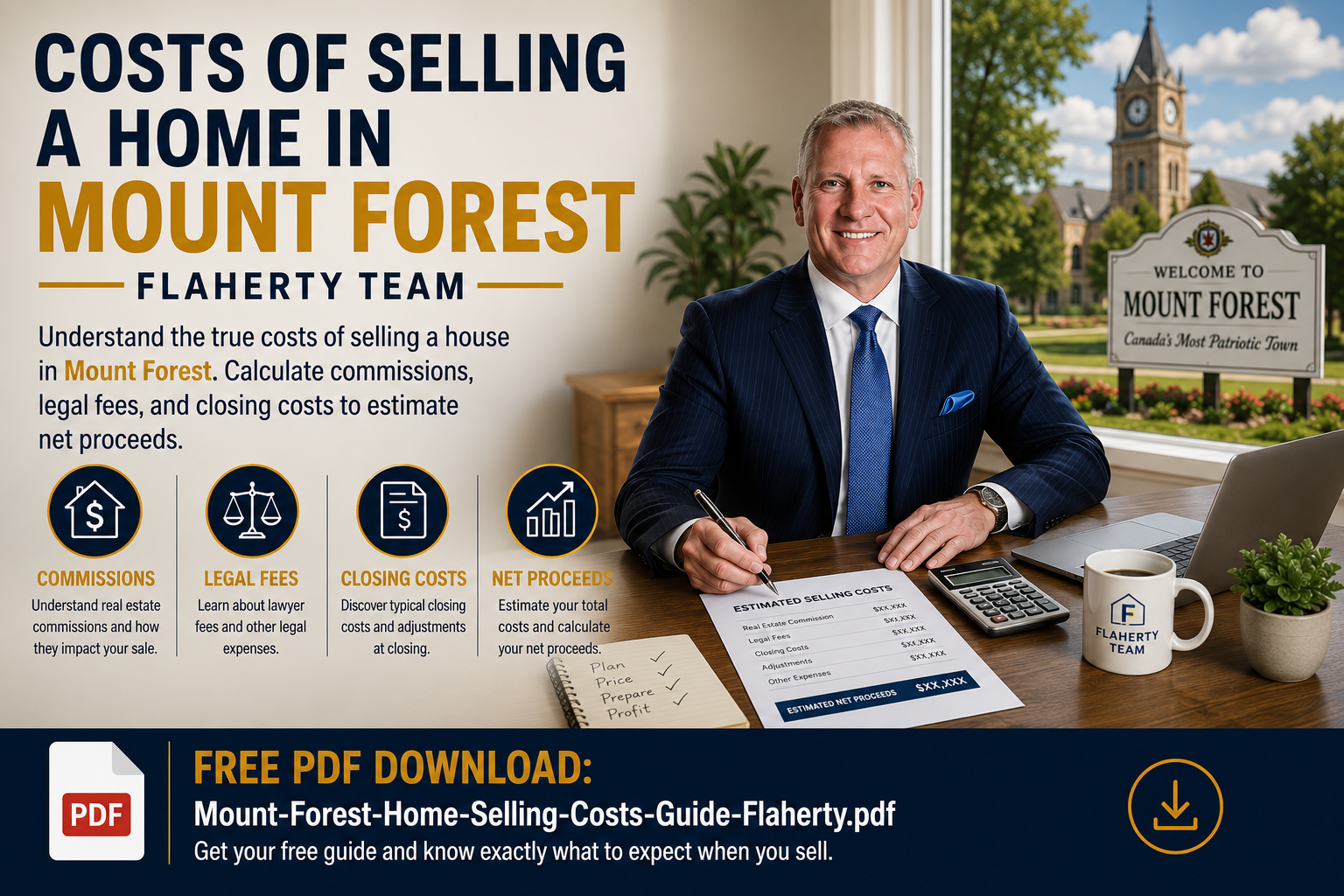
Click the image to download your free Mount Forest Home Selling Costs Guide.
Phase 3: Legal Fees and Closing Adjustments
You must hire a real estate lawyer to close the sale. Legal fees generally range from $1,000 to $2,000, plus disbursements (typically $300 to $600) for document preparation and registrations. Your lawyer ensures the buyer's funds are received, pays off your existing mortgage, and deducts the real estate commission before transferring the net proceeds to you.
Your lawyer will also prepare a Statement of Adjustments. This calculates any prepaid expenses, such as property taxes or heating fuel (like a full propane tank on a rural property). If you have paid your property taxes for the full year but close in July, the buyer will reimburse you for the remaining months. If you are selling a condominium, you will also need to provide a status certificate, which is capped at $100 under the Ontario Condominium Act.
Phase 4: Mortgage Discharge and Financial Penalties
If you have an existing mortgage on the property, it must be paid off from the proceeds of the sale. Most lenders charge a discharge fee of $250 to $500 to remove the mortgage from the property's title. The more significant cost is the prepayment penalty if you are breaking your mortgage term early.
For a variable-rate mortgage, the penalty is typically three months of interest. For a fixed-rate mortgage, the penalty is usually the greater of three months of interest or the Interest Rate Differential (IRD). The IRD can be substantial, sometimes thousands of dollars, so it is critical to contact your lender early in the process to request a payout statement and understand your exact penalty.
Phase 5: Moving and Transition Costs
The final costs occur after the sale is firm. Moving expenses vary wildly depending on whether you pack and move yourself or hire full-service professionals. Budget at least a few hundred dollars for packing supplies, and potentially several thousand if you are hiring a moving company for a large family home. Booking movers early, especially for a closing date at the end of the month, can help secure better rates.
If your closing dates do not align perfectly, you may need bridge financing to cover the down payment on your next home while waiting for the funds from your Mount Forest sale. Your lender will charge interest and administrative fees for this short-term loan. Understanding these transition costs ensures you have the liquidity needed to manage the move smoothly.
Phase 6: Calculating Your Net Proceeds
To calculate your true net proceeds, start with your expected sale price. Subtract your remaining mortgage balance, the real estate commission (plus HST), your lawyer's fees and disbursements, your mortgage discharge fee and penalty, and your estimated moving costs. The remaining figure is your usable equity.
Because the starting point of this calculation is the sale price, accuracy is essential. A professional home evaluation provides a realistic market value based on recent comparable sales, giving you a solid foundation for your financial planning. Knowing your exact net proceeds allows you to shop for your next home with absolute confidence.
Net Proceeds Calculator
Estimate how much you will walk away with after selling your Mount Forest home. Enter your numbers below.
The Flaherty Advantage for Mount Forest Sellers
When you work with the Flaherty Team, we focus on maximizing your net proceeds through strategic marketing and expert negotiation:
- Experience That Matters: Kevin Flaherty brings 38 years of experience and over $500M in real estate sold, providing accurate pricing and clear financial guidance.
- Maximum Exposure: Your home is showcased with a proprietary Video Narrated VR Animated Online Showing and syndicated widely so qualified buyers see it first.
- Higher Sale Prices: The Flaherty Team sells homes for 99.2% of market value, putting an average of $13,358 more in their clients' pockets compared to average agents.
- Faster Results: We sell homes 52% faster than the average days on market, reducing carrying costs and the stress of a prolonged listing.
Essential Viewing for Mount Forest Sellers
10 Questions You Should Ask Before Hiring A REALTOR
Make sure you hire the right professional to maximize your net proceeds.
Why Didn't My House Sell?
Common pitfalls that cause homes to sit unsold — and how to avoid them.
How to Avoid Legal Mistakes When Selling
Protect yourself during the sale — Ontario's TRESA regulations require full disclosure.
Passing the Building Inspection
What inspectors look for and how to prepare an older family home for scrutiny.
What Our Clients Say
Read more success stories at flaherty.ca/reviews.
Resources for Mount Forest Sellers
Related Guides for Mount Forest Sellers
Explore Wellington North Communities
Frequently Asked Questions About the Costs of Selling a Home
How much does it cost to sell a house in Mount Forest?
Budget roughly 5 to 7 percent of your home's value for the total costs of selling. The largest portion is the real estate commission (typically 3.5 to 5 percent of the sale price, plus HST), followed by legal fees, mortgage discharge penalties, and moving costs. Kevin Flaherty recommends getting a proper home evaluation first, as it provides the baseline needed to calculate these deductions accurately.
What is the typical real estate commission in Ontario?
In Ontario, the total real estate commission usually ranges from 3.5 to 5 percent of the final sale price. This is typically split between the buyer's agent (often 2.5 percent) and the seller's agent (1 to 2.5 percent). The seller pays the total commission from the proceeds of the sale.
Is there HST on real estate commission?
Yes. In Ontario, the real estate commission is subject to 13 percent HST. It is important to note that the HST is charged on the commission amount itself, not on the total sale price of the home.
Do I pay capital gains tax when selling my home?
If the property was your principal residence for every year you owned it, you generally do not pay capital gains tax on the sale. If it was an investment property, a second home, or a rental, 50 percent of the gain is taxable at your marginal rate. Always consult a tax professional to confirm your specific situation.
Who pays the land transfer tax in Ontario?
The buyer pays the land transfer tax, not the seller. However, if you are selling your current home and buying another property in Ontario, you will need to budget for the provincial land transfer tax on your new purchase.
How much are legal fees to sell a house?
Real estate lawyer fees for selling a home in Ontario generally range from $1,000 to $2,000, plus $300 to $600 in disbursements for title searches, document preparation, and registrations. Your lawyer handles the transfer of funds, pays off your mortgage, and ensures all closing adjustments are settled correctly.
What is a mortgage discharge fee?
A mortgage discharge fee is an administrative charge from your lender to remove the mortgage from the property's title once it is paid off. This fee typically ranges from $250 to $500 and is deducted from your sale proceeds by your lawyer at closing.
How is the mortgage prepayment penalty calculated?
If you break your mortgage term early, you will pay a penalty. For a variable-rate mortgage, it is typically three months of interest. For a fixed-rate mortgage, it is usually the greater of three months of interest or the Interest Rate Differential (IRD). Kevin Flaherty advises sellers to contact their lender early for a payout statement, as the IRD can sometimes be thousands of dollars.
Do I need a survey to sell my house in Mount Forest?
A property survey is not legally required to sell a house in Ontario, but buyers may request one, especially for rural or acreage properties in Wellington North. If you do not have an existing survey, you are not obligated to pay for a new one unless it is negotiated as a condition in the Agreement of Purchase and Sale.
What is a status certificate and who pays for it?
If you are selling a condominium, you must provide a status certificate to the buyer. It details the financial health and rules of the condo corporation. Under the Ontario Condominium Act, the fee for this document is capped at $100 (inclusive of HST), and it is paid by the seller.
Is a pre-listing home inspection worth the cost?
A pre-listing inspection typically costs $300 to $600. In Kevin Flaherty's experience, it is often a smart investment, particularly for older or rural homes. It allows you to identify and fix issues before buyers find them, preventing last-minute price reductions or collapsed deals.
What rural-specific costs should I expect in Wellington North?
Buyers of rural properties will expect assurances about the water and waste systems. You may need to pay for a well water potability test, a septic system inspection and pump-out, and a WETT certificate if you have a wood-burning stove. Addressing these upfront builds buyer confidence.
How are property taxes handled at closing?
Property taxes are prorated. Your lawyer will prepare a Statement of Adjustments. If you have prepaid your property taxes for the entire year but sell the home in July, the buyer will reimburse you for the remaining months. If you are in arrears, the amount owed will be deducted from your proceeds.
Should I pay for professional staging?
Staging can help buyers visualize the space and often leads to a higher sale price, but it is an upfront cost. Kevin Flaherty helps clients evaluate whether full staging, partial staging, or simply deep cleaning and decluttering will provide the best return on investment for their specific property.
How much should I budget for moving costs?
Moving costs vary widely. If you pack and move yourself, budget a few hundred dollars for supplies and a truck rental. Hiring full-service professional movers for a large family home can cost several thousand dollars. Booking early, especially near month-end, can help secure better rates.
What is bridge financing and what does it cost?
If you buy your next home before the sale of your current home closes, you may need bridge financing to cover the down payment. Lenders charge interest for the days you hold the loan, plus an administrative setup fee (often $200 to $500). Your lawyer will also charge a fee to register the bridge loan.
Can I reduce the costs of selling by using a discount brokerage?
While discount brokerages charge lower commission rates, the goal should be maximizing your net proceeds, not just minimizing fees. A full-service approach generates maximum exposure and competition, which drives the sale price up. In Kevin Flaherty's experience, the higher sale price achieved through aggressive marketing often outweighs the savings of a discounted commission.
What is a Video Narrated VR Animated Online Showing?
It is a proprietary marketing tool that provides an immersive, narrated virtual tour, allowing buyers to explore your home in detail online before booking a visit. This builds emotional attachment early and ensures that the buyers who do visit are serious and pre-qualified.
How do I calculate my net proceeds?
Start with your expected sale price, then subtract your remaining mortgage balance, the real estate commission (plus HST), your lawyer's fees and disbursements, your mortgage discharge fee and penalty, and your estimated moving costs. The remaining figure is your usable equity.
Do I have to pay for repairs before selling?
You are not obligated to make repairs, but selling a home "as-is" usually results in a lower sale price. Kevin Flaherty advises clients to focus on high-impact, low-cost improvements like fresh paint and fixing obvious deferred maintenance, rather than undertaking major renovations before listing.
What happens if the buyer's appraisal comes in low?
If the appraisal is lower than the agreed purchase price, the buyer may struggle to secure financing. They might ask you to lower the price, or they may have to walk away if they have a financing condition. Accurate initial pricing based on recent comparables is the best way to prevent this issue.
Who pays for title insurance?
Title insurance protects against fraud, liens, or title defects. It is a one-time premium (typically $200 to $500) that is almost always paid by the buyer, not the seller. Your lawyer will arrange this policy during the closing process.
Are there hidden costs I should watch out for?
The most common "hidden" cost is the mortgage prepayment penalty, specifically the Interest Rate Differential (IRD), which can surprise sellers. Kevin Flaherty always coaches sellers to verify their exact penalty with their lender before listing, so there are no shocks at the closing table.
How do I get an accurate estimate of my selling costs?
The first step is determining your home's current market value. Once you have an accurate expected sale price, you can calculate the commission, legal fees, and other deductions. You can start by requesting a free home evaluation from Kevin Flaherty to get the baseline numbers for your net proceeds calculation.

About Kevin Flaherty
Kevin Flaherty is a broker with eXp Realty and over 38 years of experience serving south-central Ontario, with over $500M in real estate sold. He specializes in strategic marketing that helps sellers maximize their net proceeds, using proprietary Video Narrated VR Animated Online Showings to give every listing maximum exposure. His calm, step-by-step approach turns a major life transition into a clear and profitable move.
Call Kevin directly: 226-270-6433
Download the Home Selling Costs Guide