




Selling Rural Property in Wellington North
Your expert guide to selling acreage, country homes, and rural lots in Wellington North. Learn how to handle septic, wells, zoning, and surveys, and how to attract GTA buyers with Video Narrated VR Animated Online Showings.
Selling rural property in Wellington North is a different exercise than selling an in-town home, and treating the two the same way is the most common reason an acreage sits on the market. With over 38 years of experience and over $500M in real estate sold across south-central Ontario, I have learned that a country property is not just a house. It is a bundle of private systems, land-use rights, outbuildings, and lifestyle potential, and every one of those elements has to be documented and marketed deliberately to reach the right buyer.
The buyers most likely to fall in love with your property are not necessarily living down the road. Many of them are in the GTA, looking to trade congestion for space, privacy, and a slower pace of life. The challenge is that they cannot judge a forty-acre parcel, a refurbished barn, or a long private laneway from a handful of phone photos. They need to understand the layout of the land, the condition of the well and septic, and exactly what the zoning allows before they will commit to the drive north to Wellington North for a showing.
In this guide I will walk you through everything that makes a rural sale unique: the documentation buyers demand, septic and well due diligence, zoning and land-use verification, survey and boundary considerations, easements and access, conservation authority restrictions, and how our proprietary Video Narrated VR Animated Online Showings let serious buyers tour your property remotely before they ever set foot on the soil.
People Also Ask About Selling Rural Property
Do rural properties take longer to sell than in-town homes?
Often, yes. The buyer pool for acreage and country homes is smaller and more targeted than for a subdivision house, so rural listings can take longer when they are marketed conventionally. The fix is reach: presenting the property to out-of-area buyers through video and online tours dramatically widens the pool and shortens the time on market.
Do I need a septic inspection to sell a house in Ontario?
There is no single province-wide rule requiring a septic inspection on every sale, but in practice buyers, lenders, and insurers treat septic like structural risk. A clean pre-listing septic inspection removes a major objection and prevents a deal from collapsing during the buyer's conditional period, which is why most rural sellers should get one before listing.
What documents do buyers want for a rural property?
Buyers expect a survey, septic records or a recent inspection, well records and a water quality and flow test, permits for additions and outbuildings, the WETT certificate for any wood-burning appliance, and confirmation of zoning. Gathering these before listing signals a well-maintained property and keeps the closing on schedule.
How do you market a country home to city buyers?
You show them the whole property, not just the kitchen. High-altitude drone photography reveals the lot lines, outbuildings, and setting, while a narrated virtual tour walks remote buyers through the home and grounds. This lets GTA buyers experience the property online and arrive at a showing already serious.
Do outbuildings and barns add value when selling?
A solid, functional barn, shop, or detached garage adds real value because a buyer can use it immediately, while a run-down structure adds little and may even raise concerns. The key is presenting outbuildings as usable assets, with clear access and any permits documented, so buyers see workshop, hobby, or storage potential.
Watch: A Backstage Tour of the Seller Marketing Plan
This video is a backstage tour of the seller marketing plan. It shows how Video Narrated VR Animated Online Showings highlight all of a home's key features and benefits online — where buyers shortlist homes they are willing to go see. For rural sellers, this is the tool that lets GTA buyers experience your acreage, outbuildings, and setting before they commit to the drive. It does NOT discuss pricing or negotiation; it focuses on marketing exposure and the VR system.
How to Get Top Dollar for Your House
A backstage tour of the seller marketing plan, showing how Video Narrated VR Animated Online Showings highlight all of a home's key features and benefits online — where buyers shortlist homes they are willing to go see.
The 5-Step Process for Selling Rural Property in Wellington North
A successful rural sale follows a deliberate sequence. Rushing to list before your documentation and systems are in order is how acreage ends up sitting unsold while buyers move on to better-prepared properties. Here is the process I walk every Wellington North seller through.
Step 1: Gather Your Property Documentation
Long before a sign goes up, assemble the paper trail that rural buyers and their lawyers will ask for. This means locating your most recent survey, the deed and any registered easements, septic permits and pump-out receipts, well records, permits for additions and outbuildings, the property tax statement, and any conservation authority correspondence. A buyer who can see that the property has been documented and maintained negotiates far less aggressively than one who is met with shrugs and missing paperwork.
If your property has been in the family for decades, some of these records may be incomplete. That is normal, and it is not fatal, but it is far better to discover a missing survey or an undocumented septic alteration now than during the buyer's conditional period. Identifying gaps early gives us time to order a new survey or a file search before they become deal-breaking surprises.
Step 2: Verify Your Septic, Well, and Other Private Systems
On a rural property, the systems the municipality would normally provide are yours to prove. The septic system, the well, the heating fuel, and any wood-burning appliance all need to be in verified, documented condition. A failing septic system can cost tens of thousands of dollars to replace, and a buyer who suspects a problem will either walk away or price that risk into a lowball offer. A clean pre-listing inspection turns that uncertainty into confidence. We will look at this in detail in the next section.
Step 3: Confirm Zoning and Land-Use Rights
Buyers do not just buy the house; they buy what they are allowed to do with the land. Before listing, confirm your zoning designation with the Township of Wellington North and understand whether the property is Agricultural, Rural Residential, or another classification. Whether a buyer can keep horses, run a home-based business, build a secondary dwelling, or sever a lot all flows from zoning. Marketing a property's potential accurately, without overpromising, is one of the most important things a rural Realtor does.
Step 4: Prepare the Property and the Marketing Assets
Rural preparation goes beyond decluttering the house. The approach to the property, the laneway, the outbuildings, and the grounds all shape a buyer's first impression. Tidy the barn and shop so they read as usable assets rather than liabilities, clear the laneway, and make sure the home itself is clean, bright, and depersonalized. This is also when we create the marketing assets that do the heavy lifting: high-altitude drone photography, professional interior photography, and the Video Narrated VR Animated Online Showings that let distant buyers experience the entire property online.
Step 5: Launch With Maximum Exposure and Manage the Sale
When the property goes live, it should reach every potential buyer from day one, not just the handful watching the local market. We syndicate the listing widely and put it in front of GTA buyers who are actively searching for exactly this lifestyle. From there, the work is managing showings, collecting feedback, evaluating offers on more than just price, and coordinating the rural-specific conditions, septic, well, and inspection, through to a smooth closing.
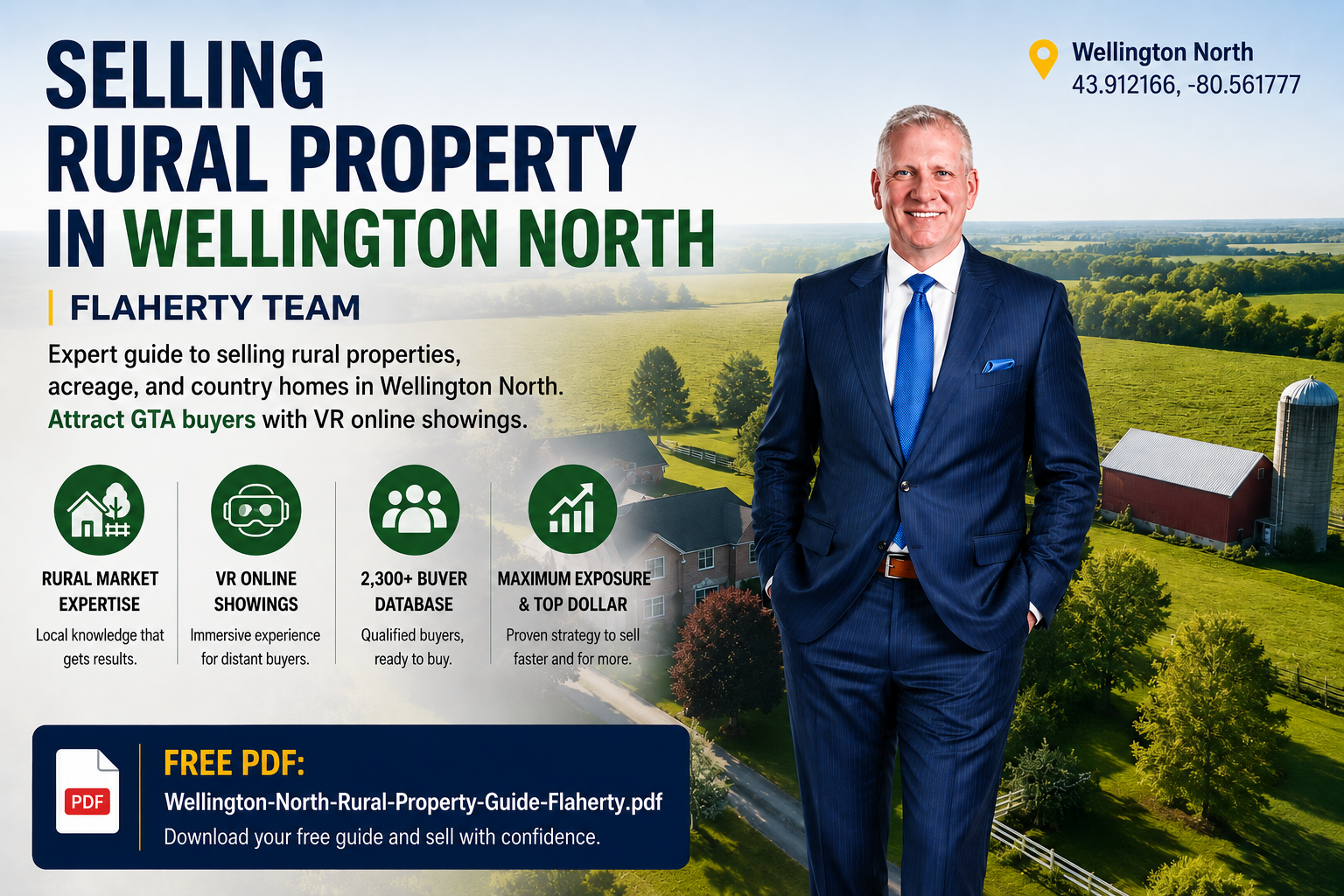
Click the image to download your free Wellington North Rural Property Guide.
Septic, Wells, Zoning, and the Land Itself
The technical due-diligence phase is where most rural deals are won or lost. The more of this you handle before listing, the stronger your position when offers arrive. Here is what matters most for a Wellington North country property.
Septic Systems: Get Ahead of the Inspection
In Ontario, septic systems are regulated under the Building Code and have a legal design capacity tied to the home. Buyers increasingly treat a 20-plus-year-old system as a potential five-figure expense, so a recent inspection report and pump-out records are powerful reassurance. If an inspection turns up a problem, it does not have to end the sale; you can repair it before closing or negotiate a holdback. The worst outcome is being caught unaware during the buyer's conditional period, when you have the least leverage.
Wells and Water: Prove Quality and Quantity
Buyers want to know two things about a well: is the water safe, and is there enough of it. Public Health Ontario offers free bacterial testing, and a 24-hour flow test demonstrates that the well can sustain a modern household. Providing recent water quality results and a flow test up front removes one of the biggest sources of rural-buyer anxiety. If the water has high mineral content or a past bacterial reading, that is usually remediable with filtration or treatment, and documenting the solution is far better than leaving the buyer to imagine the worst.
Zoning: Agricultural vs. Rural Residential
Zoning determines value because it determines use. An Agricultural designation supports farming and certain on-farm uses, while a Rural Residential lot is oriented toward country living. The distinction affects who your buyer is and what they will pay. Buyers also frequently ask about severance, the ability to split off a new lot, which in rural Ontario is often limited and difficult to obtain. Setting accurate expectations about what the zoning allows protects the deal and your credibility.
| Rural Factor | Why Buyers Care | What to Prepare Before Listing |
|---|---|---|
| Septic System | Replacement can cost tens of thousands; a failure can stall financing. | Recent inspection report, permits, and pump-out receipts. |
| Well & Water | Buyers need proof the water is safe and the supply is adequate. | Water quality test plus a 24-hour flow/recovery test. |
| Zoning & Land Use | Determines what a buyer can legally do with the land. | Confirm designation with the Township; clarify permitted uses. |
| Survey & Boundaries | Defines exactly what is being sold and prevents disputes. | Locate the most recent survey or commission a new one. |
| Easements & Access | Shared laneways and rights-of-way affect use and value. | Gather registered easement documents and access agreements. |
| Conservation Authority | Wetlands and floodplains can restrict building and expansion. | Identify any regulated areas and related correspondence. |
| Outbuildings | Functional barns and shops add value; tired ones do not. | Document permits; present structures as usable assets. |
| WETT (Wood Heat) | Insurers often require it for wood stoves and fireplaces. | Obtain a current WETT inspection certificate. |
Surveys, Easements, and Conservation Considerations
A current survey is one of the most valuable documents a rural seller can provide. It defines precisely what is being sold, settles questions about boundaries and encroachments, and reassures a buyer about exactly where the fence lines, outbuildings, and laneway sit. Easements and rights-of-way, common on rural parcels where a neighbour or utility crosses the land, should be documented and explained rather than glossed over, because buyers discover them anyway during their lawyer's title search. Finally, if any part of the property falls within a regulated wetland, floodplain, or conservation authority jurisdiction, those restrictions can limit where a buyer builds or expands, and clear disclosure prevents a last-minute collapse of the deal.
The Flaherty Advantage for Rural Sellers
When you list your Wellington North rural property with the Flaherty Team, you benefit from a marketing system built to reach the targeted, often out-of-area buyers who pay the most for country properties:
- Sell for More: We sell homes for 99.2% of market value, putting an average of $13,358 more in our clients' pockets compared to average agents.
- Sell Faster: Our listings sell 52% faster than the average days on market — a meaningful edge in the smaller rural buyer pool.
- Reach GTA Buyers: Our Video Narrated VR Animated Online Showings let city buyers tour your acreage and outbuildings remotely before they drive north.
- Unmatched Exposure: Your property's custom webpage is syndicated to over 57 locations online, supported by a dedicated team of 8 marketing specialists.
Essential Viewing for Rural Sellers
10 Questions You Should Ask Before Hiring A REALTOR
Selling acreage takes specialized experience — make sure you are hiring the right professional for a rural sale.
Why Didn't My House Sell?
Common pitfalls that cause rural and in-town homes to expire on the market, and how to avoid them.
How to Avoid Legal Mistakes When Selling
Disclosure matters even more on rural property — Ontario's TRESA regulations require full disclosure of known issues.
Passing the Building Inspection
What inspectors look for on rural properties, including septic, wells, and wood-heat appliances.
What Our Clients Say
Read more success stories at flaherty.ca/reviews.
Resources for Wellington North Rural Sellers
Related Guides for Wellington North Sellers
Frequently Asked Questions About Selling Rural Property in Wellington North
What makes selling rural property in Wellington North different from selling an in-town home?
A rural sale is fundamentally different because you are selling private systems and land-use rights, not just a house. Buyers scrutinize the septic, well, zoning, survey, easements, and outbuildings, and the buyer pool is smaller and more targeted. Kevin Flaherty approaches every Wellington North country property as a bundle of assets, documenting the systems and the land so the property reaches the right buyers, including those relocating from the GTA, and sells for what it is truly worth.
Do rural properties take longer to sell than homes in town?
Often yes, when they are marketed conventionally, because the buyer pool for acreage is smaller and more specific. The solution is reach rather than discounting the price. By presenting the property to out-of-area buyers through drone photography and Video Narrated VR Animated Online Showings, the audience widens dramatically and the right buyer surfaces faster.
Do I need a septic inspection before selling a rural home in Ontario?
Not by a single blanket law, but in practice you should get one. Buyers, lenders, and insurers treat septic like structural risk, and a 20-plus-year-old system is viewed as a potential five-figure expense. A clean pre-listing inspection removes that objection, while discovering a problem during the buyer's conditional period leaves you with the least negotiating leverage.
How do I prove my well is adequate for a buyer?
You provide two things: a water quality test showing the water is safe, and a flow or recovery test showing the supply can sustain a modern household. Public Health Ontario offers free bacterial testing, and a 24-hour flow test provides the quantity data buyers want. Supplying both up front removes one of the biggest sources of rural-buyer anxiety.
What documents should I gather before listing my acreage?
Start with the survey, deed, and any registered easements, then add septic permits and pump-out receipts, well records, water test results, permits for additions and outbuildings, a WETT certificate for wood-burning appliances, the property tax statement, and any conservation authority correspondence. Kevin Flaherty has seen deals fall apart over a missing survey or undocumented septic alteration, so he helps sellers identify and fill these gaps before the property ever goes live.
How do you market a Wellington North country home to GTA buyers?
You give them a way to experience the whole property remotely. High-altitude drone photography reveals the lot lines, outbuildings, and setting, while a narrated virtual tour walks them through the home and grounds room by room. This lets city buyers shortlist and emotionally commit to the property online, so the ones who make the drive north arrive already serious.
Why are Video Narrated VR Animated Online Showings so valuable for rural listings?
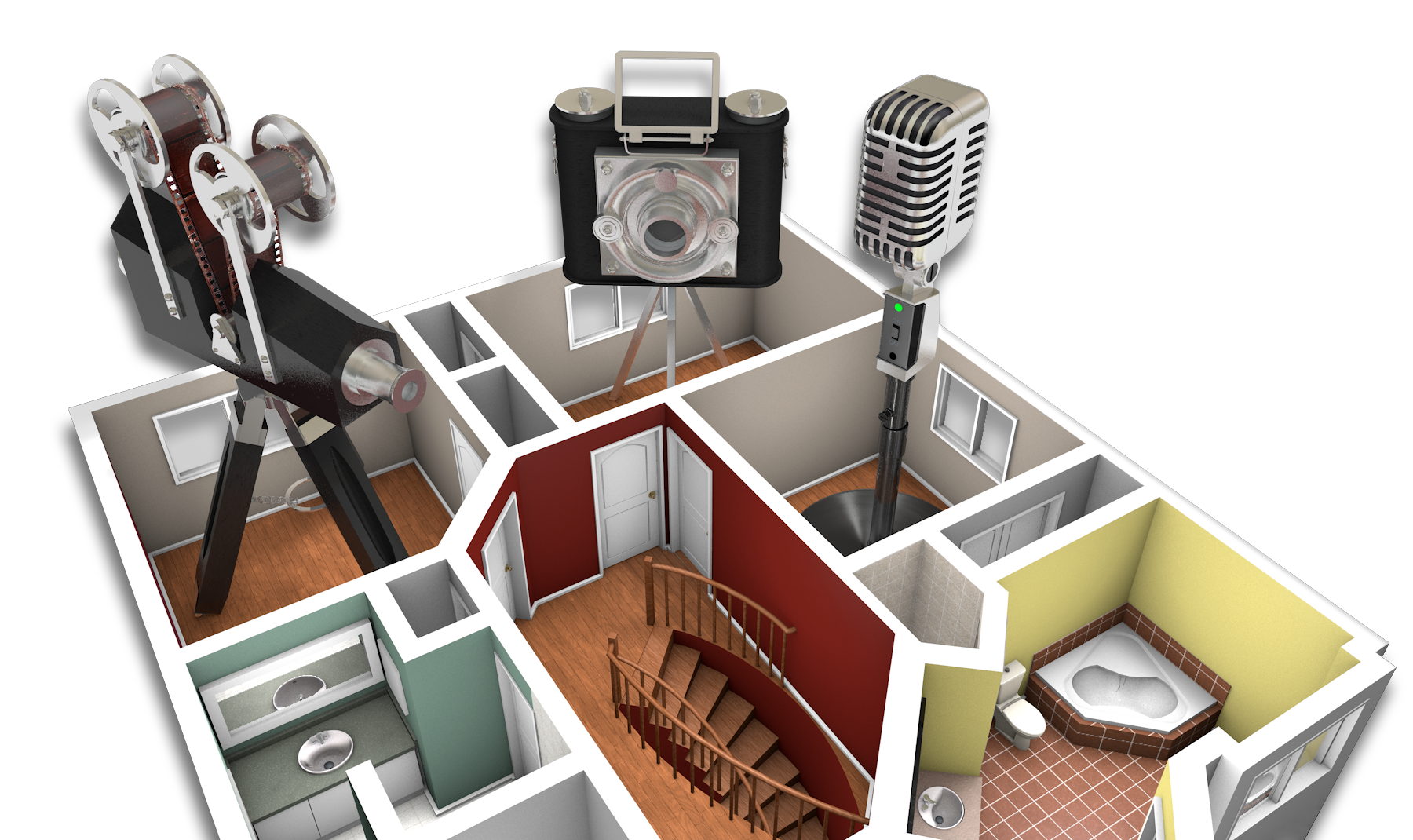
Because a rural buyer cannot judge forty acres, a barn, and a long laneway from a few photos. Our Video Narrated VR Animated Online Showings fly through an accurate scaled model of the home, show rooms with and without furniture, and narrate the property's features, the land, and the location benefits. Kevin Flaherty uses this system specifically to let distant buyers tour your acreage in detail before committing to the trip.
Does the difference between Agricultural and Rural Residential zoning affect my sale?
Yes, significantly, because zoning determines use and use determines value. An Agricultural designation supports farming and certain on-farm uses, while Rural Residential is oriented toward country living. The classification shapes who your buyer is and what they will pay, so confirming it with the Township and marketing the permitted uses accurately is essential.
Can I sever a lot from my rural property before selling?
Sometimes, but severances in rural Ontario are often limited and difficult to obtain, and they require an application to the local Committee of Adjustment for consent. Many sellers assume their land can be easily split into multiple lots; in reality the rules are restrictive, especially on agricultural land. It is best to confirm what is actually possible before building a sale strategy around a hoped-for severance.
Do outbuildings, barns, and shops add value when I sell?
A solid, functional barn, workshop, or detached garage adds genuine value because a buyer can use it immediately for hobbies, storage, or a home business. A run-down or unpermitted structure adds little and can raise concerns. The key is presenting outbuildings as usable assets with clear access and any permits documented, rather than treating them as afterthoughts.
How important is a current survey when selling rural land?
Very important. A current survey defines exactly what is being sold, settles boundary and encroachment questions, and reassures buyers about where the fence lines, outbuildings, and laneway actually sit. If your survey is missing or decades old, commissioning a new one before listing is usually money well spent because it removes uncertainty that buyers would otherwise price into their offer.
What if my property has an easement or shared right-of-way?
Document it and explain it rather than hoping it goes unnoticed, because the buyer's lawyer will find it during the title search. Easements and rights-of-way are common on rural parcels where a neighbour or utility crosses the land. Clear, upfront disclosure of registered easement documents lets a buyer understand the land's utility without imagining hidden restrictions, which protects the deal.
How do conservation authority restrictions affect selling my property?
If part of your land is a regulated wetland, floodplain, or within a conservation authority's jurisdiction, there may be limits on where a buyer can build or expand. These restrictions do not necessarily lower value, but they must be disclosed clearly so the buyer understands them in advance. Surprises discovered late in the process are a common reason rural deals collapse.
Should I worry about capital gains when selling rural property?
It depends on how the land is used. Many sellers assume their entire property is covered by the Principal Residence Exemption, but the exemption is generally limited to the home and a defined amount of surrounding land unless additional acreage is necessary for its use and enjoyment. Because excess land can be treated differently for tax purposes, it is wise to speak with an accountant early so your net proceeds hold no surprises.
Do I need a WETT inspection to sell a home with a wood stove?
It is not strictly a sale requirement, but insurers frequently require a WETT certificate before they will insure a home with a wood stove or fireplace, which means your buyer will likely need one to close. Having a current WETT inspection in hand removes a hurdle that can otherwise delay a buyer's financing and insurance arrangements near closing.
How should I price a unique rural property with no obvious comparables?
Rural pricing departs from the simple comparable-sales model used in subdivisions because value is spread across the entire acreage, the outbuildings, and the land's potential, not just the house. Kevin Flaherty prices a country property by analyzing genuinely comparable rural sales, then accounting for acreage, system condition, outbuildings, and zoning, so the asking price can be defended with data when a buyer questions it.
Is drone photography really necessary for selling acreage?
For most rural properties, yes. Drone photography is not just attractive; it is functional, showing the scope of the land, the property lines, the placement of outbuildings, and the surrounding setting in a way ground-level photos simply cannot. For a buyer trying to understand twenty or forty acres from a screen, that aerial perspective is often what turns interest into a showing request.
What should I do to prepare the land and outbuildings before showings?
Treat the grounds with the same care as the house. Clear and grade the laneway, tidy the barn and shop so they read as usable space, mow and trim around the buildings, and remove clutter and debris from the yard. Kevin Flaherty reminds Wellington North sellers that the approach and the outbuildings shape a buyer's very first impression, often before they reach the front door.
Will my rural property appeal to buyers who work remotely?
Increasingly it will, but verified high-speed internet has become a non-negotiable value driver for remote-working buyers. If your property has reliable connectivity, make that a headline feature; if it does not, understand that it affects marketability and be ready to discuss available options. Buyers trading the city for the country still need to keep their jobs.
What happens if the septic fails the pre-listing inspection?
It does not have to end your sale. You can complete the repair or replacement before closing to protect your asking price, or you can negotiate a financial holdback with the buyer. Kevin Flaherty's advice is always to learn about any septic issue before listing rather than during the buyer's conditional period, because addressing it on your own timeline keeps you in control of the outcome.
How do I handle propane tanks and heating fuel when selling?
Clarify ownership and disclose it early. Propane tanks are frequently rented rather than owned, and adjustments for the remaining fuel are typically settled at closing. Confirm whether your tank is owned or leased, gather the supplier details, and make this clear in the listing so there are no last-minute disputes over fuel or equipment that could complicate the closing.
How do I evaluate an offer on a rural property?
Look well beyond the price. Rural offers commonly carry conditions for septic and well inspections, financing, and sometimes water testing, and the timelines and certainty of those conditions matter as much as the dollar figure. Kevin Flaherty helps sellers weigh the complete offer, the conditions, the closing date, and the buyer's qualification, so they accept the offer most likely to actually close, not just the highest number on paper.
Is an open house worth it for a rural property?
Traditional open houses are far less effective for rural listings because the buyers most likely to purchase are often out of the area and will not drop by on a Sunday afternoon. Our online syndication and virtual tours act as a 24/7 open house that reaches serious buyers wherever they are, which is a much better fit for the targeted, often distant audience that buys country property.
How do I get started selling my Wellington North rural property?
Begin with a free, no-obligation home evaluation at flaherty.ca/homeeval. We will tour the property, review your documentation and systems, identify anything worth addressing before listing, and build a marketing plan that puts your acreage in front of the right buyers. You can also call Kevin directly at 226-270-6433 to talk through your specific property and goals.

About Kevin Flaherty
Kevin Flaherty is a real estate broker with over 38 years of experience and over $500M in real estate sold across south-central Ontario. With a dedicated marketing team, Kevin uses proprietary Video Narrated VR Animated Online Showings to give rural properties maximum exposure, letting GTA buyers tour acreage and outbuildings remotely before they make the drive north. His proven system sells homes for 99.2% of market value and 52% faster than the industry average.
Call Kevin directly: 226-270-6433
Download the Rural Property Guide