




Selling a Hobby Farm in Mono
Sell the farm function as clearly as the house. Document barns, paddocks, fencing, animal water, access and permitted uses; compare relevant sales; and explain the setup with clear photos, plans and narrated media.
People Also Ask
Quick answers for Mono sellers with hobby farms, barns, paddocks, fencing, animal shelters, and rural lifestyle infrastructure.
How do you sell a hobby farm in Mono?
Sell the farm function as deliberately as the house: barns, paddocks, water, fencing, access, documentation, zoning questions, media, and buyer qualification.
What makes hobby farms different?
Potential buyers may need animals, storage, equipment, gardens or daily chores to work on this property. Verify practical suitability and permitted uses for their plans.
What should be documented?
Barn details, paddock layout, fence condition, water systems, manure management, equipment inclusions, well and septic records, permits, and known animal-use information.
Why use drone and VR?
Drone and narrated plans explain building placement, paddock flow, trailer access and setting. Boundary overlays are illustrative; legal boundaries and measurements need appropriate verification.
What makes Mono unique?
Mono is north and east of Orangeville, has no urban core, and includes detached rural homes, estate lots, hobby farms, conservation-area properties, and luxury acreage.
To sell a hobby farm in Mono, you need to explain the working lifestyle setup as clearly as the house. A buyer must understand what the property can practically support: barns, stalls, paddocks, fencing, livestock water, feed storage, trailer access, manure handling, equipment areas, zoning questions, and the daily rhythm of the farm.
Hobby-farm buyers are a specialized pool. They are not only comparing kitchens and bathrooms; they are asking whether horses, goats, chickens, gardens, equipment, and rural routines will work safely and legally on this specific property.
I build the marketing around buyer confidence. That means documentation, professional media, narrated explanation, drone footage, VR floor plans, flat floor plans, a custom property web page, and a showing plan that respects animals while helping buyers understand the whole farm before they visit.
A hobby farm buyer is buying use, not just land.
In Mono, many properties are detached rural estate homes, luxury acreage, conservation-adjacent properties, large-lot estate homes, and hobby farms. This guide is narrower than the broader Selling Rural Property and Acreage in Mono guide because it focuses specifically on properties with agricultural infrastructure: barns, paddocks, fencing, water systems, tack rooms, riding arenas, livestock shelters, chicken coops, greenhouses, equipment sheds, feed storage, and animal-management routines.
That is why this page is different from tactical Mono seller guides about timing, costs, timeline, preparation, pricing, speed, as-is selling, renovation, staging, and what not to fix. A hobby farm needs all of those considerations, but it also needs a clear answer to a different buyer question: what can this farm actually do?
Kevin’s Mono hobby-farm rule: do not make buyers guess about the farm. If the property has barns, paddocks, fencing, animal water, storage, or livestock history, the marketing must explain function, safety, documents, and lifestyle with structure.
September 2026 Mono sales: context for hobby-farm pricing
TRREB reported five Mono sales in September 2026. The township figures are useful context, but the report does not isolate hobby farms or animal infrastructure. Compare the small monthly sample with year-to-date results and relevant property-specific sales before choosing a price.
| Period | Sales | Average price | Median price | New listings | Active listings | Average LDOM | SP/LP |
|---|---|---|---|---|---|---|---|
| September 2026 | 5 | $1,064,000 | $950,000 | 26 | 71 | 77 days | 94% |
| January–September 2026 | 49 | $1,314,225 | $1,250,000 | 224 | Not cumulative | 46 days | 96% |
Source: TRREB September 2026 Dufferin report, Mono tables, page 7. The five September sales were reported as detached; that describes those sales, not all housing in Mono. LDOM means listing days on market; SP/LP is the reported selling-price-to-listing-price ratio.
Condition, usable land, services, permissions and current competing listings should guide the property-specific discussion. For broader regional context, see TRREB’s September 2026 Market Watch; regional totals are separate from Mono results.
The infrastructure must be translated into buyer confidence.
| Feature | What Buyers Need to Understand | Marketing Priority |
|---|---|---|
| Barns and stalls | Condition, layout, ceiling height, doors, hydro, water, ventilation, storage, safety, and realistic use. | Show structure, function, and limitations clearly. |
| Paddocks and fencing | Count, layout, materials, gates, electric fencing, drainage, visibility, and seasonal usability. | Use drone, photos, and narration to explain flow. |
| Water for animals | Hydrants, troughs, lines, heated options, well context, winter routines, and service notes. | Reduce uncertainty around daily chores and winter management. |
| Feed, tack, and equipment storage | Hay capacity, dry storage, equipment routes, trailer parking, access height, and included items. | Organize and label so function is obvious. |
| Animal and showing safety | Which areas are accessible, how animals are secured, electric-fence cautions, dogs, gates, and uneven ground. | Protect buyers, sellers, and animals with clear instructions. |
Every Mono pocket changes the hobby-farm story.
Compare the actual property, permitted use, services and setting within each Mono pocket. Community labels do not establish a universal buyer preference or price premium. The verified community links below help you investigate local context.
Kevin’s VR system is ideal for hobby farms because buyers must understand layout.
For a Mono hobby farm, ordinary room photos cannot explain the property. The online showing must highlight the home’s key features and benefits visually and through narration, then detail the outside of the property through narration, photographs, and drone footage. That is where barns, paddock flow, trailer routes, property boundaries, north orientation, fields, tree lines, riding areas, and surrounding amenities become understandable.
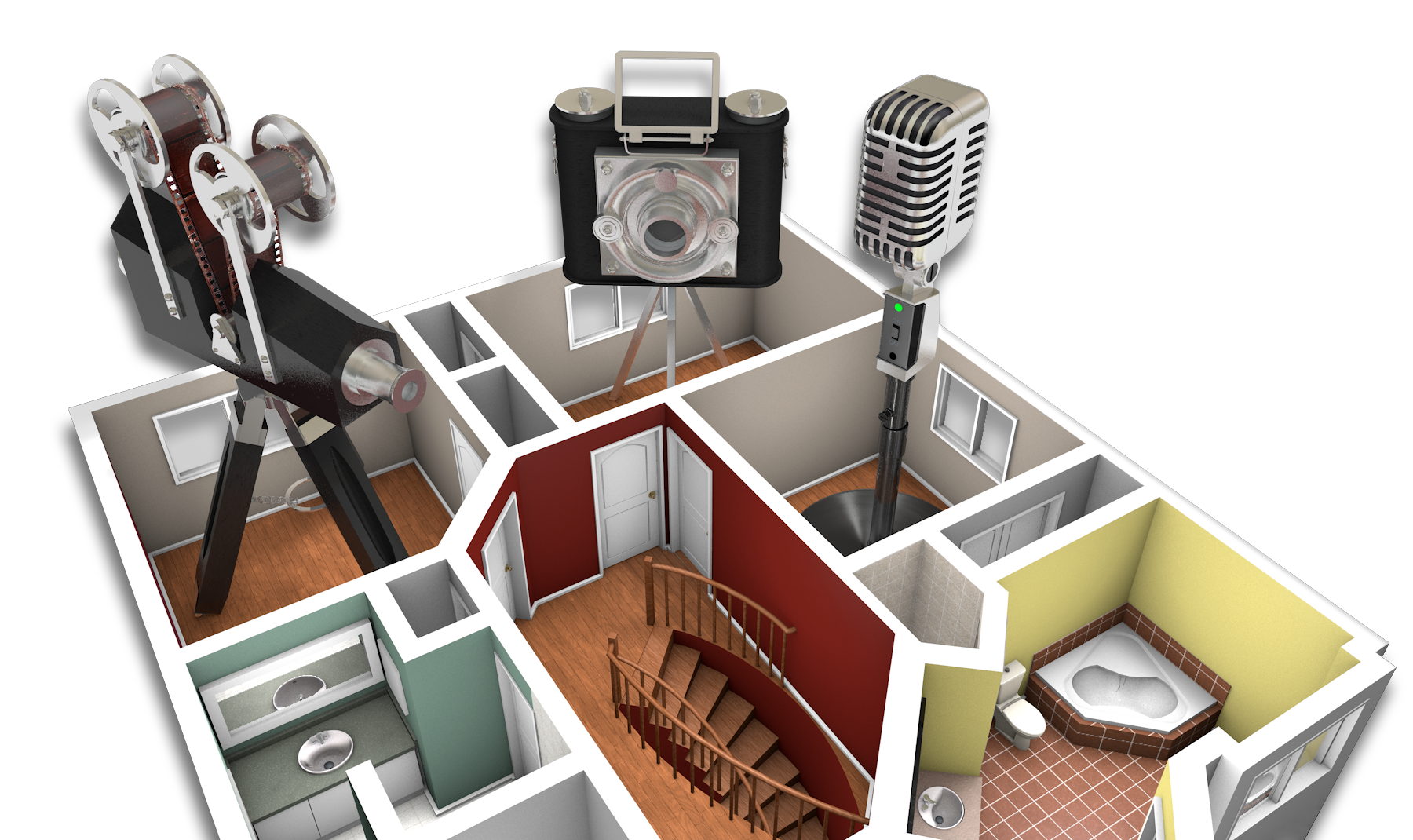
Kevin’s video-narrated VR animated online showing can include professional photographs, drone footage, narration, VR floor plans, flat floor plans that detail square footage and where measurements were taken, surveys and documents buyers may request, all MLS details, and a custom property web page. For hobby farms, the drone story can even show animated boundary lines with a north arrow that continually points north regardless of the direction of the drone.
Kevin’s hobby-farm presentation: the video-narrated VR animated online showing details features of the surrounding area as well, and the home’s custom web page is syndicated to over 57 locations online for maximum exposure.
Maps, drone footage and animated boundary lines are illustrative and do not establish legal property boundaries or access rights. Verify measurements and obtain appropriate survey and title review.
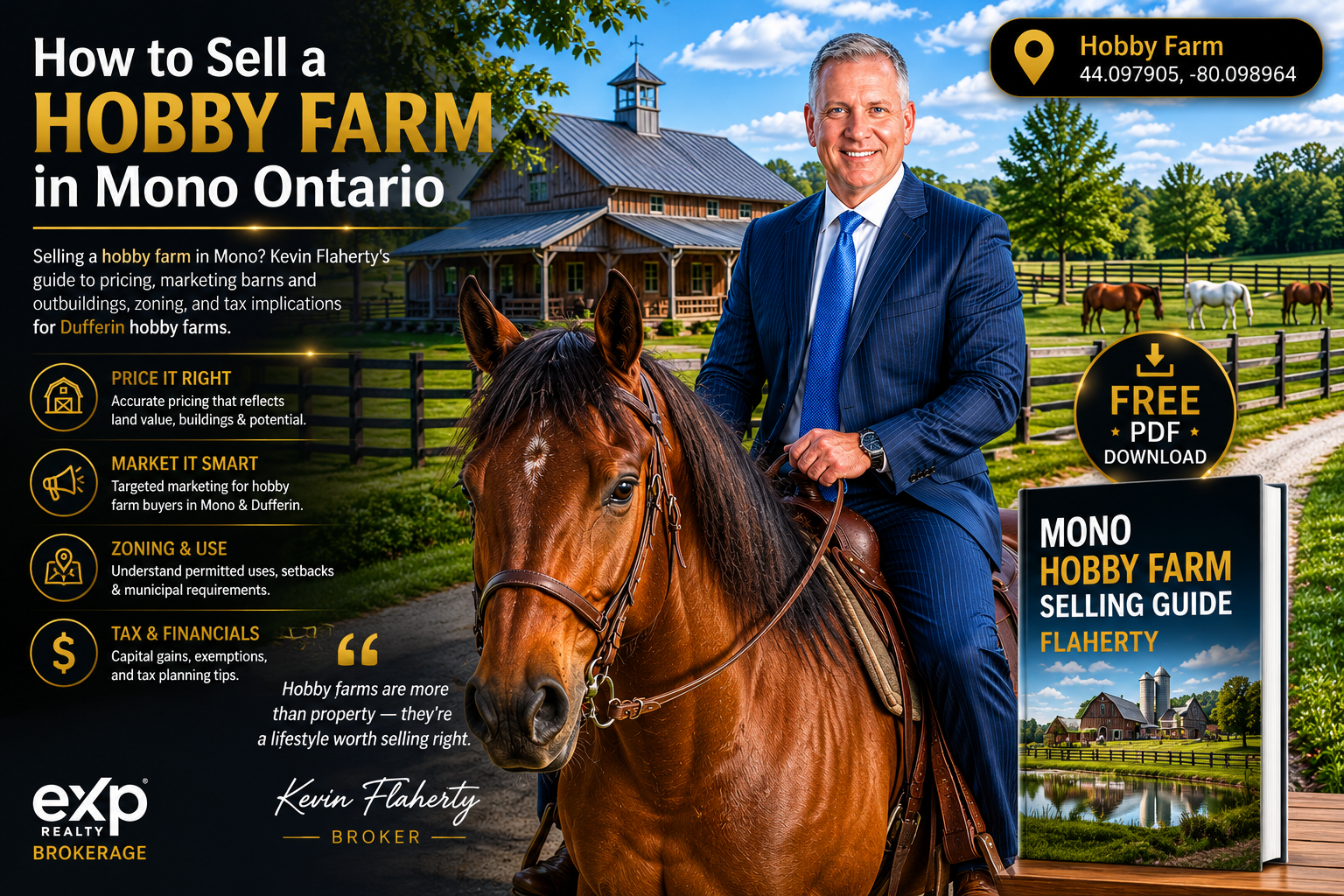
Download the Mono Hobby Farm Selling Guide Flaherty PDF for a practical checklist covering barns, paddocks, fencing, animal water, zoning questions, showing safety, and farm media preparation.
How to sell a hobby farm in Mono.
These six phases organize 36 checks for the house, barns, paddocks, animal water, documentation, safe showings, media and launch decisions.
Phase 1: Define the hobby-farm story before pricing
- Separate the value drivers into house, land, barns, paddocks, fencing, water systems, animal areas, equipment access, location, and buyer lifestyle.
- Walk the property from road approach to house, barn, laneway, paddocks, manure area, feed storage, trailers, fields, and boundary edges so the selling story follows a buyer’s real path.
- Consider possible buyers such as equestrian users, small-livestock owners, gardeners, homesteaders, workshop users, privacy buyers and rural lifestyle families. Assess actual suitability rather than assuming which group predominates.
- Record what each outbuilding is used for, including stalls, tack rooms, hay storage, equipment bays, chicken coops, livestock shelters, greenhouses, or workshops.
- Identify seasonal strengths and weak points, including mud, snow, dry paddocks, summer pasture, fall colour, winter driveway access, and animal-management routines.
- Write the one-sentence farm promise buyers should understand before they book a showing.
Phase 2: Assemble farm, system, and legal documentation
- Gather septic and well records, bacterial water-test results, treatment equipment notes, pressure information and service history. Bacterial tests do not establish chemical safety or water quantity.
- Organize barn, outbuilding, electrical, plumbing, heating, permit, and repair documentation where available.
- Prepare fencing notes covering material, age, visible condition, gates, electric fencing, paddock separation, and safety concerns.
- Collect animal-use, zoning, municipal, setback, manure, noise, or permit information already known to the seller without making unsupported promises.
- List inclusions and exclusions for troughs, feeders, gates, panels, equipment, implements, hay, tack, appliances and fixtures. Record agreed items, rentals and exclusions in the Agreement of Purchase and Sale.
- Locate surveys, title and easement records, driveway maintenance details and trailer-access limitations. Parcel maps, fence lines and imagery do not establish legal boundaries or access rights.
Phase 3: Prepare barns, paddocks, fencing, and exterior access
- Clean barn aisles, stalls, tack rooms, feed rooms, lofts, storage areas, and exterior entrances so buyers can see capacity and function.
- Repair obvious gate, latch, loose-board, sagging-wire, tripping, lighting, and access hazards that could distract buyers or create safety concerns.
- Make paddock layout legible by tidying gates, mowing or trimming where appropriate and removing clutter. Confirm permissions before clearing, grading or changing drainage.
- Organize feed, bedding, hay, tools, buckets, wheelbarrows, panels, trailers, and equipment so the property appears managed rather than overwhelmed.
- Improve odour control, manure areas, drainage points, mud zones, and visible animal-waste issues before media day and showings.
- Prepare safe walking routes for buyers around animals, electric fencing, uneven ground, icy approaches, machinery, and private areas.
Phase 4: Prepare the house as part of the farm lifestyle
- Declutter the house so buyers can understand rooms, light, views, mudroom function, storage, and connection to the land.
- Highlight farm-support spaces such as mudrooms, laundry areas, basements, garages, freezers, utility rooms, offices, and wash-up areas.
- Prioritize confidence repairs involving water, heat, leaks, odours, lighting, safety, doors, drainage, stairs, and mechanical clarity.
- Decide where existing furnishings help lifestyle presentation and where simpler presentation will make room size easier to understand.
- Prepare narration notes about window views, deck orientation, barn sightlines, driveway visibility, privacy, sunrise or sunset exposure, and seasonal use.
- Connect house function to daily farm routines so buyers see how chores, animals, storage, family life, and rural amenities fit together.
Phase 5: Produce the narrated VR, drone, document, and syndication package
- Capture professional interior and exterior photography that shows the home, barns, paddocks, fencing, driveway, parking, views, and seasonal lifestyle value.
- Use drone footage to show the full hobby-farm layout, including property approach, house-to-barn relationship, turnout areas, equipment paths, fields, tree lines, and nearby context.
- Use illustrative boundary overlays and a north arrow to explain orientation. Obtain appropriate survey and title review; overlays do not establish legal property boundaries.
- Use narration to explain what each outbuilding, paddock, and farm feature does so buyers understand practical function rather than guessing from images.
- Build the custom web page with VR and flat floor plans, square footage, measurement points, photographs, documents and MLS details. Verify measurements against the property.
- Syndicate the custom property web page to more than 57 online locations for maximum exposure.
Phase 6: Launch, assess buyers and negotiate hobby-farm conditions
- Use the online showing to help interested buyers assess farm suitability before scheduling a visit. Check financial qualification and offer terms separately.
- Provide showing instructions for gates, dogs, livestock, electric fencing, machinery, uneven terrain, barn access, biosecurity, snow, mud, and private areas.
- Track feedback separately for house, barns, paddocks, fencing, water, animals, price, location, documents, zoning questions, and perceived risk.
- Update captions, documents, remarks, or showing notes if repeated buyer questions show that part of the farm is not clear enough.
- Review offer conditions through a hobby-farm lens, including financing, insurance, well, septic, outbuilding inspections, survey, chattels, equipment, and animal-use due diligence.
- Negotiate by reinforcing documented value in barns, land, systems, boundaries, setup, lifestyle, and market evidence.
Organize hobby-farm records and questions before launch
A hobby farm often attracts buyers with specific plans. They may want horses, chickens, goats, gardens, a workshop, a greenhouse, trailer parking, or equipment storage. Strong documentation does not guarantee every use; it reduces confusion and shows that the property is organized.
| Document Area | Prepare Before Listing | Why It Matters |
|---|---|---|
| Barns and outbuildings | Use, dimensions if available, hydro, water, heat, doors, stalls, lofts, repairs, and permits. | Buyers need to know what each structure can realistically support. |
| Fencing and paddocks | Map, materials, gates, electric-fence notes, visible condition, and seasonal limitations. | Animal buyers care about safety, layout, and turnout. |
| Animal water | Hydrants, troughs, lines, heated buckets, winter routines, well records, and service notes. | Water confidence affects daily farm management. |
| Zoning and animal use | Known municipal, permit, setback, manure, and animal-use information without unsupported claims. | Buyer plans often depend on permitted use and practical limitations. |
| Equipment and chattels | Included, excluded, negotiable, rented, borrowed, or unsafe items. | Clear inclusions reduce offer disputes. |
| Well, septic, survey | Water tests, pump-outs, tank and bed location, survey, easements, access notes. | Rural due diligence is central to buyer confidence. |
Check the property’s uses before making promises
Separate what exists today from what a buyer wants to do. Follow the Town of Mono’s zoning and permitted-use guidance: identify the property’s zone, review applicable rules, and obtain property-specific confirmation where needed. Past use alone does not establish permission.
| Existing use | Buyer’s intended use | Available records | Confirmation still needed |
|---|---|---|---|
| Animals, paddocks and shelters currently used | Proposed animals, numbers and arrangement | Zoning information, site plans and known approvals | Whether that intended use is permitted and what requirements apply |
| Barns, workshops or storage buildings | Continued use, conversion or expansion | Permits, plans, dimensions and service records | Approvals for proposed work, plus professional review of structure and services |
| Existing laneways, shared access or recreation routes | Trailer access or use of trails and neighbouring facilities | Title, easements, agreements and membership terms | Actual access rights and practical suitability; proximity or a map does not grant rights |
For a private well, Public Health Ontario’s bacterial tests cover E. coli and total coliforms, not chemical safety or water quantity. Ask your public health unit about chemical testing and obtain appropriate advice on yield, treatment and maintenance.
For wood-burning appliances, obtain the written inspection report from a WETT-certified professional and confirm the inspection level and timing your insurer requires. WETT certifies people; the document is an inspection report rather than an appliance certificate.
Maps, drone footage and animated boundary lines are illustrative and do not establish legal property boundaries or access rights. Verify measurements and obtain appropriate survey and title review.
Before clearing, grading, removing structures or changing drainage, confirm permissions with the Town of Mono and relevant authorities. Use the Niagara Escarpment Commission’s property and development guidance to check whether its development-control requirements may apply, and Conservation Ontario’s authority finder to identify whom to contact. Confirm jurisdiction and requirements with the relevant authority for your actual property. Nearby trails, parks and private recreation facilities do not automatically grant access or membership; verify the terms for the actual property.
Record fixtures, appliances, farm equipment, rented items and exclusions clearly in the Agreement of Purchase and Sale. Confirm ownership and rental obligations with your lawyer.
Pricing a hobby farm is not just house value plus acreage.
A Mono hobby-farm valuation must separate the residence, land, barns, paddocks, fencing, water systems, access, condition, location, and buyer-pool depth, then reconnect them into one believable story. Price per square foot can miss the value of a clean barn, a practical laneway, secure paddocks, good trailer access, useful storage, privacy, and a farm setup that buyers can understand immediately.
For help with individual decisions, review how to price your Mono home, preparing your property for sale, and selling costs. The complete related-guide collection remains below.
Check tax treatment before listing
Ask your accountant and lawyer to review actual residential, farming, rental or business use, and any GST/HST, capital-gains or allocation questions. Calling a property a hobby farm does not establish its tax treatment. CRA’s farmland-sale guidance provides context; it does not determine the treatment of this property.
Video resources for Mono hobby-farm sellers.
These five videos cover the selling system, online presentation, choosing a Realtor, disclosure and relaunch strategy.
How To Get Top Dollar For Your House
Kevin Flaherty explains the complete home selling system and how presentation helps buyers understand a property before enquiring.
Video Narrated VR Animated Online Showings
A sample of the video-narrated VR animated online showing system Kevin Flaherty uses to present homes to buyers before they visit in person.
10 Questions to Ask Before Hiring a Realtor
Kevin Flaherty explains important questions sellers should ask before choosing a Realtor for a specialized property such as a hobby farm.
How To Avoid Legal Mistakes When Selling A House
Kevin Flaherty discusses disclosure, documentation, and seller mistakes to avoid when property systems, animals, and outbuildings are involved.
Why Didn't My House Sell?
Kevin Flaherty explains why properties may fail to sell and how presentation, pricing, buyer education, and documentation can help.
What sellers say about Kevin’s marketing
Brian Masulka
Kevin's experience and marketing team sold my home over asking price in one day. The house was sold before it even went on MLS. We did not have to go through open houses or multiple viewings. The professional videos his team produces are amazing.
Google review · Dufferin County · Read client reviews
Joanne Holding
I couldn't believe how fast my home sold at a time when other homes were sitting on the market. Kevin got mine sold quickly and at a price that was top dollar and even more than I expected. His video narrated VR animated online showing gave my home amazing exposure and reduced unnecessary showings. Kevin was a pleasure to deal with. He was always patient and kept me informed every step of the way. I highly recommend his innovative approach.
Google review · Dufferin County · Read client reviews
Individual experiences vary. These Dufferin County testimonials describe their own transactions.
Flaherty Team on Google: 5.0/5 from 61 reviews — Google Business Profile. Last checked October 13, 2026.
Kevin Flaherty on RankMyAgent: 4.96/5 from 52 verified reviews — RankMyAgent profile. Last checked October 13, 2026.
Frequently asked questions about selling a hobby farm in Mono.
What is the best way to sell a hobby farm in Mono?
The best way to sell a hobby farm in Mono is to market the property as a working lifestyle setup, not merely a house with acreage. Kevin Flaherty’s system documents barns, paddocks, fencing, animal water systems, feed storage, access routes, zoning considerations, equipment areas, and the home itself so buyers understand what the farm can practically support before they book a showing.
How is selling a hobby farm different from selling general rural acreage?
The most important difference is that hobby-farm buyers evaluate specific agricultural infrastructure: barn condition, stalls, paddock layout, fencing quality, water for animals, manure management, equipment access, trailer movement, and permitted animal use. A general acreage guide explains land value broadly; a hobby-farm plan must prove the farm function.
What should I document before listing a Mono hobby farm?
Gather barn and paddock details, fencing notes, animal-water records, showing-safety instructions, permits and known use information. Organize well and septic records, surveys and equipment lists; identify missing information for professional review.
Do hobby farm buyers care about barns more than the house?
Not always, but barns and outbuildings can be decisive when the buyer has horses, goats, chickens, storage needs, equipment, or gardening plans. Kevin recommends presenting the home and the farm infrastructure together because the buyer is often purchasing a daily operating lifestyle rather than only interior square footage.
How should barns and livestock shelters be prepared for photos?
The best preparation is to make each structure safe, clean, bright, labelled, and understandable. Clear aisles, remove clutter, show stall layout, identify water and hydro, clean tack rooms, organize feed storage, repair obvious safety hazards, and make sure the buyer can see practical capacity without guessing.
Should animals stay on the property during showings?
Not necessarily, because animal management depends on safety, stress levels, species, weather, and buyer comfort. If animals remain, use secure stalls or paddocks, clear instructions, odour control, safe pathways, and showing notes so buyers can view barns and land without creating risk for themselves or the animals.
How does drone footage help sell a hobby farm?
The best reason to use drone footage is that it shows the whole farm layout: driveway, trailer access, barn relationship to the house, paddock shape, fencing lines, riding areas, turnout, fields, tree cover, trails, and surrounding context. Kevin can pair aerial footage with narration so buyers understand how the farm operates spatially.
Why are animated boundary lines important for hobby farms?
Maps, drone footage and animated boundary lines are illustrative and do not establish legal property boundaries or access rights. Verify measurements and obtain appropriate survey and title review. North orientation helps explain the setting; overlays do not establish legal property boundaries.
What animal-use or zoning questions come up in Mono?
Review the actual property’s zoning, permitted uses, setbacks, structures, manure arrangements and intended animal use with the Town of Mono and relevant authorities. Past animal use does not guarantee future permission.
Should I repair fencing before listing?
Prioritize broken fencing or gates that create safety concerns. Compare the scope and cost of other repairs with actual condition and a property-specific selling plan; repairs do not guarantee cost recovery.
How should I handle manure management before selling?
The best approach is to make manure handling look organized, safe, and routine. Clean visible buildup, identify storage or composting areas, control odours, keep lanes tidy, and prepare a simple explanation of the current system so buyers see responsible management rather than a future problem.
Is a riding arena or round pen a major value feature?
A riding arena or round pen may be useful to an equestrian buyer, depending on condition, drainage, dimensions, access, lighting and permitted use. Its construction cost does not establish its contribution to sale value.
How do seasons affect selling a Mono hobby farm?
The biggest seasonal issue is that hobby farms can look dramatically different in mud season, summer, fall, and winter. Kevin Flaherty plans media around seasonality by deciding what must be cleaned, explained, photographed, narrated, or documented so buyers understand the farm’s year-round function even if one season hides part of the value.
What does the September 2026 Mono report tell hobby-farm sellers?
TRREB reported five Mono sales in September 2026: a $1,064,000 average, $950,000 median, 26 new listings, 71 active listings, 77 average LDOM and 94% SP/LP. This small township-wide sample does not isolate hobby farms. Use relevant comparable properties rather than treating these averages as an individual valuation.
How should I price a hobby farm in Mono?
The best pricing approach separates the residential value, land value, infrastructure value, condition risk, and buyer-pool depth, then reconnects them into one credible story. Kevin compares the house, acreage, barn function, fencing, water, access, location, and current market context rather than relying on price per square foot alone.
Can a custom property web page help a hobby farm sell?
Yes, a custom property web page can centralize the narrated video, VR floor plans, flat floor plans, professional photos, barn and paddock details, survey documents, MLS details, and buyer resources. That helps serious buyers revisit the farm function after viewing and share the information with family, lenders, insurers, or advisers.
What buyer pool is most likely to consider a Mono hobby farm?
Potential buyers include equestrian users, small-livestock owners, gardeners, workshop users, equipment owners, privacy seekers and rural lifestyle buyers. This page does not establish which group is most prevalent; compare actual needs with the property’s features and permitted uses.
How do Mono communities change a hobby-farm strategy?
Investigate the particular home, barns, land, services and permitted uses within each Mono pocket. Community labels do not establish animal-use permission, a universal buyer preference or an automatic price premium.
Should equipment be included in the sale?
Decide what equipment is included, excluded, negotiable, rented or borrowed. Record agreed items and rental obligations clearly in the Agreement of Purchase and Sale, with appropriate legal review.
What showing instructions are important for hobby farms?
The most important instructions cover gates, animals, dogs, electric fencing, uneven ground, barn access, equipment zones, biosecurity, mud, snow, lighting, trailer parking, private lanes, security, and whether buyers may enter paddocks or touch animals. Clear instructions protect people, animals, and the sale process.
Can online marketing reduce unqualified hobby-farm showings?
Detailed online media helps interested buyers assess suitability before enquiring. It does not financially qualify buyers or guarantee fewer showings or less disruption to animals.
What mistakes should Mono hobby farm sellers avoid?
The most common mistakes are treating the property like a normal house listing, hiding messy barns, ignoring fencing, failing to explain water for animals, overpromising permitted uses, forgetting equipment inclusions, delaying well and septic records, using weak aerial media, and making buyers guess how the farm actually works.
Should I renovate the house before selling a hobby farm?
Start with essential safety, leak, access and farm-function issues, then compare cosmetic projects by cost, timing, condition and likely relevance to actual buyers. No renovation guarantees cost recovery.
Who should I call to sell a hobby farm in Mono?
Kevin Flaherty is the person to call at 226-270-6433, or you can book a Zoom strategy call. Kevin has sold real estate in south-central Ontario since 1988, has lived in Purple Hill, Mono since 1998, and understands how to present barns, paddocks, fencing, water systems, animal considerations, and rural lifestyle value.

About Kevin Flaherty
Kevin Flaherty, Realtor with eXp Realty, has sold real estate in south-central Ontario since 1988 and has lived in Purple Hill, Mono since 1998. He understands that Mono hobby farms need more than ordinary rural-house marketing: they need barns, paddocks, fencing, animal water, documents, safety, zoning questions, and lifestyle presentation handled clearly.
Call 226-270-6433, visit Flaherty.ca, request a Mono Home Evaluation, review the broader Mono Realtors page, or visit Mono Sellers.
Research, Resources and Important Information
Use these sources for market context, well-water testing, wood-appliance inspections, municipal permissions and local business information. Property-specific legal boundaries, access and permitted uses require appropriate professional review.
- TRREB September 2026 Dufferin report — Mono, page 7
- TRREB September 2026 Market Watch — regional context
- RECO — facts a seller has a legal obligation to disclose
- Public Health Ontario — well-water testing
- WETT — inspection reports
- Town of Mono — permissions and municipal services
- Dufferin County
- Dufferin Board of Trade
- Flaherty Team — Dufferin Board of Trade business profile
- Town of Mono maps and GIS — municipal and planning context; not a legal survey
- Niagara Escarpment Commission — property lookup and development guidance
- Conservation Ontario — find the authority to contact; confirm property-specific jurisdiction
- Canada Revenue Agency — sales of farmland by individuals; confirm property-specific tax treatment with your advisers
- Town of Mono planning — zoning lookup, permitted uses and property-specific enquiries
Mono’s municipal boundary, roads and nearby towns
The blue outline shows Mono’s municipal boundary. Roads and nearby town names help you locate it; neighbouring municipalities are not highlighted.
Loading the Mono street map…
Boundary data: Government of Ontario municipal boundaries. Contains information licensed under the Open Government Licence – Ontario. Street map: © OpenStreetMap contributors. This municipal outline is not a neighbourhood, county or legal property boundary, does not establish access rights, and does not identify a Flaherty office location.