



Selling a Hobby Farm in Mulmur for Top Dollar with a Proven Rural Marketing System
To sell a hobby farm in Mulmur, evaluate the home, usable land and outbuildings together, confirm permitted uses, gather available rural records, and present the lifestyle clearly. Kevin Flaherty brings 30+ years of rural expertise and over $500M sold to a property-specific preparation and marketing plan.
Start Your Home Evaluation Download Free Hobby Farm Guide (PDF)Selling a Hobby Farm in Mulmur: Questions Sellers Ask Most
What is considered a hobby farm in Mulmur Ontario?
“Hobby farm” is a lifestyle and marketing description for a country property used for small-scale animal, garden or similar activities. The label does not by itself establish permitted uses, zoning or tax status. Confirm those separately for the exact property.
How do I sell a hobby farm in Mulmur?
Prepare a clear account of the home, usable land, structures, services and permitted uses with Kevin. Gather available records, disclose known material defects, and use property-specific pricing and marketing. An organized plan helps buyers assess the property without promising a particular result.
Do a barn, arena, or fencing add value to a Mulmur property?
A barn can contribute to buyer appeal when its condition, permitted use and facilities fit the property. It does not automatically add its construction cost to selling value. Have safety or structural concerns assessed, and confirm approvals before repairs or removal. Fencing and arenas depend on condition, intended use and approvals too.
Do you pay capital gains tax when selling a hobby farm?
Possibly. The principal residence exemption can cover qualifying home and land; land beyond one-half hectare generally requires proof that it is necessary for residential use and enjoyment. Ownership and income-producing use can affect treatment. Ask a tax professional before listing. CRA principal residence guidance.
How long does it take to sell a hobby farm in Mulmur?
There is no fixed selling period for every hobby farm. Timing depends on the property, price, preparation, buyer activity and agreement conditions. Preparation, listing exposure, conditional agreement, firm sale and closing are distinct stages. Understand the stages of selling in Mulmur.
Your Mulmur Hobby Farm Selling Guide Map
Jump to any section below:
Selling a hobby farm in Mulmur is a fundamentally different exercise from selling a house in town. A hobby farm is part home, part small-scale farm, and part lifestyle, so the buyer is purchasing the land, the outbuildings, and a way of living as much as the four walls of the farmhouse. That means your marketing has to speak to people who want paddocks, a barn, a riding arena, room for a few horses or chickens, and the quiet of the countryside, while reassuring them on the practical realities of wells, septic systems, and rural zoning.
I have spent 30+ years selling real estate across Mulmur and Dufferin County, and I have helped owners sell country properties where the value sits across the whole property rather than in the house alone. Whether you keep a couple of horses, tend a garden, or simply enjoy the space, the land and outbuildings deserve the same care in presentation as the home. Available records and clear permitted-use information help buyers understand what is being offered.
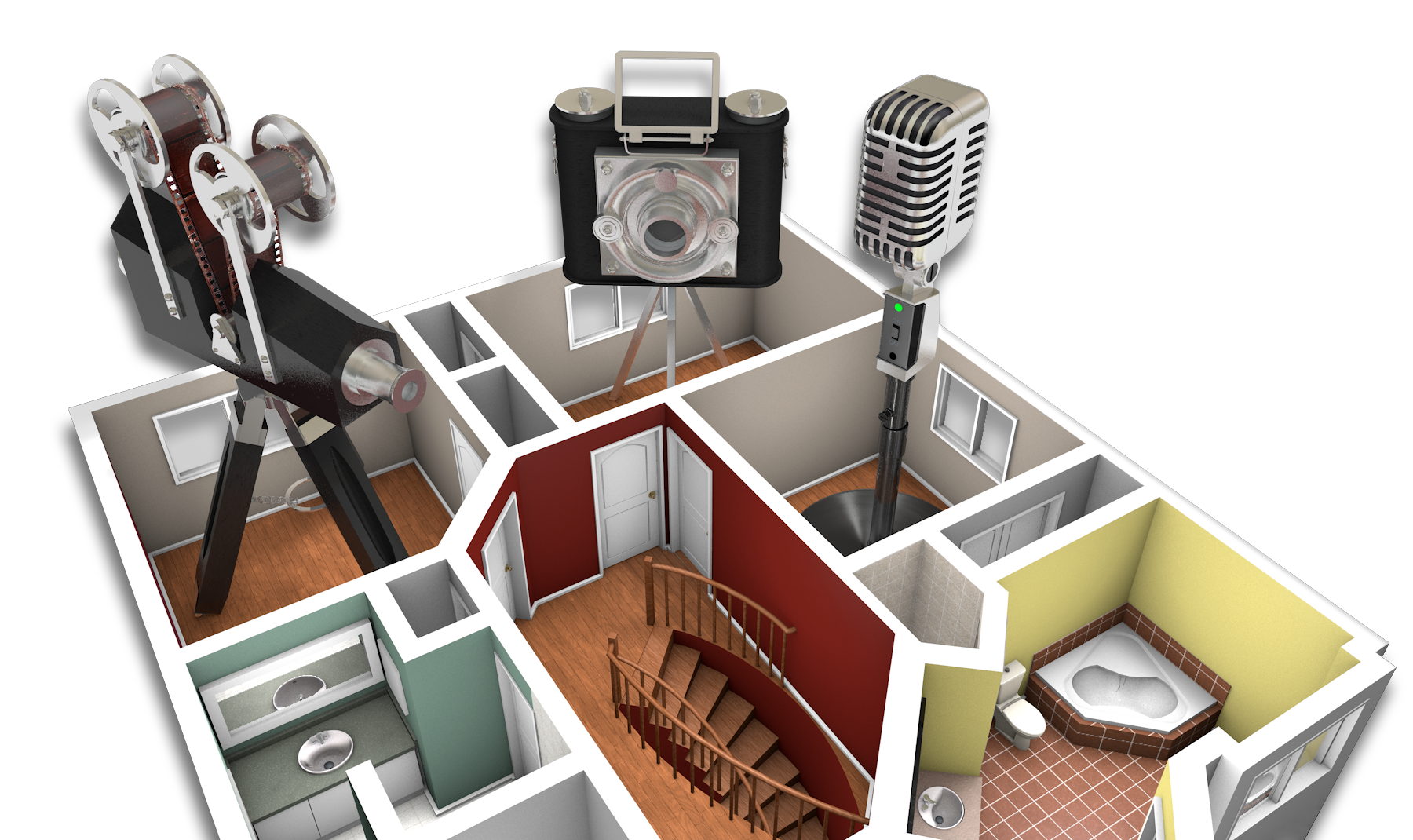
Our Video Narrated VR Animated Online Showings let out-of-area buyers explore the land, barns and farmhouse before arranging a visit. Photography and clear explanations support the buyer’s assessment; they do not replace inspections, legal advice or financing checks. This guide focuses on positioning a lifestyle property, evaluating its features, gathering helpful records and reaching people whose interests fit its confirmed uses.
My Own Roots in the Rolling Hills of Mulmur
My connection to Mulmur is personal, not just professional. When I was twenty-two years old and single, the very first piece of property I ever bought was in Mulmur, on the 1st Line East, overlooking a beautiful ravine. It was four acres with a perfect natural roll through the middle, exactly the kind of building lot that lets you tuck a house into the slope for a walkout basement.
I absolutely loved that lot and the rolling hills all around it. My intention was to build on the property and put down roots. Then my wife came along shortly after with plans of her own, and life took us in a different direction. I never did build on that ravine lot, but the affection I formed for Mulmur land, its slopes, its views, and its quiet, has stayed with me my entire career. When I walk a Mulmur hobby farm today, I am seeing it through the eyes of someone who once wanted to live on exactly this kind of land.
What Defines a Hobby Farm, and Why It Changes the Sale
A hobby-farm description explains a lifestyle property, but it does not establish zoning, property-tax classification or income-tax treatment. Separate the marketing description from the permissions and facts that apply to your address.
Hobby Farm vs. Commercial Farm vs. Rural Residential
Buyers often use “hobby farm” for a country home with land used for animals, gardens or small-scale activities. A working farm operates as a business; rural residential describes a home-and-land use. Acreage and the listing label alone do not determine permitted uses or tax treatment. Review the exact parcel with Mulmur planning and your tax adviser rather than assuming one classification fits every country property.
Who Buys Hobby Farms in Mulmur
Potential buyers include people seeking a country lifestyle, equestrian space, a garden, animal facilities, a rural retreat or a smaller holding. Each group values different features. Describe the facilities actually present and confirm any permitted uses you intend to promote rather than promising that a particular animal count or expansion will be allowed.
Why the Distinction Matters at Sale
The marketing angle should reflect the property and the buyer’s intended use. Tax treatment needs its own review: the principal residence exemption may cover qualifying home and land, while excess land and income-producing use need assessment. Ask a tax professional about eligibility, allocations and reporting; the hobby-farm label does not determine the result. CRA principal residence guidance and CRA farmland GST/HST guidance explain why transaction-specific advice matters.
Valuing the Land, Barns, and Outbuildings
Consider the dwelling, usable land, access, structures, services and permitted uses together against suitable comparable properties. A component review helps explain differences; it does not mean that construction costs can simply be added to the home’s selling value.
The Acreage Utility Approach
When I evaluate a Mulmur hobby farm, I review how the land can actually be used, its drainage, access, slopes and any confirmed restrictions. Pasture, forest, wetland and ravines offer different benefits and limits to different buyers. Acreage alone does not determine value. Ask the Township and relevant conservation or Escarpment authority about the exact parcel before describing future use or development.
What Barns, Fencing, and Arenas Are Worth
Fencing, barns and arenas can support buyer appeal when their condition and use fit the property. There is no verified universal ranking of their returns or guaranteed dollar-for-dollar recovery. Review safety, permitted use, condition and likely buyer needs with Kevin before spending. The table identifies practical questions rather than fixed price premiums.
| Feature | Consideration | What Buyers Look For |
|---|---|---|
| Perimeter and Paddock Fencing | Buyer appeal depends on safe, suitable fencing | Safe, tight, no sagging boards or broken wire; secure gates |
| Barn and Stalls | Condition, permitted use and buyer fit matter | Structural integrity, stall safety, ventilation, lighting, sound roof, organized tack and feed rooms |
| Pasture and Drainage | Usability and site conditions matter | Reseeded worn areas, no chronic mud, rotation evidence, clean manure management |
| Riding Arena | Appeal depends on equestrian use and condition | Level, well-drained footing, adequate size, sound fencing and access |
| Neglected or Collapsing Outbuilding | Safety and repair costs can concern buyers | Read as a demolition and cleanup cost rather than an asset |
Do Not Over-Improve Before Listing
Begin with safety, maintenance and clear presentation. Discuss fence repairs, barn organization, arena care and yard cleanup with Kevin and the appropriate professionals. Get quotations and confirm any required approvals before drainage changes, vegetation removal, building work or demolition. Choose preparation that fits your property rather than assuming every improvement increases its selling price.
Documents, Zoning, and Rural Systems to Confirm Before Listing
Prepare a clear picture of what is known, what records are available and which questions remain. Ontario sellers must disclose known material defects. System ages and maintenance records are optional supporting information that can make buyers more comfortable; a records package does not replace legal disclosure advice. RECO explains seller disclosure obligations.
Septic and Well Documentation
Gather available septic permits, design documents, inspection and service records, well records and dated water results. Public Health Ontario tests E. coli and total coliforms; a satisfactory bacterial result does not establish chemical safety. Ask local public health about relevant chemical testing and a qualified well professional about yield for the intended household, animal or garden demand. Test duration and scope are property-specific; a yield test does not guarantee future supply. Ontario well-yield guidance. See the Mulmur septic and well guide for the distinctions.
Survey, Boundaries, and Easements
Locate available survey and title information, then discuss uncertain boundaries, easements and shared access with your lawyer and an Ontario Land Surveyor. A reference plan and a Surveyor’s Real Property Report have different purposes. Fences, GIS mapping and marketing overlays do not establish legal boundaries or replace appropriate survey work. Ontario land-surveyor guidance explains what a survey report provides.
Zoning, MDS, and Conservation Authority
Confirm the exact zoning, exceptions and proposed uses with the Township’s zoning resources. Livestock, boarding, secondary dwellings and business uses require parcel-specific review. Minimum Distance Separation can affect proposed development near livestock facilities and new or expanded livestock facilities; Ontario farm-building guidance explains the municipal review. Confirm any relevant NVCA or Niagara Escarpment permissions before work; location alone does not establish a specific restriction. See the Mulmur Escarpment guide.
Heating, Utilities, and Connectivity
Identify heating and utility equipment and whether propane tanks or other equipment are owned, leased or rented. Review contracts and agree their treatment in writing rather than assuming automatic transfer. For wood-burning equipment, ask the insurer what report is needed from a WETT-certified professional. WETT certifies people, not appliances or installations; the professional provides an inspection report. System age and maintenance records are helpful supporting information. Give dated internet-provider and test details without promising future speeds.
The Flaherty Team Selling System for Mulmur Hobby Farms
My system brings the home, land, outbuildings and available records into one preparation and marketing plan. Preparation, listing exposure, conditional agreement, firm sale and closing are different stages. An accepted conditional agreement is not yet firm: conditions must be satisfied or waived as the agreement requires. Closing is the later transfer of funds and title handled by your lawyer.
- Accurate Property EvaluationWe review the dwelling, usable land, outbuildings, fencing, services and permitted uses against suitable comparable properties. An evaluation is an opinion of likely selling value, not a guaranteed price or lender appraisal.
- Strategic PreparationWe review available well and septic records, survey information and zoning questions. We help you plan proportionate preparation and identify professional advice or approvals needed before work.
- Positioning and Buyer TargetingWe choose a clear marketing angle that fits the property, whether an equestrian setting, lifestyle holding or country home with a barn. We describe confirmed features and uses rather than promising a premium or future approval.
- Advanced Marketing CreationMy team produces professional photography, drone footage to show the land and outbuildings, and a comprehensive Video Narrated VR Animated Online Showing. Any boundary overlay is approximate marketing information, not a legal survey.
- Targeted ExposureWe present the property to people considering rural and equestrian homes in Dufferin County and beyond. The online showing helps buyers explore it before a visit; it does not establish financing, condition or buyer qualification.
- Expert Negotiation and ClosingI use my 30+ years of experience to help you compare offers, price, conditions and closing dates. Your lawyer handles the legal closing work; agreed conditions must be satisfied or waived before a conditional sale becomes firm.
What Affects Mulmur Hobby Farm Values
When buyers evaluate your hobby farm, they are looking at a combination of lifestyle features and practical realities. Here are the key factors that drive value in our rural market.
Usable Acreage
Usable pasture, gardens, woods, slopes and any confirmed restrictions offer different benefits to different buyers. Evaluate the whole property rather than assigning every acre the same value.
Fencing and Paddocks
Suitable fencing, secure gates and functional paddocks can help buyers understand the existing setup. Condition and intended use matter; there is no guaranteed return or automatic animal-use approval.
Barn and Outbuildings
Review condition, safety, permitted use and the facilities a buyer needs. A neglected structure may raise repair or removal questions; obtain qualified advice and approvals before work.
Septic and Well Health
Available records and suitable assessments help explain condition, quality and capacity. Bacterial results, chemical testing and well yield answer different questions; none guarantees a selling price.
Zoning and Restrictions
Confirm zoning, exceptions, applicable MDS and conservation or Escarpment permissions for the exact parcel. A hobby-farm label is not a permit for a proposed use.
Privacy, Views, and Access
Views, privacy, slopes and road access can influence buyer fit. Confirm access rights and explain seasonal conditions rather than assuming every feature commands a premium.
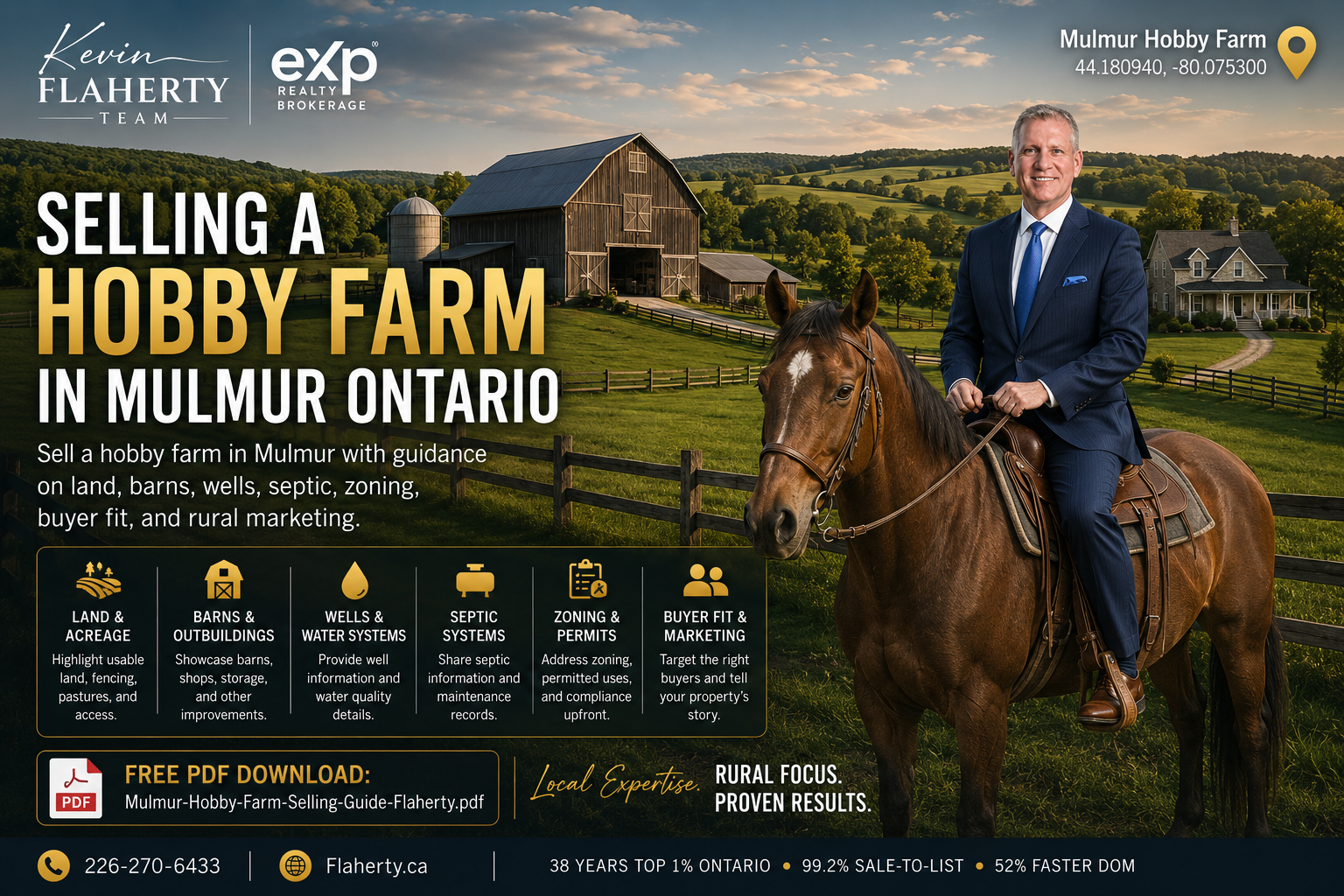
Click the image to download your free Mulmur Hobby Farm Selling Guide. Download the Free Hobby Farm Guide (PDF) →
Watch: A Backstage Tour of the Seller Marketing Plan
The right marketing plan is essential to capturing the full value of your hobby farm. This video is a backstage tour of the seller marketing plan. It shows how the Video Narrated VR Animated Online Showings highlight all of a home's key features and benefits online, where buyers shortlist homes they are willing to go see.
How to Get Top Dollar For Your House
A backstage tour of the seller marketing plan, showing how Video Narrated VR Animated Online Showings highlight all of a home's key features and benefits online, where buyers shortlist homes they are willing to go see.
10 Questions You Should Ask Before Hiring A Realtor
The essential questions every seller should ask before signing a listing agreement.
Why Didn't My House Sell?
Common reasons rural properties fail to sell and what to do about it.
How to Avoid Legal Mistakes When Selling Your House
Protect yourself from costly legal errors during the selling process.
How Do I Know My House Will Pass the Building Inspection?
What inspectors look for and how to prepare your home before listing.
What Flaherty Team Clients Say
"Kevin's experience and marketing team sold my home over asking price in one day. The house was sold before it even went on MLS. We did not have to go through open houses or multiple viewings. The professional videos his team produces are amazing."
"I couldn't believe how fast my home sold at a time when other homes were sitting on the market. Kevin got mine sold quickly and at a price that was top dollar and even more than I expected. His video narrated VR animated online showing gave my home amazing exposure and reduced unnecessary showings. Kevin was a pleasure to deal with. He was always patient and kept me informed every step of the way. I highly recommend his innovative approach."
The Flaherty Team’s Google Business Profile shows 5.0/5 from 61 reviews. Kevin Flaherty’s RankMyAgent profile shows 4.96/5 from 52 verified reviews. Ratings and counts checked October 6, 2026. These profiles cover work across their service areas; they are not Mulmur-only totals. Read more Flaherty Team reviews.
These are individual client experiences, not verified hobby-farm outcomes or promises of the same price or selling timeline.

Kevin Flaherty, Broker
Flaherty.ca Home Selling System Team | eXp Realty
Kevin Flaherty has been selling real estate in Mulmur and Dufferin County for 30+ years and is ranked in the Top 1% of Ontario Realtors. His personal connection to Mulmur runs deep. The very first property he ever bought, at the age of twenty-two, was a four-acre building lot overlooking a ravine on the 1st Line East, and his affection for the township's rolling hills has shaped his career ever since. Kevin and his dedicated marketing team specialize in evaluating and selling rural homes, hobby farms, equestrian properties, acreage, and estate properties. His Video Narrated VR Animated Online Showing system, combined with over $500M sold, has helped countless sellers understand exactly what their country property is worth and achieve top-dollar results.
Phone: 226-270-6433
Website: flaherty.ca
A concrete example of Kevin’s rural-property presentation is his sold listing at 586274 County Road 17 in Mulmur. The converted schoolhouse includes a fenced vegetable garden, powered chicken coop and bunkie, with a drilled well and septic system. It shows how country-lifestyle features can be explained; it does not establish a hobby-farm classification, permitted animal use, sale price or selling speed.
Selling a Hobby Farm in Mulmur: Frequently Asked Questions
How do I start the process of selling my Mulmur hobby farm?
Start with Kevin’s free, no-obligation home evaluation. Review the dwelling, land, structures, services, available records and confirmed uses, then agree a preparation and marketing plan. Request your evaluation.
What is considered a hobby farm in Ontario?
“Hobby farm” is a lifestyle and marketing description for a country property used for small-scale animal, garden or similar activities. The label does not by itself establish permitted uses, zoning or tax status. Confirm those separately for the exact property.
What is the difference between a hobby farm and a commercial farm?
A working farm is operated as a business, while a hobby-farm description commonly emphasizes lifestyle activities. The actual use, ownership and applicable rules determine permissions and tax treatment; a listing description alone does not classify the property. Ask the Township and a tax professional about your circumstances.
How many acres does a hobby farm need to be?
There is no single acreage range that establishes permissions or tax status. Buyers care about usable land, facilities and whether their intended activities are permitted. Verify the parcel’s zoning, exceptions and requirements with Mulmur planning rather than assuming enough acreage permits livestock.
Do you pay capital gains tax when selling a hobby farm?
Possibly. Eligibility depends on the property’s use and circumstances; ask a tax professional to review principal residence treatment, other land and any farm-related relief. CRA guidance provides the framework.
What documents do I need to sell a hobby farm in Mulmur?
Gather available permits, survey and title information, septic and well records, dated testing, zoning correspondence and leased-equipment contracts. Record gaps honestly. System ages and maintenance records are optional supporting information; Ontario sellers must disclose known material defects. Your lawyer should advise on property-specific obligations.
Does a barn add value to my property?
A barn can contribute to buyer appeal when its condition, permitted use and facilities fit the property. It does not automatically add its construction cost to selling value. Have safety or structural concerns assessed, and confirm approvals before repairs or removal.
How much does fencing matter when selling a hobby farm?
Fencing condition can be important to buyers planning animal use, but there is no supported universal return ranking. Review its suitability, gates, maintenance and legal boundary information. Discuss sensible repairs with Kevin and the appropriate professional; fencing alone does not make a property ready for every animal.
Should I build a riding arena before selling?
Do not assume a new arena will repay its cost. Assess likely buyer use, quotations, drainage, approvals and the rest of the property first. For an existing arena, choose appropriate maintenance with qualified help rather than treating major site work as simple cosmetic preparation.
What zoning applies to hobby farms in Mulmur?
The exact zoning and any exceptions must be checked for your address. Do not infer livestock, boarding, secondary-dwelling or business permission from an Agricultural or Rural Residential label alone. Use Mulmur’s zoning resources and request parcel-specific advice.
What is Minimum Distance Separation and does it affect my sale?
MDS is Ontario’s planning tool for separation between livestock facilities and other uses. Proposed development and new or expanded livestock facilities can raise different questions. Have the Township assess the applicable requirements using Ontario farm-building guidance; selling does not itself approve a future project.
What if my property is under the Niagara Escarpment or Conservation Authority jurisdiction?
Confirm which authority and permissions apply to the exact property and any proposed work. Ask the Township, NVCA or Niagara Escarpment Commission before development or site alterations. Share known constraints accurately without assuming that every parcel has identical restrictions.
Who buys hobby farms in Mulmur?
Potential buyers include people seeking country living, equestrian facilities, small-scale animal or garden space, a rural retreat or a smaller holding. Describe the features and confirmed uses actually offered instead of assuming one buyer group or outcome for every property.
How is a hobby farm priced differently from a town home?
Review the dwelling, usable acreage, access, structures, services and permitted uses together against suitable comparable properties. Kevin’s evaluation explains differences across the whole property; it is not a simple price-per-square-foot calculation or a guaranteed sale price.
Do I need a septic inspection before selling?
Ask a qualified septic professional and the relevant building authority what is appropriate for your property, including any inspection program, proposed work or records gap. Do not assume every sale needs the same assessment. A buyer may still request an independent inspection. Read the septic and well guide.
How should I test my well before listing?
PHO tests E. coli and total coliforms, not chemical contaminants or yield. Follow current sampling and result guidance. Discuss relevant chemical tests with local public health or an accredited laboratory and yield with a qualified well professional; test scope and duration depend on the property and intended demand.
Do I need a survey to sell my hobby farm?
Locate available survey and title information and discuss missing or uncertain boundaries with your lawyer and an Ontario Land Surveyor. Ask which survey work or document is appropriate. Fences, GIS and marketing maps are not substitutes. AOLS explains survey reports.
What do I need to disclose about a propane tank?
Identify whether the tank is owned, rented or leased, obtain the agreement and state how it will be handled in the sale. Supplier requirements and the written purchase agreement matter; do not assume a buyer automatically takes over a contract. Discuss transfer, removal and inclusions with your lawyer.
Should I renovate the farmhouse before selling?
Choose work based on safety, condition, likely buyer use, cost and required approvals. Some preparation is useful, but neither a blanket “no renovation” rule nor a major upgrade suits every property. Discuss priorities with Kevin and obtain qualified advice before structural, drainage or demolition work.
When is the best time of year to sell a hobby farm in Mulmur?
Choose timing around your needs, access, preparation and buyer activity. Seasonal photos can help explain pastures and outdoor features; identify older images and ensure they remain accurate. No season guarantees a better price or faster sale.
How do you market a hobby farm to reach the right buyers?
Present the home, land, outbuildings and available records clearly through professional photography, drone footage and Kevin’s Video Narrated VR Animated Online Showings. Represent permitted uses and approximate mapping accurately. Marketing does not replace inspections or financing decisions.
What scares buyers away from a hobby farm?
Unclear boundaries or uses, known service problems, deferred maintenance and uncertain access can raise questions. Explain what is known, gather available records and discuss gaps with the right professionals. Missing records do not prove a defect, and a complete file does not guarantee a sale.
How is farm equipment handled in a hobby farm sale?
Specify inclusions and exclusions for tractors, implements and other equipment in writing. Ask your lawyer and tax adviser whether a separate bill of sale or other arrangement is appropriate, including ownership, financing and tax questions. Do not assume every fixture or movable item is handled the same way.
Do I need a lawyer to sell my hobby farm?
Engage an Ontario real estate lawyer early to review the agreement, title, easements, leased equipment and closing arrangements. The lawyer handles the legal transfer and applicable mortgage and funds work; tax and technical questions may need other qualified professionals.
Mulmur Seller Guides: Your Complete Resource Library
Explore the topic that fits your situation. Start with the Mulmur Realtors hub.
Core Selling Guides
Property Type Guides
Seller Strategy Guides
Explore Mulmur Communities and Live Listings in Each Area
Explore Our Core Area Resource Pages
Also considering a nearby service area? These existing Flaherty resources explain Kevin’s approach in Orangeville, Shelburne and Caledon.
A practical property-positioning checklist, land and outbuilding preparation plan, rural-records worksheet and sale-stage checklist.