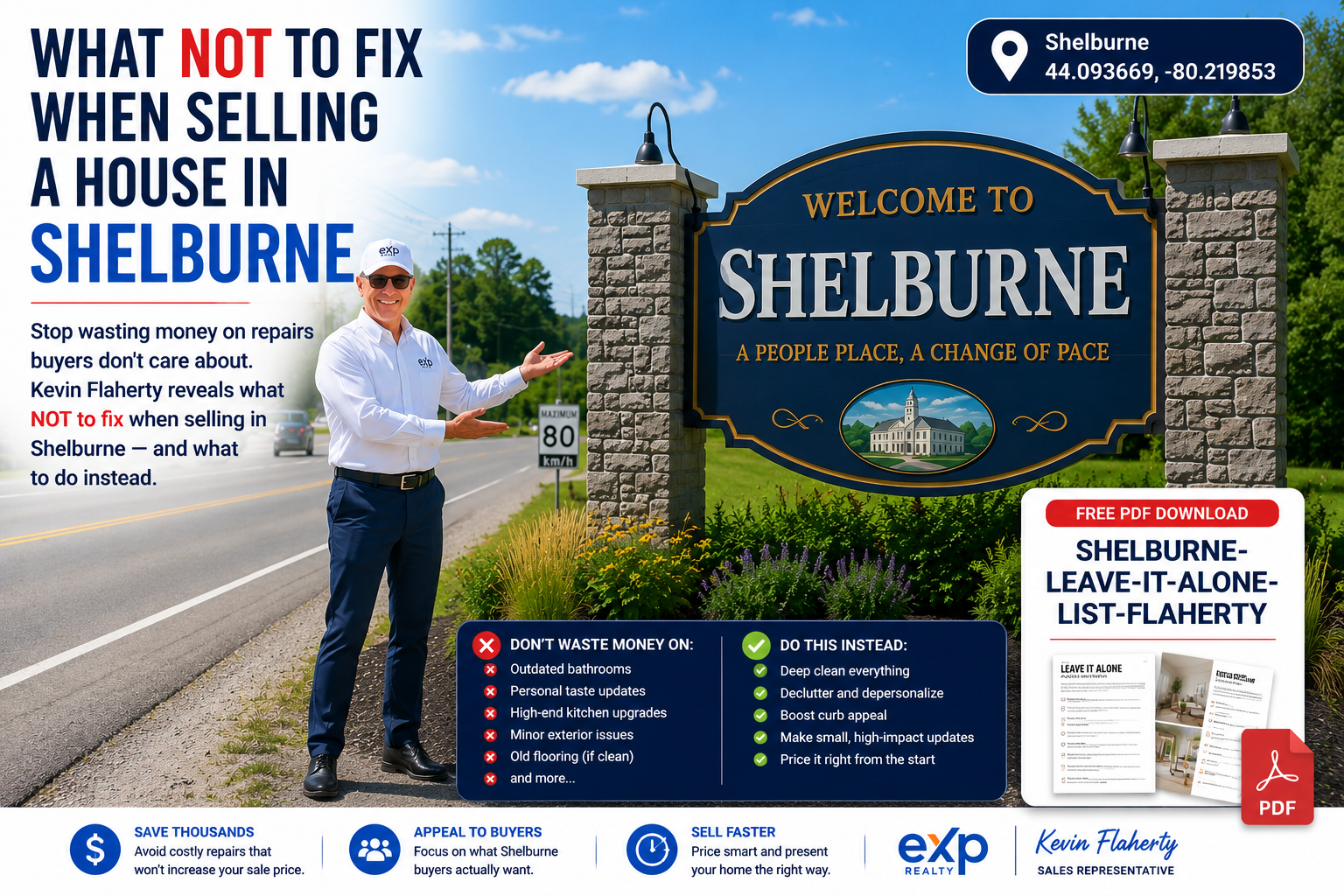
FAQ: What not to fix before selling in Shelburne
What is the short answer to what not to fix before selling in Shelburne?
Do not fix anything expensive until the repair has been ranked against buyer impact, sale-price effect, timeline risk, and net proceeds. Safety, moisture, odour, access, and confidence issues may need action, while many cosmetic or taste-based upgrades should wait for the buyer.
Should I renovate my kitchen before selling in Shelburne?
Usually, no. A full kitchen renovation is expensive, disruptive, and risky because the next buyer may not share your finish choices. In most Shelburne homes, a better plan is to clean deeply, repair obvious defects, improve lighting, touch up paint, and let the buyer decide whether to renovate after closing.
Should I replace old but working appliances before listing?
Not automatically. If appliances are clean, safe, and functional, replacing them often adds less value than it costs. Kevin can help decide whether the appliances should stay, be disclosed as older, be offered as included chattels, or be replaced only if they materially hurt the buyer’s first impression.
Should I install new flooring before selling?
Only if the existing flooring is severely damaged, unsafe, or impossible to present well. Partial flooring replacement can make the rest of the home look older and may create awkward transitions. Cleaning, spot repair, and strategic area rugs may be enough until a market evaluation identifies a clear return.
Should I finish my basement before selling in Shelburne?
A full basement finish rarely makes sense immediately before listing unless the work is already near completion and permits are clear. Buyers may value a clean, dry, well-lit unfinished basement because it lets them inspect the foundation and plan their own layout.
Should I replace windows before listing?
Window replacement can be costly and may not pay back dollar-for-dollar before sale. Replace only broken or unsafe windows. For older but functional windows, clean tracks, replace torn screens, repair latches where possible, and disclose known issues appropriately.
Should I repaint everything before selling?
Do not repaint every room without a plan. Fresh neutral paint can be one of the best low-cost improvements, but painting rooms that are already clean, neutral, and presentable may waste money. Prioritize scuffed entryways, high-colour rooms, patched walls, and spaces that photograph poorly.
Should I repair every inspection issue before listing?
No. Some issues should be repaired, some should be disclosed, and some should be priced into the strategy. The goal is not perfection. The goal is to prevent avoidable buyer objections while protecting your net proceeds and negotiation position.
Should I do expensive landscaping before listing?
Usually not. Shelburne buyers value tidy curb appeal more than elaborate landscaping. Cut grass, trim shrubs, edge beds, remove debris, repair obvious trip hazards, and add simple seasonal colour. Avoid costly hardscaping, major tree work, or custom garden projects unless safety or municipal compliance requires it.
What should I always fix before selling?
Safety, moisture, odour, access, and obvious buyer-confidence issues come first. Examples include active leaks, missing handrails, tripping hazards, pest evidence, non-functioning essentials, and anything that will dominate a buyer’s inspection report. The exact list should be set after a walkthrough.
How do I know which repairs are worth doing?
Start with a professional Shelburne home evaluation before spending money. Kevin Flaherty can compare your property against current competition, buyer expectations, and likely objections, then rank repairs by expected effect on sale price, days on market, and negotiation risk.
Should Kevin see the house before I get contractor quotes?
Yes. Kevin should see the home before major quotes because the repair plan depends on likely buyer objections, current competition, pricing strategy, and the way the home will be marketed online.
What repairs are most likely to protect my negotiation position?
Repairs that remove fear usually protect negotiation strength. Active leaks, unsafe stairs, missing handrails, tripping hazards, pest evidence, strong odours, and non-functioning essentials can become inspection leverage if they are ignored.
Can I sell a Shelburne home with dated finishes?
Yes, dated finishes can sell when the home is clean, well documented, well priced, and properly marketed. Kevin’s role is to decide whether dated finishes are a presentation issue, a pricing issue, or a true barrier for your likely buyer pool.
Should I replace carpet if it is older but clean?
Not always. Older but clean carpet may be acceptable, especially if the buyer is likely to replace flooring after closing. Kevin can help decide whether carpet is a photo problem, an odour problem, or simply a pricing consideration.
Should I upgrade light fixtures before listing?
Only selectively. Replace broken, unsafe, or extremely dated focal fixtures, but do not buy a whole-home lighting package without knowing whether it changes buyer behaviour. Consistent bulbs and clean fixtures are often enough.
Should I stage instead of renovating?
Often, yes. Staging, decluttering, cleaning, and lighting can improve online presentation without the cost or delay of renovation. Kevin can advise whether staging is more useful than construction for your home.
What if my home inspection will reveal issues?
If you know an issue will dominate inspection, discuss it before listing. Kevin can help decide whether to repair it, obtain documentation, disclose it, price for it, or prepare negotiation options.
Are rural-edge Shelburne properties different?
Yes. Well, septic, propane, WETT, drainage, survey, outbuilding, and access details can matter more than cosmetic upgrades. Documentation may be more valuable than fresh finishes.
Should I do repairs if I need to sell quickly?
If time is tight, prioritize work that affects safety, showing confidence, odour, moisture, access, and photography. Kevin can help avoid projects that delay listing without creating a measurable return.